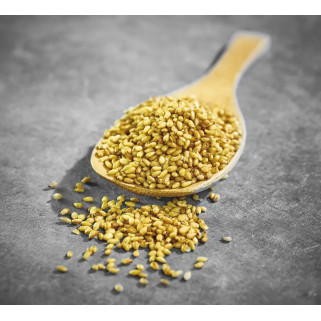
Koji is an essential ingredient produced by inoculating steamed grains, such as rice, barley, soy or beans ... with Koji mold spores. Mold Koji is then carefully grown in optimal temperature conditions to facilitate its proliferation.
Koji is a type of mold that develops from the "Kojikin" (a mushroom known as Aspergillus Oryzae) and is mainly used to break down the starch in sugar. Koji contains saccharification enzymes such as alpha-amylase and glucoamylase that can decompose the starch of sugar rice, amino acid proteins with other enzymes such as Acidic proteases and peptidases such as acidic carboxypeptidase.
The amino acids can be a source of umami and wealth, but in excess large quantities, they can affect taste. That's why the Toji (Masters brewer) and Kurabito (brewery workers) spend years with their skills in order to find the right balance between these enzymes to create a good Koji.
Koji is often described as "treasure of enzymes" because of the abundance and diversity of enzymes it contains and play a vital role in the decomposition of cereal components into their fermentation process.
The growth of Koji mold gives Koji itself a multitude of beneficial nutrients: sugars, amino acids, vitamins and minerals, making it a very nutritious food. The Koji serves as a basis for the production of many traditional Japanese food and beverages, such as Sake, Shochu, Mirin, Miso, Soy Sauce, Vinegar ...
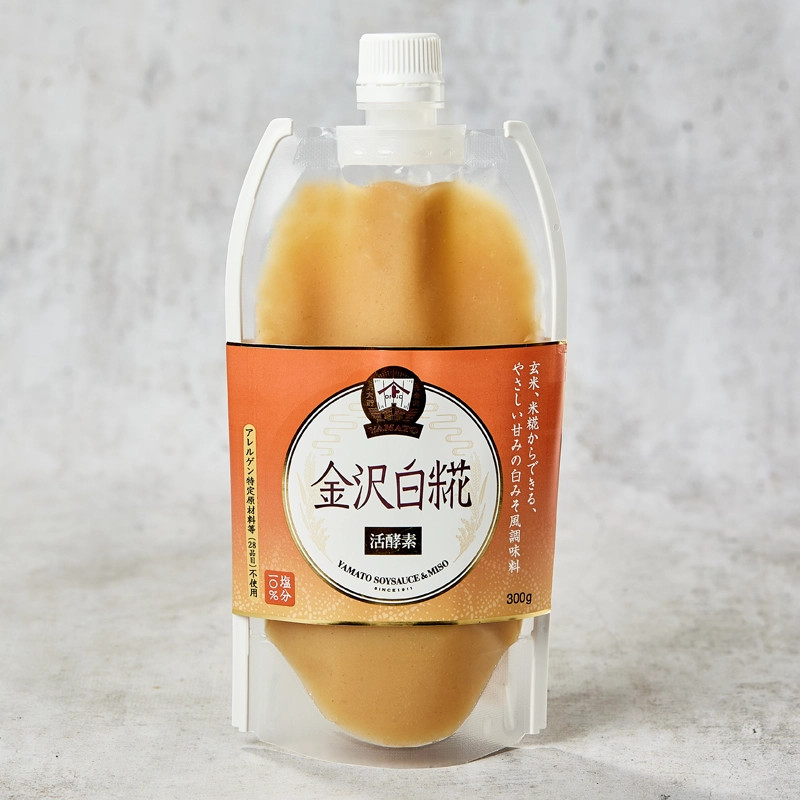
This Koji paste is a new white seasoning of the Miso, manufactured without using soy seeds, to restore the delicious malt flavor. The taste produced by brown rice and the rice malt is slightly sweet.
Our craftsman, Yamato, recommend the brown rice because it contains more protein than polished rice. That's why it does not contain allergens and has a rich flavor.
We recommend this dough to marinate salmon, seafood, poultry meat, pork meat.
To do this, diluting for 100g of fish or meat, 15 g of Koji paste with 15g of clear or 8g sake water + 7g of mirin.
Spread Koji dough moietly obtained on your fish fillet or meat, on all faces.
Filming fish or meat thus bright and let rest in the refrigerator for 1 night.
Remove the paste from the surfaces (otherwise it burns easily) then grill on low heat to the pan or plancha.
The result is spectacular, the rich flavors, the powerful umami, tender and tasted flesh. You can also use a half of Méo Pulp and a half Koji White in a miso soup for a more refined taste.
This dough, added to your cake or cheese cake pasta, will bring very tasty notes.