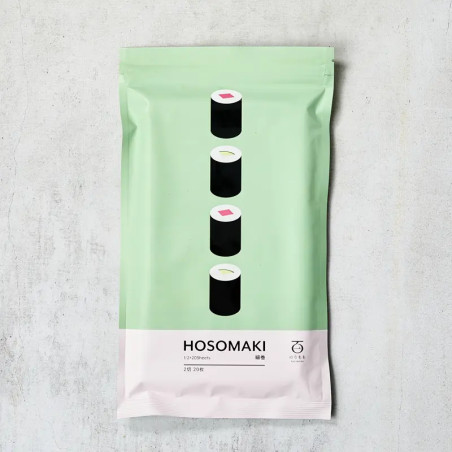
Hosomaki is a type of sushi roll that is thinner than other types of sushi, such as futomaki. Although both are wrapped in a sheet of nori on the outside and contain a layer of vinegared rice on the inside, hosomaki is thin and slender, while futomaki has a larger diameter.
When sushi rice is wrapped in a sheet of nori seaweed and rolled, the result is a sushi roll. In Japan, this is called makizushi or maki sushi.
There are several types of sushi rolls:
Hosomaki: Thin rolls, about 2.5 cm in diameter, with a sheet of nori on the outside, containing a single ingredient (e.g., avocado, cucumber, and salmon).
Chumaki: Medium rolls, about 2.5 to 3.8 cm in diameter, wrapped in nori on the outside, containing 2 to 3 ingredients (e.g., salmon, avocado, cucumber)
Futomaki: Thick rolls, about 5 to 6.3 cm in diameter, with nori on the outside, containing 4 to 5 ingredients (e.g., salmon, avocado, cucumber, cream cheese)
Uramaki: “Inside-out” rolls with nori on the inside, better known as California Rolls
Temaki: Cone-shaped sushi rolls filled with rice and several ingredients Hosomaki means “thin roll” in Japanese.
It has a slender shape and simple style and is presented on a small bamboo mat. Hosomaki consists of sushi rice wrapped in a sheet of nori (dried seaweed) with a filling, which can be vegetables or fish.
To make it a quick snack or an ideal starter, it should be cut into small pieces. Hosomaki is prepared using a bamboo mat.
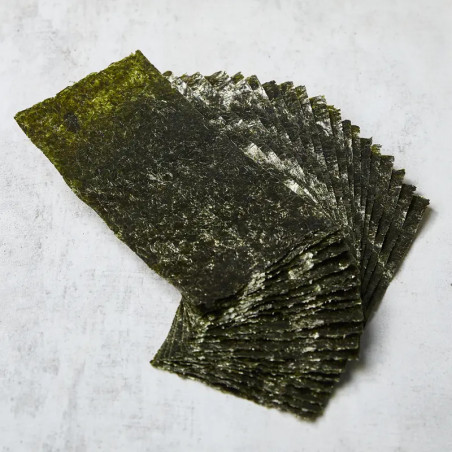
Nori seaweed introduced here has been toasted. It has a crunchy, crisp texture with a delicate sea flavor and subtle, elegant umami. This seaweed is rich in minerals and also acts as a flavor enhancer. These hosomaki nori sheets are completely natural, with no additives or preservatives.