All grapes are grown using the vertical shoot positioning (VSP) system. Grape varieties include Merlot, Kai White (a hybrid of Koshu and Pinot Blanc), Muscat Bailey A, Chardonnay, and Fuji no Yume (a hybrid of Yamabudo and Merlot). They produce wine from a total of 40 tons of grapes from their own vineyard and local contract farms. All stages of winemaking, from pressing and fermentation to aging, bottling, and labeling, are carried out in a compact space of 80 tsubo (approximately 265 m²). In addition to stainless steel tanks, enamel tanks are also used, remnants from the days when wine was produced in a sake brewery.
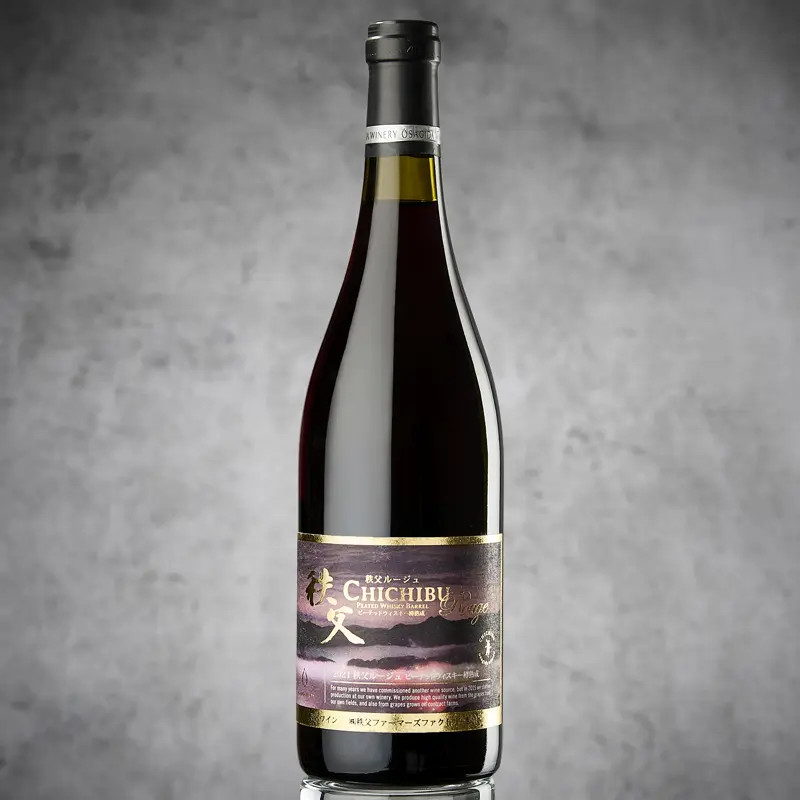
For red wines such as Muscat Bailey A, these enamel tanks allow higher fermentation temperatures to be achieved, a technique inspired by sake production, which results in a rich and beautiful color. The large 3.5-ton enamel vats can hold large quantities of grapes, which ferment naturally under their own weight without being pressed after being destemmed and crushed. Aging also takes place in traditional wine barrels, but the whiskey barrels come from the Chichibu distillery, which produces one of Japan's most renowned whiskeys, Ichiro's Malt.
The use of different whisky barrels (such as Peated Cask, Cherry Cask, Bourbon Barrel, Mizunara Cask, etc.) allows wines with varied characteristics to be produced. After about a year of aging, the wine develops an interesting flavor. In addition, Mizunara wood chips, roasted on site, can sometimes be used to enhance the aroma. The estate produces wine in collaboration with local farmers and continues to receive about 30 tons of grapes grown in Chichibu each year. As Chichibu is a tourist destination, farmers enjoy a stable income from the direct sale of various products, including table grapes, rice, and shiitake mushrooms. This stability and diversity have helped to sustain wine production.
In addition to grapes, the winery also produces wines from local fruits such as kabosu, a citrus fruit, and strawberries. It maintains close ties with local farmers, even providing them with grape marc to use as compost. Due to their rural location, Chichibu's wineries have faced a labor shortage, particularly for agricultural work. To address this, in the early 2000s, Usagida Winery partnered with Sakura Farm, a local center that supports people with disabilities, to offer them vocational training and help them become self-sufficient, creating a model of collaboration between agriculture and the social sector.
Most of the members of the facility are energetic and capable of performing more complex tasks than simply packaging vegetables. In fact, they have shown a keen interest and motivation for working in the winery, including in the vineyards and for meticulous tasks. In the future, the winery hopes to continue producing “Chichibu Nofuku Renkei Wine,” a wine produced through collaboration between agriculture and the social sector, in order to further strengthen its contribution to the local community. The Usagida Winery designs its wine labels with the theme of “capturing the spirit of Chichibu.” They feature images such as the “Chichibu sea of clouds,” a natural spectacle unique to the region, highlighting its climate, landscapes, and tourist appeal.
The aim is for the label to not only reflect the identity of Chichibu, but also serve as a local souvenir and encourage visits to the area. Since 2019, the winery has also introduced labels using Chichibu Meisen patterns, a traditional local textile design, further emphasizing its commitment to showcasing Chichibu in every bottle. Owner Kazuhiko Fukada was born and raised in Chichibu in a family that ran a sericulture business and also grew grapes such as Campbell Early. Inspired by his father's friends and other local winemakers, he always had a desire to produce wine from grapes grown in Chichibu. A visit to Napa Valley in the United States deeply inspired him, and about 30 years ago, while running a wine and spirits store, he decided to enter the wine industry. At first, he entrusted the winemaking to a nearby sake brewery, but after winning several awards at wine competitions, he decided to open his own winery and vineyard.
Thus, Domaine Usagida was born in 2015.