Suribachi, Japanese mortar, was introduced with cooks and practitioners of traditional Japanese medicine by Chinese traders in the eleventh century. Buddhist monks originally used these mortars and pestles to crushed herbal remedies.
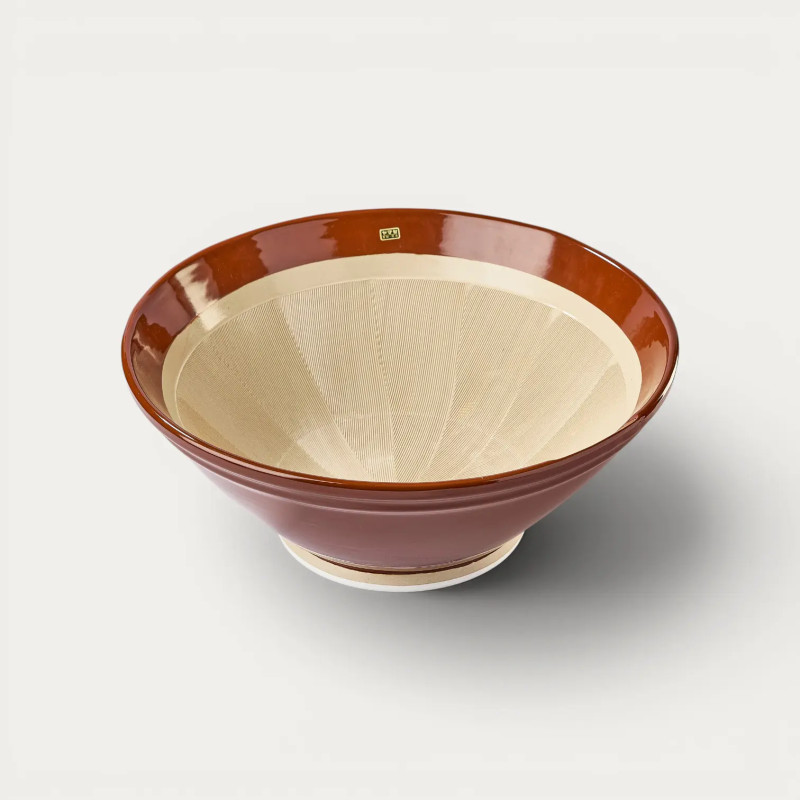
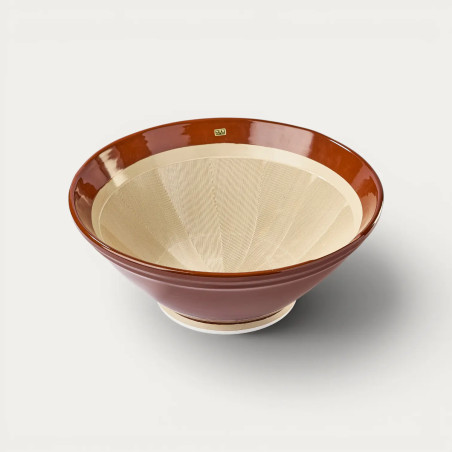
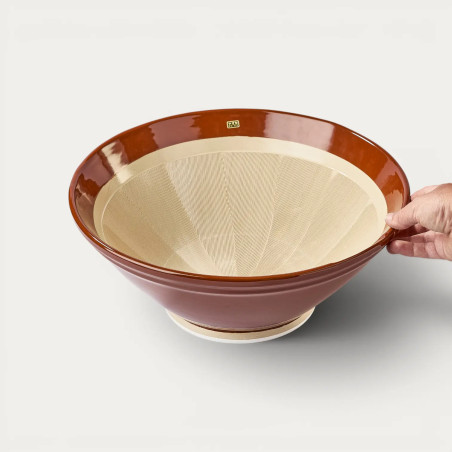
In the sixteenth century, following the Japanese invasion of Korea, Korean methods began to influence Japanese ceramics, giving birth to the typical style of Suribachi: enamelled outside, but not enamelled inside, condition Optimized for the grinding of sesame seeds without damaging them.
The Japanese survachi is distinguished by its inner grooves that brighten the ingredients, associated with a lightweight wooden pestle, which makes it easy to extract the flavor of the ingredients. Grinding the ingredients in an overibachi is the sweetest way to treat herbs and delicate seeds with intense flavors, while preserving and enjoying natural essential oils.
The grooves inside the Suribachi are part of the grinding work and alleviate the physical task by leaving enough texture for a pleasant mouth. What's more, they bring the ingredients back to the center of the bowl while you grind, thus preventing them bouncing.
Suribachi offers the same efficiency for wet or dry mixtures. Suribachi being clay, it is necessary to use a wooden pestle (Surikogi) so as not to chip grooves.
Completely hand-made, this survacy mortar will be perfect for pounding and crushing sesame seeds, mustard seeds, walnut kernels, hazelnuts, almonds, salt, cardamom, dried pepper, cumin, fenugreek, Berries of Sansho, cashew nut or peanuts.
Its streak interior will allow small seeds and berries to get crashing. It will also be perfect for making Guacamole, pesto and other aromatic preparations.
This model, is particularly popular with restaurateurs, spice triturators, caterers ...