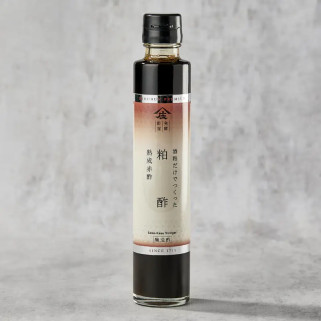
Usually, the vinegar in Japan is made from rice while the Akasu, it is made from Lie de Sake. At the end of the EDO period, the craftsmen began to produce Akasu because of the ever-increasing production of Sake and therefore Lie de Sake.
When the Lie of Saké is allowed to stand long in a hermetically closed barrel, its color changes from amber to brown (like Méo) because of the work of yeast and kôji (yeast of rice). The vinegar 'Akasu' draws its name from its color, 'aka' meaning red in Japanese.
Long to produce, the Sake Lie becomes more and more flexible, proteins are changing into amino acids and peptide and starch decomposes into sugar and organic acid that are the essence of the production of the best sakes.
This vinegar is milder and has a more aromatic nose than most of the other vinegars, which is why it is mainly used to flavor the sushi in Japan. Recently, it has become a product used primarily by the chief sushi while, during the Edo period, it was the most popular vinegar for sushi making.
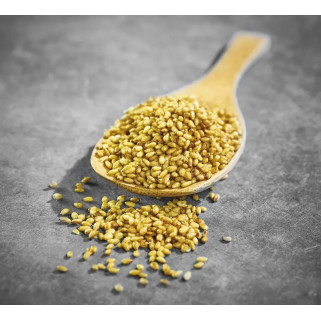
The high quality saké lees used for the making of this vinegar are purchased from national Sake breweries and are aged for a long time to mature aromatic components. When the yeast and the Koji contained in the Sake Lie work together, the milky white color of the Sake Change Lie changes to look like that of the red miso.
As an aging, the proteins contained in the Lie de Sak are transformed into peptides and amino acids, and starch is decomposed into organic acids. Since this vinegar is made from aged Saké Lie, rich in UMAMI components, it is characterized by its "soft aroma" and its "flavor and its wealth". The vinegar made from Lie de Sake Aged is called "red vinegar" or "vinegar kasu".
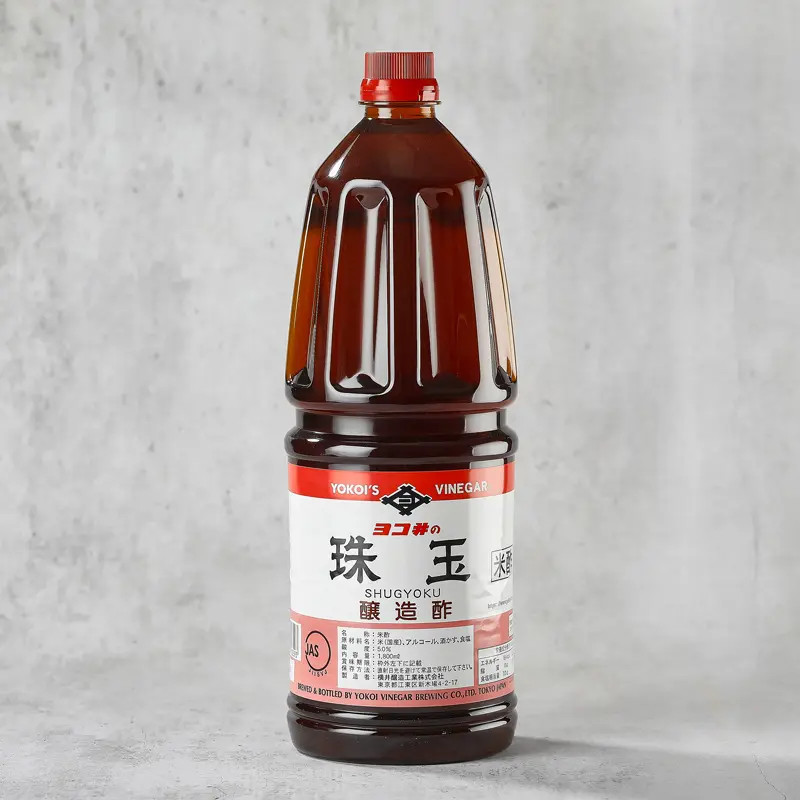
The red vinegar Akasu Shugyoku is a balanced mixture of red vinegar and fluffy rice vinegar (made from local rice) then brasserie vinegar, traditional Edo style. This red vinegar Shugyoku is inherited from the tradition of Sushi Edomae. It is characterized by a sweet taste and a perfume of rice vinegar.
For use with sushi rice, we recommend using salt and sugar sparingly. You will get a soft, fragrant rice with rich umami. We advise you not to marry another vinegar. Seasoned with the Akasu Shugyoku, your rice will take a moderate color.