Important : Before use, check out the "Documents to download"
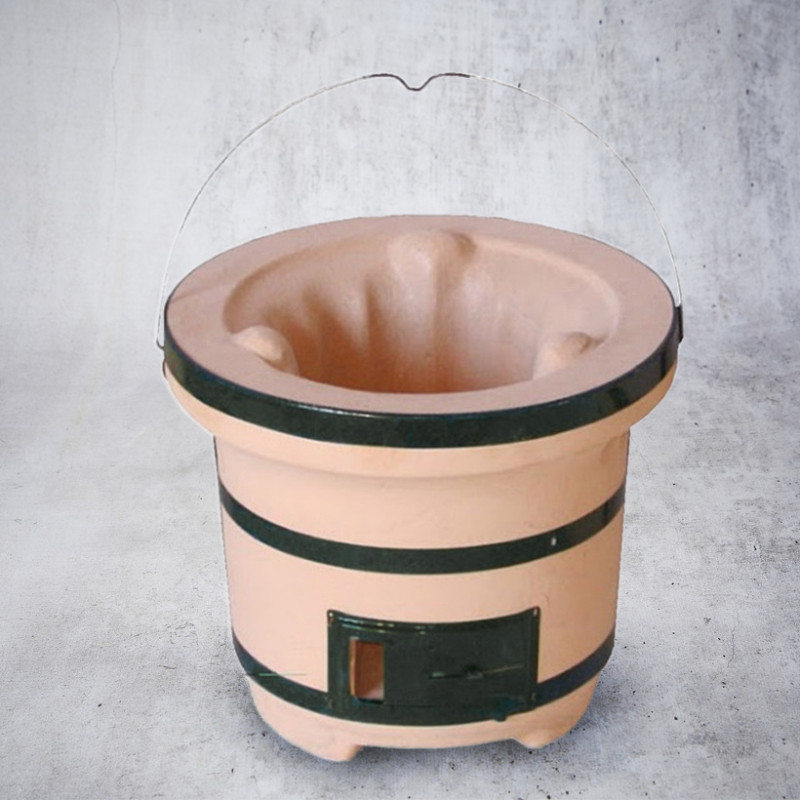
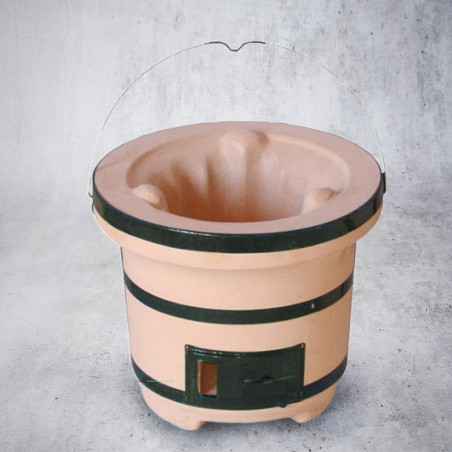
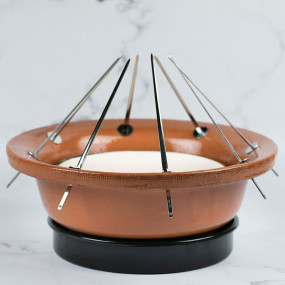
Shirinin's table barbecue: Japanese traditional barbecue in diatomaceous diatoms from the city of Suzu, prefecture of Ishikawa.
It has a good capacity for accumulation and storage of heat.
Its coal consumption is therefore less important than for a classic barbecue.
The diatomaceous earth emits infrared rays that promote immediate cooking of foods without altering the Umami flavors they contain.
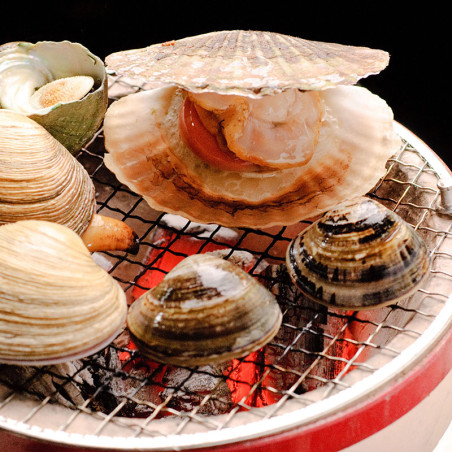
The barbecue is lightweight and arises directly on the table, at hand of the guests who can then grill fresh or marinated meat, fish, or vegetables.
A barbecue for the garden, camping or even a kitchen or a living room provided you maintain a good ventilation of the room and protect the table with heat-resistant support.
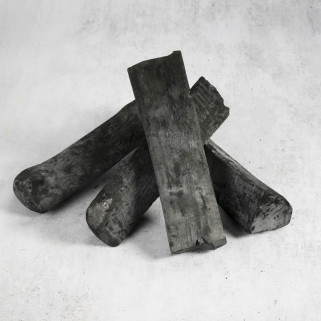
To avoid smoke, use from binchotan coal.
Original and very effective for quality cooking.
Dark green strapping
Pictures of non-contractual scenario, an example of use and color.
On the classic barbecues and stoves to cook, the air that enters with the opening increases and the adjustment of the thermal power of the wind becomes low. By reducing the supply of charcoal, the embers is maintained and the thermal power remains.
Barbecues are made to diatomaceous earth :
The diatomaceous earth is a soft siliceous sedimentary rock of very friable natural origin and therefore can be easily crumbled into a fine white powder broken.
The diatomaceous earth is made from the fossilized remains of tiny aquatic organisms called diatoms. Their skeletons are made of a natural substance called silica.
For a long period of time, diatoms have accumulated in the sediments of rivers, streams, lakes and oceans.
The diatomaceous land, Japan, is very mainly worked throughout the city of Suzu. This model modeable has long been used as heat insulating like stoves. A kettle of the Edo period (1603 ~), made of diatomaceous land, appeared in Japanese historical literature.
What are the characteristics of the diatomaceous land?
The Kaginushi Diatomite barbecue is 100% diatom of Oku-Noto (Ishikawa). The diatomaceous earth is porous, allowing high thermal insulation. In addition, it enjoys siliceous fire resistance (heat resistance is good).
The diatomaceous earth blushes with fire and captures infrared rays.
Charcoal cooking in this type of barbecue will bring out the umami of the highest ingredients.