Jamaica berries
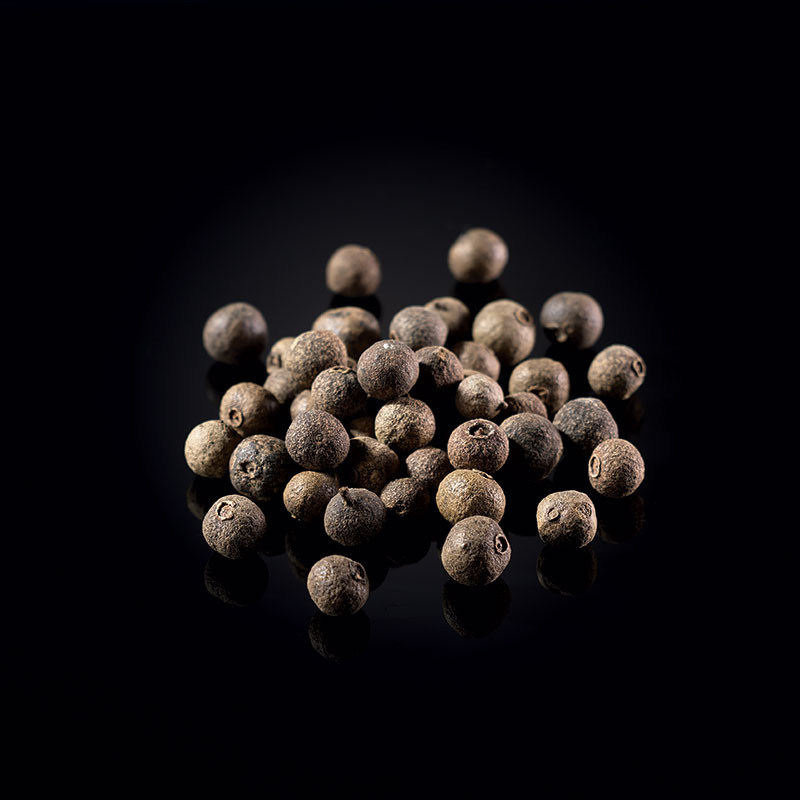
This spice is fluently and improper, "pepper" of Jamaica or "pepper" of Jamaica, belonging to any of these two families. It is better to call it, as do the English "Allspices", "all spices", for its smell evokes the four main spices. It is also called India, pepper or pepper of Mexico, or amomi.
This tree native to tropical America, in the West Indies, belongs to the botanical family of myrtaceae. It is mainly cultivated in Jamaica and the tropical areas of America, Guatemala, Honduras, Mexico.
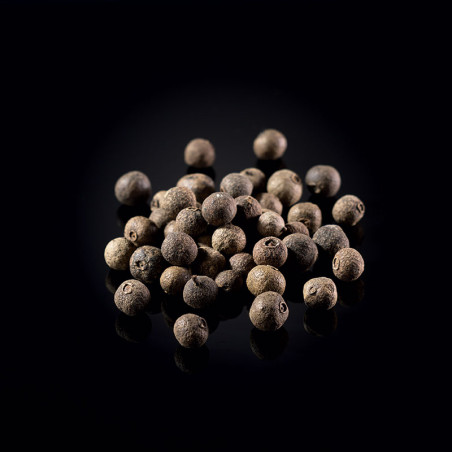
This large tree also called myrtre-pepper, up to 10 meters high and can produce fruits up to 100 years old, is adorned with pretty white flowers from June to August, which turn into round bays, the size of a pea and blush. Maturity. Like pepper, berries are picked before maturity and dried in the sun which gives them an elegant brown color.
Several plantation attempts, outside the original area, have remained unsuccessful. The English tried in India, the experience was also tried without success in Sri Lanka, Malaysia and Australia. This tree is in the wild in the West Indies, Central America and the northern part of South America.
This spice, brought back for the first time in Europe by Christopher Columbus, was named Jamaica's inexcurement, by Botanic ignores, but also for lucrative reasons, by passing it for "dear spice" and in the selling at gold price.
The Mayas used it to embalme their dead. Today, it is widely used in cooking in the West Indies with the fish and in their delicious little bodies.
Jamaica's "pepper" is used in pastry for the making of certain cookies, enters the composition of the ketchup (which is a very old invention of the Chinese and can be of very high quality, when it is not the American product industrialized and saturated with sugar. And artificial aromas, which you all know, unfortunately.), As well as in that of Benedictine and Chartreuse. This magnificent spice is quite little known under our latitudes and it's really a shame because it is rich in flavors.
Our perfect agreements : To use in soups and stews, terrines and marinades, it will be pleased on some fish, sardines, anchovy, mackerel and especially with herring. It is perfect with meats like pigeon, pintade and lamb. We strongly advise you to use it with the fireproot and danut and other stews. It marries harmoniously with fresh fruit salads: melon, pineapple, strawberries, figs ... etc ..