This product has been added to your wish list.
Remove
This product was successfully removed from your wish lists.
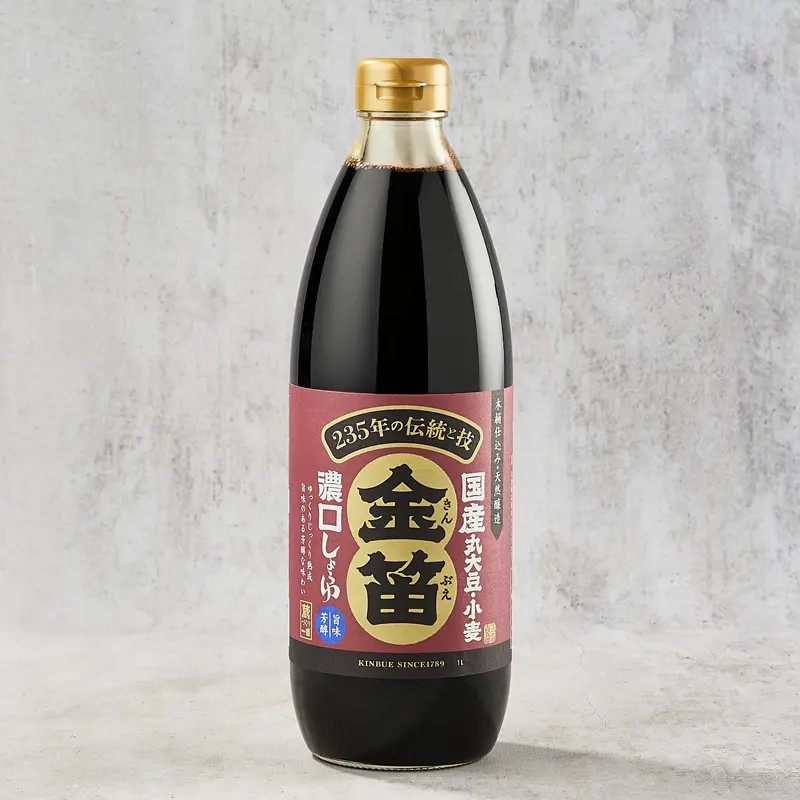
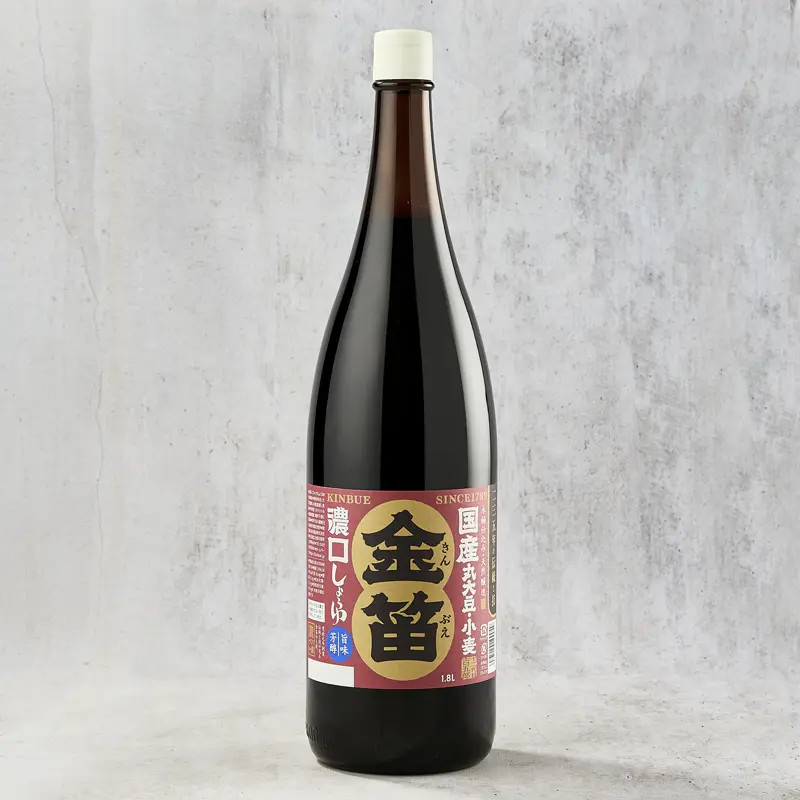
Kinbake soy sauce
Ref : NISFUE16
€13.10
Tax Included
€13.10 / L
The soy sauce Koikuchi uses the Honjozo production method, according to which the roasted wheat and steam cooked soybeans (in a ratio of 1: 1 in the case of Koikuchi Shoyu) ferment for at least six months before being pasteurized and filtered, then aged or bottled and sold.
The longer the fermentation, the more decomposed the proteins, which still accentuates its dark brown color and its complex flavors. In the case of Koikuchi Shoyu, a longer fermentation period is used to produce its dark color and bring out its strong flavor and rich flavor.
Characterized by a more dominant flavor and a more aromatic scent, the Koikuchi sauce stands out for its also moderate salinity and a strong umami flavor, refreshing acidity and the strange ability to be both sweet and subtly slightly bitter.
The soy sauce Koikuchi is used as a condiment and plays a greater role in influencing the overall taste and the presentation of the food it accompanies.
The Koikuchi Kinbue soy sauce is a craft soy sauce made according to traditional methods that have been in effect for more than 200 years, sponsoring a natural part of a natural fermentation, slow for two long years.
It is a well-fledged and aged soy sauce in a large Sugioke (open cedar tank). The rich aroma and the golden whistling of the sauce plunge you into the nostalgia of the good old days.
It is made from a selected whole soy type from Aomori, Saitama wheat and Mexico solar salt. No additives are added during the brewing process.
Our perfect agreements :
Its rich aroma makes it ideal for sashimis or sushi, tofu and fresh tofu or as seasoning for meat, fish or vegetables cooked with stifled or grilled.
This soy sauce Koikuchi is also recommended for simmer or teriyaki dishes that require more full-bodied flavor. It is also ideal for marinades and sautées.
NISFUE16
Data sheet
Origin
Saitama, Japan
Weight
1.8 L Net
Bonus
20 L available on request
Packaging
Glass bottle
Ingredients
soy beans, wheat, salt
Storage
protected from light and heat
Allergenic(s)
soya
wheat
Nutritional values
Per 100 g : energy 66 kcal (281 kJ) ; fat <0,3g, of which saturates <0,01g ; carbohydrate 7,9g, of which sugars 0,4g ; protein 8,7g ; salt 15,37g.
In Japan, there are officially 1,200 companies specializing in soy sauce. However, more than 90% do not manufacture and are limited to bottling their brand.
Until the fifties, soy sauce was still a luxury product. There were nearly 10,000 manufacturers in Japan, spread over all prefectures of the Archipelago, and mainly active in their terroir. The best sauces were all sourced from very long and complex fermentations.
The current market requires low, aggressive prices and therefore pushes the majority of manufacturers to produce soy sauces at a lower cost, all short fermentation. This competition hurts many artisans, pushing them to abandon long fermentations.
The major manufacturers dominating sales in supermarkets, restaurant chains ..., use aluminum cellars and chemical yeasts that have the effect of significantly accelerate fermentations to the detriment of tastes, aromas, textures.
The best manufacturers, master craftsmen, all work on open cellars, made of "sugi" cedar wood, confined in protected rooms to preserve the bacteria on the surfaces and the ambient air. These bacteria allow the fermentation of soy must to follow the seasons: in winter, the must or "moromi" sleeps; in the spring, the moromi wakes up and activates; in summer, under the action of heat, moromi is very active; in the fall, the moromi cools
All of these long steps are necessary for the making of exceptional soy sauces. The cycle can be repeated 2, 3, 5 or even 10 to 35 times for the rarest sauces. It is possible to talk about great wines from 2, 3 years of fermentation.
Of the 1200 companies declared soy sauce manufacturers, only one hundred realizes the complete manufacturing process, and only 20 to 30 of them make good soy sauce.
Jonathan B. Published Oct 06, 2025 at 12:03 am (Order date: Sep 19, 2025)
5
Excellent soy sauce, very aromatic and quite strong in taste! (Translated review)
Christophe M. Published Jun 06, 2025 at 08:18 pm (Order date: May 20, 2025)
5
In line with my expectations. (Translated review)
Thérèse R. Published Feb 04, 2025 at 09:21 am (Order date: Jan 18, 2025)
5
Our "everyday" and "multi-purpose" sauce, it tastes great on its own without dominating dishes. The 1.8-liter bottle is excellent value for money, so we keep it in the cellar and gradually transfer it to a smaller bottle. There's little moromi, but it's present and I believe it's alive (probiotic). (Translated review)
Hervé C. Published Jan 23, 2025 at 06:09 pm (Order date: Jan 07, 2025)
The soy sauce Koikuchi uses the Honjozo production method, according to which the roasted wheat and steam cooked soybeans (in a ratio of 1: 1 in the case of Koikuchi Shoyu) ferment for at least six months before being pasteurized and filtered, then aged or bottled and sold.
The longer the fermentation, the more decomposed the proteins, which still accentuates its dark brown color and its complex flavors. In the case of Koikuchi Shoyu, a longer fermentation period is used to produce its dark color and bring out its strong flavor and rich flavor.
Characterized by a more dominant flavor and a more aromatic scent, the Koikuchi sauce stands out for its also moderate salinity and a strong umami flavor, refreshing acidity and the strange ability to be both sweet and subtly slightly bitter.
The soy sauce Koikuchi is used as a condiment and plays a greater role in influencing the overall taste and the presentation of the food it accompanies.