Buddhist monks discovered Matcha already more than 800 years ago during their travels in China. When they return to Japan, they reported tea plants and started to cultivate them. At the time already, the matcha was a very precious drink, whose consumption was reserved for the social elite. Buddhist monks enjoyed this drink during their long meditation sessions. The samurai, meanwhile, drank a cup of matcha before their fights, because it made them stronger and gave them a durable energy and concentration.
Traditionally, Matcha is always drinking as part of a tea ceremony, and this ritual is still practiced today.
The 3 most important features of a good matcha:
The color
Each quality of Matcha has its own color. During the shading phase, the tea trees produce more
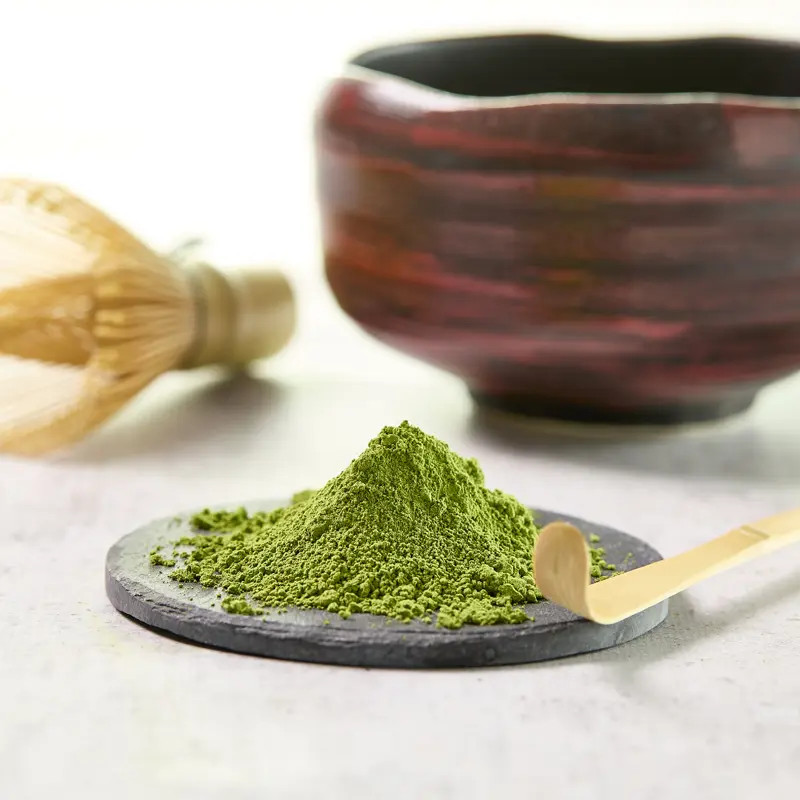
chlorophyll and amino acids. These give the leaves their intense green color, which remains visible even after the grind. The more the green is intense, the more the matcha is of good quality.
Taste
The higher content of chlorophyll and amino acids gives tea leaves their hazelnut taste and gentleness (UMAMI).
The bitter substances contained in normal tea are necessary to protect the leaves of the sun. Shaded tea contains less.
Texture
Before the Tencha leaves are ground in matcha, the ribs and the stems are removed, leaving only the finest pulp and the purest tea leaves for grinding. High quality matcha powder has an ultra-fine texture that can also be tactilely checked using a plot test.
How to recognize the true matcha
The line test makes it possible to determine whether the matcha is authentic or false: only a straight and velvety line can be traced with the thumb on authentic matcha. The lower qualities, which are transformed industrially, give a sandy line and broken during the line test.
* rich color of a deep emerald green
* Intense, fresh smell like green tea aroma
* Taste umami pronounced, Japanese sweetness
When you drink Matcha, you consume the entire tea sheet and thus enjoy 100% of its ingredients.
Matcha tea is considered natural superimate because of the large amount of valuable ingredients it contains, such as many vitamins, minerals, amino acid L-theanine and many antioxidants such as epigallocatechin Gallate.
Matcha is full of benefits: it reduces stress, detoxifies, reinforces the immune system and brain functions, stimulates energy level and promotes cellular regeneration.
Our tea matcha Kotobuki Bio Premium ceremony is made from Tencha Majorly from Kagoshima and then ground with stone grinding wheel in Nishio, Aichi Prefecture.
This tea benefited from shading for 3 to 4 weeks.
This ceremonial quality biological kotobuki matcha tea is recommended to be pure tasted. It has a slightly spicy and very soft taste. In addition to being pure tasted, this powder can also be used as a high quality ingredient in desserts, chocolate and ice, or cosmetics and dietary supplements.
Preparation tips:
* Sift the matcha
* Add a little hot water (max 80 ° C)
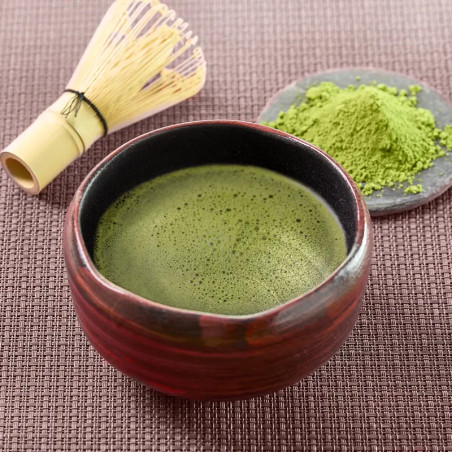
* Whip the matcha with a bamboo whisk until a foamy consistency
* Enjoy
For a good matcha latte, mix 1 tablespoon (10 g) from Matcha with 200 ml of hot milk, add the milk foam and serve.