The preparation is then drawn up, without pressing plums, simply by gravity so as not to crush the core.
The alcohol is then aged in tank for 18 additional months; No wooden drum is used to keep only the pure flavor of Benisachi ume.
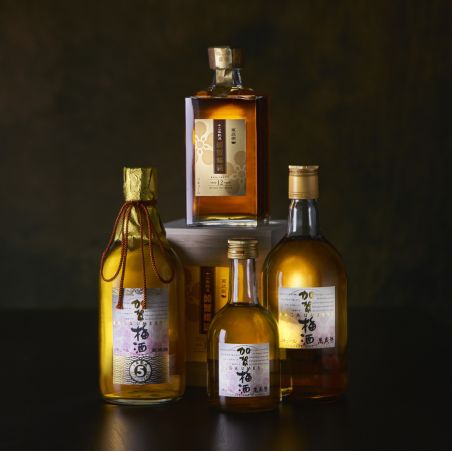
Kobori Shuzo is one of the most famous and oldest breweries of Ishikawa's prefecture on Honshū Island. The company, founded in 1716, is not only known for its great sakes, but also for its fantastic umeshu. The Kobori Shuzo House has been kept by the same family since its creation. Thus, Mr. Kobori represents the 16th generation of brewers. In the middle of the era Meiji, she creates the brand "Manzairaku". Manzairaku means "Always be happy".
The Kaga umeshu of the Manzairaku House is made from the famous and luxurious Japanese umes of "Benisashi" variety, sugar crystals, distilled alcohol and the very famous natural water of the Tedori River, from the Hakusan Sacred Mountain in Ichikawa Prefecture. It is said that water from this source has energized for more than 100 years at the top of Mount Hakusan, before going down the valley by the river. The ume is often called plum, but botanically, it's an apricot.
Benisashi ume variety is used for Kaga umeshu. This particular variety grows only in the city of Kanazawa (Ishikawa Prefecture) and in the nearby Fukui prefecture. "Beni" means "red" and "Sashi" means "shine". The name represents the deep and shiny red color of the mature ume. The Benisashi 'ume contain more amino acids than other ume species. Due to the higher proportion of amino acids, benisashi ume has a milder aroma and fluffy taste and intense umami. This variety is also used for the making of high quality umeboshi plums. It is difficult to cultivate and harvest is lower than other umes because the branches do fruit only once every three years. The Benisashi variety is therefore very rare.
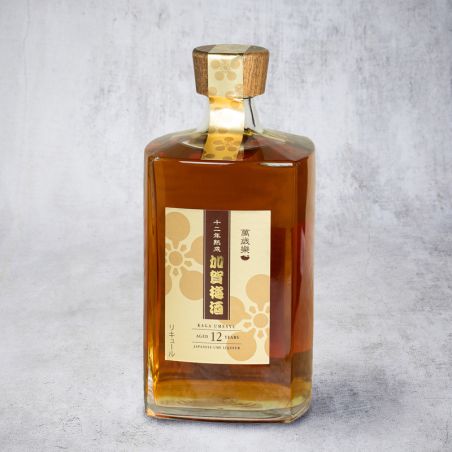
Tasting side, for this refined umeshu for 12 long years, we discover a drinking beverage with sustained honeyed and amber dress. The aromas of mature apricot, leather, very ripe plums dominate followed by a complex aromatic procession evoking tobacco, cocoa, vanilla, honey.
On the palate side, we are facing a true tasting umeshu, which lets us discover a loose and round mouth, a slight astringency, maple notes, bitter orange, chestnut honey, candied date, grapes of Corinth ...
We appreciate this wonderful acidity that is salivating and a fabulous balance between sugar, bitter, and acidity.
An initiated umeshu that you will enjoy in digestive, served at temperature, accompaniment to dried fruits.
This umeshu is self-sufficient.