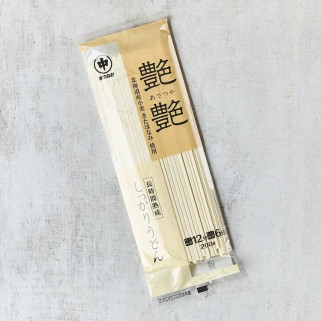
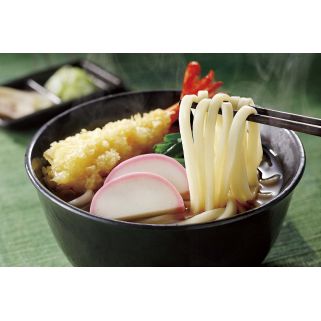
The current long shape appeared in the fourteenth century. Udon are consumed nowadays throughout Japan, but especially from Kagawa to Osaka and Kyushu. Udon are served in a dedicated bowl, in soup or sauce and are tasted using chopsticks to carry the noodles to the mouth while making a suction noise.
The Japanese will explain that this noise enhances the flavors and helps to cool the hot noodles as they penetrate in the mouth. If there is a broth, it can be drunk directly into the bowl. Udon thick noodle dishes therefore deserve a bowl that makes them justice.
Udon need to be mixed to fully enjoy their flavors. A wider and deeper bowl allows you to turn them and mix them comfortably without spilling them. These thick bowls keep the broth of hot Udon. Udon can be enjoyed throughout the year. In cold weather, Udon consume warm in a rich broth.
In summer, they consume cold or hot in a lighter broth, accompanied by fresh vegetables and tempura.
Here, Udon's dough was infused with "Binchotan" coal for a unique flavor and aroma. Udon have a creamy texture and a slight taste and aroma of coal. Udon have a striking black glow, creating a memorable presentation. You will appreciate the smooth texture and shine.
250g = quantity for two people
Volume of water for cooking: 3.5 liters
Cooking time in boiling water: 8 minutes 30
Stir the Udon so that they do not stick together. At the end of cooking, place Udon in a colander and rinse them with the current cold water to cool quickly and stop cooking.
Once the Udon has cooled, rinse under running water by kneading them with your hands to eliminate the stake of the sticky effect. Finally, drain the water. In summer, if you put the noodles in ice water to firm them, they will have a firmer and more soft texture.