This product has been added to your wish list.
Remove
This product was successfully removed from your wish lists.
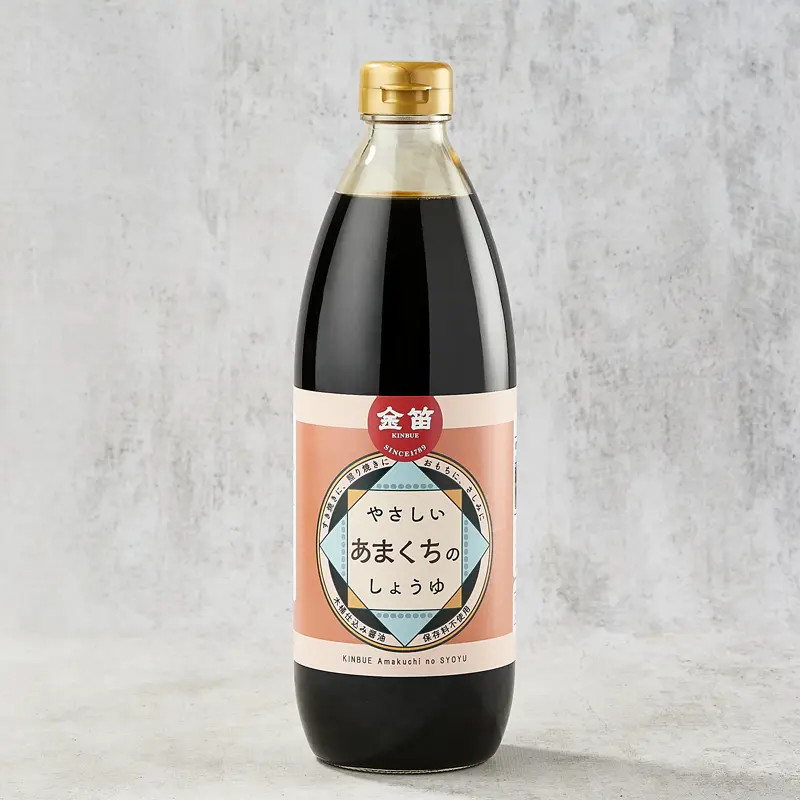
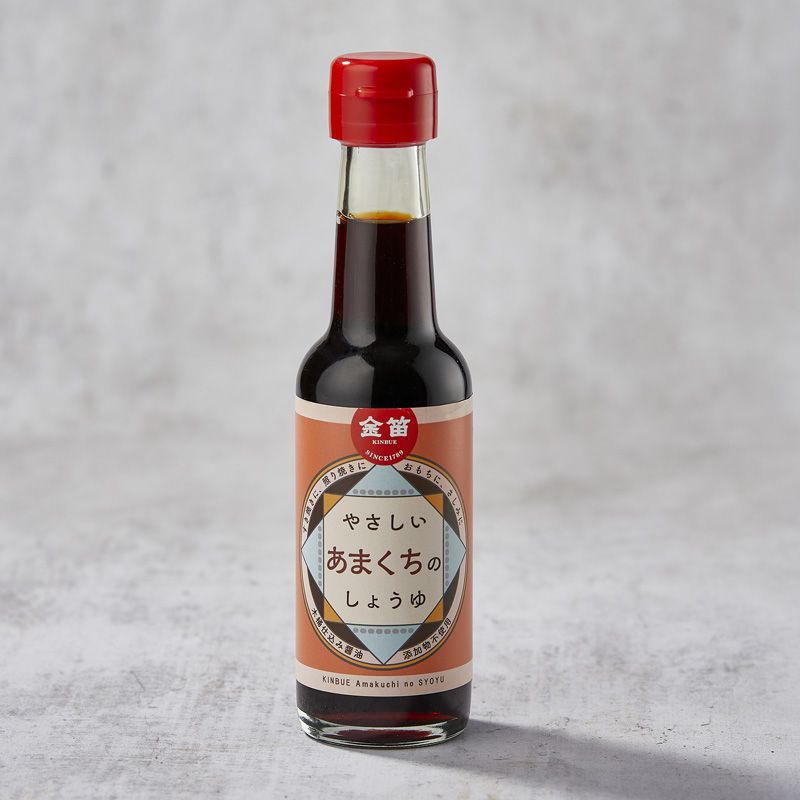
Authentic Sweet Soy Sauce Amakuchi
Ref : NISFUE15
€23.50
Tax Included
€20.49 / L
The Soy Sauce Ambiachuchi is one of the six major shoyu soy sauce in Japan.
It is predominantly consumed on the island of Kyushu, south of Japan. It is often watered with mirin and unrefined cane sugar.
The more you go down to the south of the island, the more sweet it is. However, it is significantly less saturated with sugar and syrupy than Western versions. The existence of this soy sauce, a sweet version, is intimately linked to Japan's history, which, during the Edo period began to trade with the West and more precisely the Netherlands.
This trade started on Kyushu, in the Nagasaki region, with a major ingredient, sugar, quickly adopt by the premises that started incorporating it into their cuisine. Since the sugar cane cultivation is also concentrated on the island of Kyushu, its use logged in many seasonings.
The Soy Sauce Amakuchi has a softer flavor than the other varieties of Shoyu. It has the salinity of the soy sauce and a sweet taste that gives it a unique flavor and a umami that we do not find in the other Japanese soy sauces.
The peculiarity of this Soy Sauce Ambiachuchi is that it does not contain artificial aromas or preservatives. This sweet and salty soy sauce, with soft flavor, is elaborated from soy sauce Honjozo, sugar and Hon mirin, all traditionally brewed in soybean tanks, in Kanto style.
UMAMI is powerful. You will like the velvety texture and grain notes delicately sweet. The amakuchi sauce can consume as a soaking sauce or be added to cooking the dishes.
It is particularly suitable for the seasoning of the yaki onigiri (delicately grilled rice onigiri), sashimi, Tamagoyaki omelettes, beaten crus eggs for the sukiyaki dishes ... She is very appreciated as the basis of Sukiyaki and Teriyaki sauces.
Per 100 g : energy 133 kcal (566 kJ) ; fat less than 0,5g, of which saturates less than 0,1g ; carbohydrate 26g, of which sugars 21g ; dietary fiber 0,6g; protein 6,6g ; salt 10g.
Recommendation
EXCESSIVE CONSUMPTION OF ALCOHOL IS DANGEROUS FOR YOUR HEALTH. DRINK WITH MODERATION. CONSUMPTION OF ALCOHOLIC BEVERAGES DURING PREGNANCY, EVEN IN SMALL QUANTITY, CAN HAVE SEVERE CONSEQUENCES FOR THE CHILD’S HEALTH. THE SALE OF ALCOHOL IS FORBIDDEN TO MINORS UNDER AGE 18
In Japan, there are officially 1,200 companies specializing in soy sauce. However, more than 90% do not manufacture and are limited to bottling their brand.
Until the fifties, soy sauce was still a luxury product. There were nearly 10,000 manufacturers in Japan, spread over all prefectures of the Archipelago, and mainly active in their terroir. The best sauces were all sourced from very long and complex fermentations.
The current market requires low, aggressive prices and therefore pushes the majority of manufacturers to produce soy sauces at a lower cost, all short fermentation. This competition hurts many artisans, pushing them to abandon long fermentations.
The major manufacturers dominating sales in supermarkets, restaurant chains ..., use aluminum cellars and chemical yeasts that have the effect of significantly accelerate fermentations to the detriment of tastes, aromas, textures.
The best manufacturers, master craftsmen, all work on open cellars, made of "sugi" cedar wood, confined in protected rooms to preserve the bacteria on the surfaces and the ambient air. These bacteria allow the fermentation of soy must to follow the seasons: in winter, the must or "moromi" sleeps; in the spring, the moromi wakes up and activates; in summer, under the action of heat, moromi is very active; in the fall, the moromi cools
All of these long steps are necessary for the making of exceptional soy sauces. The cycle can be repeated 2, 3, 5 or even 10 to 35 times for the rarest sauces. It is possible to talk about great wines from 2, 3 years of fermentation.
Of the 1200 companies declared soy sauce manufacturers, only one hundred realizes the complete manufacturing process, and only 20 to 30 of them make good soy sauce.
Danielle d. Published Mar 13, 2026 at 06:12 pm (Order date: Feb 25, 2026)
5
EXCELLENT! (Translated review)
Sarah D. Published Feb 03, 2026 at 02:23 pm (Order date: Jan 16, 2026)
5
Not tested yet this sauce which, although "sweet", seems completely different from the sauces of the same name used in France (the fluidity of a normal soy sauce, for example). (Translated review)
Jacques B. Published Jan 25, 2026 at 11:36 am (Order date: Jan 09, 2026)
5
Not tested yet (Translated review)
Michael K. Published Jan 21, 2026 at 07:50 pm (Order date: Jan 04, 2026)
5
Top (Translated review)
Carole M. Published Aug 26, 2025 at 04:50 pm (Order date: Aug 09, 2025)
5
Very good (Translated review)
Aurelie L. Published Mar 13, 2025 at 06:07 pm (Order date: Feb 23, 2025)
5
Not tasted yet (Translated review)
Laurent D. Published Nov 18, 2024 at 05:53 pm (Order date: Nov 01, 2024)
5
Very good soy sauce. Subtly sweet and delicate. This sauce goes wonderfully with my Sômen. (Translated review)
The Soy Sauce Ambiachuchi is one of the six major shoyu soy sauce in Japan.
It is predominantly consumed on the island of Kyushu, south of Japan. It is often watered with mirin and unrefined cane sugar.
The more you go down to the south of the island, the more sweet it is. However, it is significantly less saturated with sugar and syrupy than Western versions. The existence of this soy sauce, a sweet version, is intimately linked to Japan's history, which, during the Edo period began to trade with the West and more precisely the Netherlands.
This trade started on Kyushu, in the Nagasaki region, with a major ingredient, sugar, quickly adopt by the premises that started incorporating it into their cuisine. Since the sugar cane cultivation is also concentrated on the island of Kyushu, its use logged in many seasonings.
The Soy Sauce Amakuchi has a softer flavor than the other varieties of Shoyu. It has the salinity of the soy sauce and a sweet taste that gives it a unique flavor and a umami that we do not find in the other Japanese soy sauces.