Want to know more about shōchū? Appointment in the "Documents to Download" tab (PDF format)
It has been created to be drunk like a saké, in a small cup, so that its beautiful aroma does not interfere with food, but complete with a clean and refreshing taste.
It was well received in Japan by women who do not like the rustic aroma of the potato shōchū.
It differs from the gin which, is made of several plants.
It has a sweet aroma and herbaceous flavors.
Its refreshing taste agrees perfectly with fatty or richly scented dishes.
You can taste it on ice or cocktail, or elongated with a tonic.
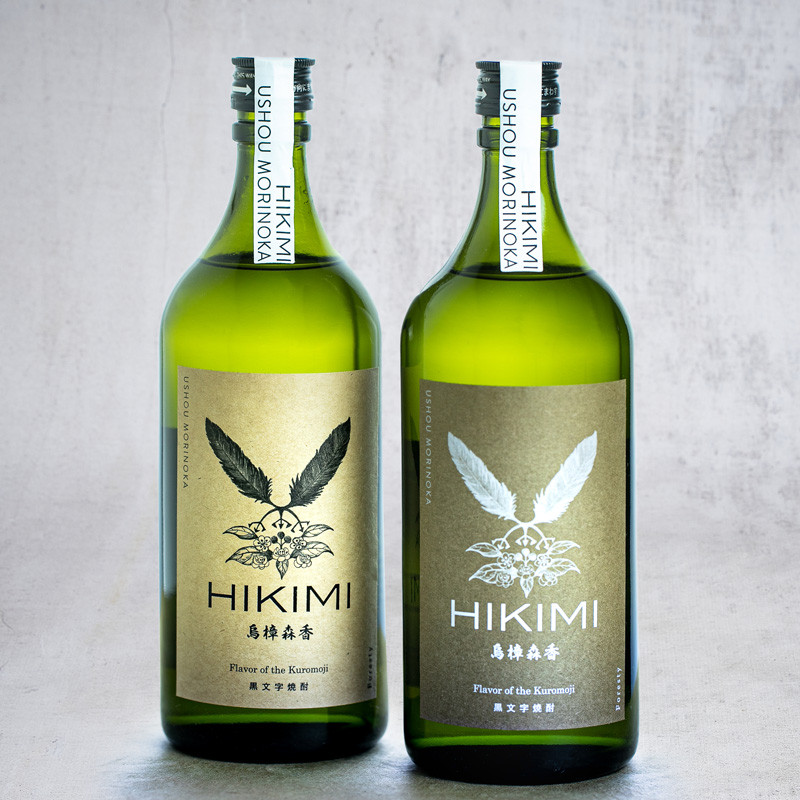
The feathers on the label of the bottle represent the yatagarasu, the incarnation of the sun, and its three legs represent the sky (God), the earth (natural environment) and the human (human).
The flowers and leaves under the wings represent Kuromoji.
The Kuromoji (Lindera Umbellate) is a ddequous large-leaves shrub that grows naturally in the forests of Japan.
Since antiquity, its branches are used for picking picks for tea ceremonies.
It is also known under its vernacular name: Ushou.
Japanese medicine has demonstrated its beneficial effect on gastrointestinal transit. Its leaves and bark have a refreshing scent, which led to its recent use in cooking, in various forms, in Michelin-starred French and Japanese restaurants.
This fresh perfume is due to Linalol, the same substance found in the rosewood, which was once used to make perfume, and is also in abundance in Camellia.
It has been shown that Linalol has relaxing properties, making it a suitable product for making essential oil.
Hikimi, name of a region where horseradish is cultivated since antiquity, is renowned for its natural forests where Kuromoji, Kuromoji Shōchū raw material abounds.
The name Ushou Morinoka, "Sake of the forest", comes from the name of Kuromoji's phytotherapy, "Ushou", and refreshing scent of the forest.