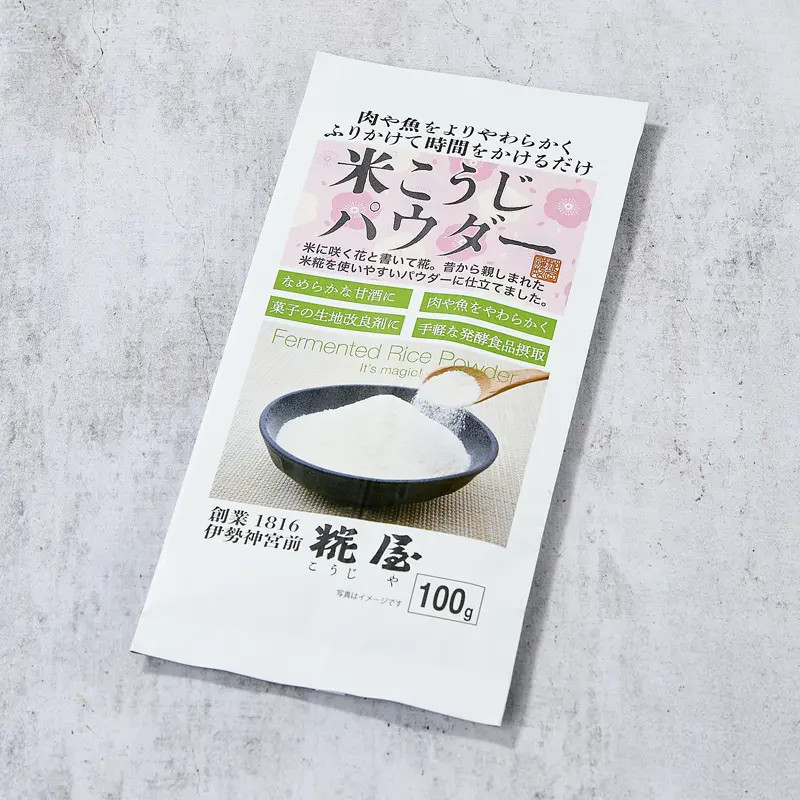
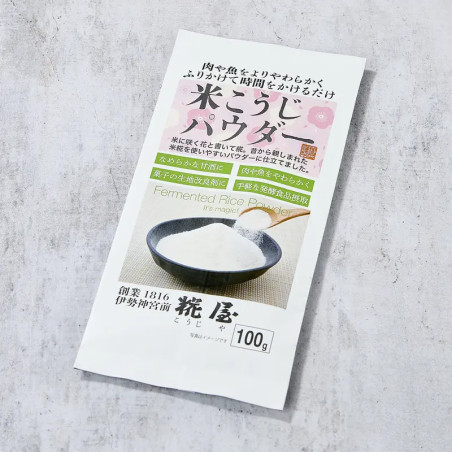
The Kanji character for "Koji" (糀) was born in Japan a long time ago. Composed of a combination of rice (米) and flower characters (花), it comes from the fact that the Koji fermented rice looks like white flowers flourish.
Koji is the starting point for making miso, soy sauce and Amazake. At our craftsman, it is produced in an old ISE brasserie by taking advantage of the purity of soil, climate and cultures of this land, as well as cultivated fermentation techniques over time.
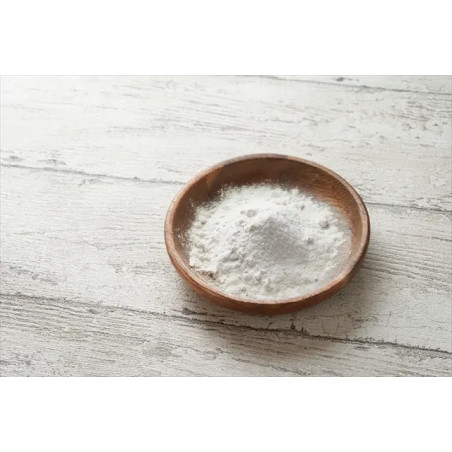
The Koji is dried at low temperatures to make the most of the function of the enzymes. It is traditionally used for the manufacture of Koji Amazake, Shio Koji, Koji Soy Sauce (Shoyu Koji), for the making of the Miso, for Kojizuke (brushing method) and bettarazuke (Daikon radish horny). The rice koji is steamed and seeded with a fermentation culture called Aspergillus Oryzae, Koji Mold, then carefully preserved in hot and wet conditions that promote growth.
During the fermentation process, Koji produces more than 100 types of enzymes. Proteases break down proteins to amino acids, such as glutamate, which gives an intensely tasty taste called "umami". The amylases transform glucose starch (sugar), which gives a sweet taste. This explains why foods containing Koji combine deep flavor, umami, success and this particular aroma due to fermentation.
Enzymes facilitate digestion and reinforce the immune system. Koji brings us nutrients such as B vitamins and minerals and creates a pleasant beneficial flavor for health.
* DDM: Minimum durability date
The DDM an indicative date corresponding to the optimal quality period, it does not present any danger to health after exceeding.