favorite_border
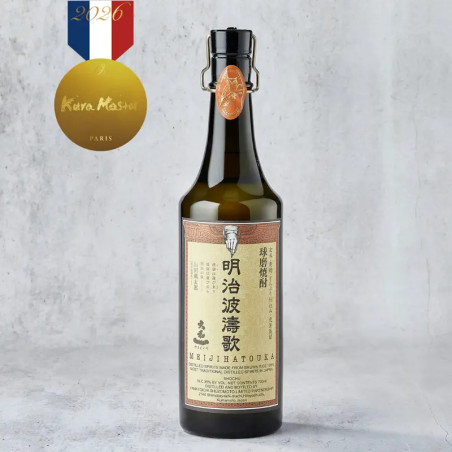
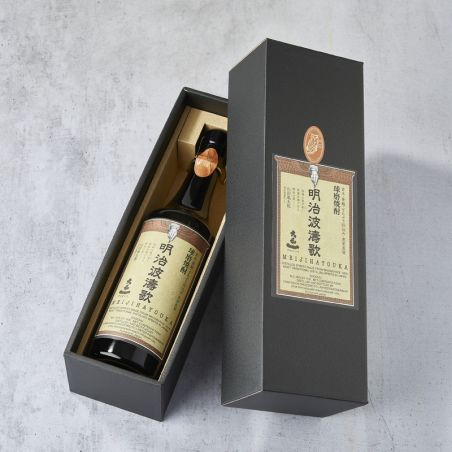
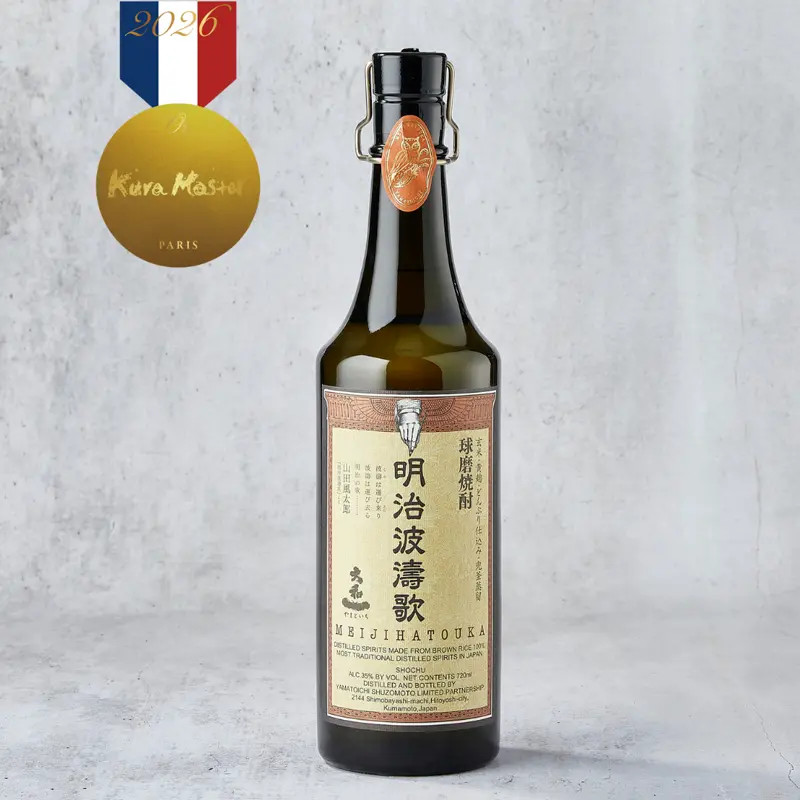
      Shochu with full rice "Meijihatouka" 35%
      Shochu with full rice "Meijihatouka" 35%
      Shochu with full rice "Meijihatouka" 35%
      Shochu with full rice "Meijihatouka" 35%

      Shochu with full rice "Meijihatouka" 35%

      Ref : NISYMT1

      €59.90
      Tax Included
      €83.19 / L

      A shochu produces according to the original methods dating from nearly five centuries!

      Its manufacture was recorded in archives dating from the Meiji era which were found and recovered by our craftsman Yamatoichi.

      The distillery realized this shochu by reproducing the distillation process at Alambic Kabuto, which continued by the Muromachi era (1336-1573) at the Meiji era (1868-1912). The so-called Kabuto-Gama distillation method has been developed from the beginning of the Muromachi period, mid-14th century, until the end of the 19th century. This ancestor of the Alambic holds his name from Kabuto, a warlike helmet. Indeed, the shape of the cooling tray looks like an upholstered headset on the Kama (kettle). A pipe sends steam to the bottom of the still. The Moromi, here of the complete fermented rice, of an old mizuhochikara variety, is preserved inside (this Moromi is formed of the first shikomi and the second shikomi are fermented together for 45 days in winter and 25 days in summer before their distillation).

      Quantity :
      In Stock

      The vapor rises through the kettle that contains the moromi and which is covered with a cap (barrel-shaped) in cedar wood. The steam rises through this Japanese cedar barrel, which helps to add aromas to shochu.

      The cooling water tray located on the top of the wooden cap coiff steam. The cone-shaped tray and tip down (such as Kabuto warlike headset), collects the shochu at its end. The distilled shochu is collected at the end of the tray and flows through a pipe. This shochu is a great, rare, is much more complex to make a tClassic shochu. It is remarkable for its aromatic richness, with very fruity accents, very sweet (candy), on roasted overalls of Mochi and grilled brown.

      The palate is rich, very round, on notes of cereals, roasted touches, sweetness like a good genmaicha, a lactic tip, a rich umami we recommend its tasting hot, 50 ° C, or on the rocks or cut with A little fresh water, in tastings of papper cheeses (blue, roquefort, gorgonzola) of games of game, grilled duck, bourguignon beef ...

      NISYMT1

      Data sheet

      Origin
      Kumamoto, Japan
      Capacity
      720 ml net
      Weight
      72 gr
      Packaging
      Glass bottle
      Ingredients
      Rice mizuhochikara
      Storage
      at room temperature (below 28°C).
      Volume of pure alcohol
      35%
      Kobo/yeast/Kyokai
      kuratsuki kobo
      Palate
      full-bodied, smooth, fruity, roasted accents, hints of cereal and genmaicha, lactic notes, powerful umami.
      Idéal tasting temperature
      Ideally warm, at 50°C or on the rocks, or cut with fresh water.
      Service
      whisky glass or shochu cup
      Category
      Honkaku (honkaku, also known as authentic shochu, is distilled only once and offers very rich aromas and flavor notes)
      Our tip
      blue cheeses, game, duck, simmered dishes (bourguignon, game)
      Ferments
      yellow koji (fruity aromas, for highly aromatic shochu)
      Distillation
      Kabuto-gama atmospheric distillation. Traditional distillation method of boiling at atmospheric pressure allows many of the moromi's components to enter the shochu naturally.
      Maturation
      matured in earthenware jars called “kame”
      Type
      kome shochu, long maturation, 3 to 4 years
      Important
      Distilled from 100% rice
      Recommendation
      EXCESSIVE CONSUMPTION OF ALCOHOL IS DANGEROUS FOR YOUR HEALTH. DRINK WITH MODERATION. CONSUMPTION OF ALCOHOLIC BEVERAGES DURING PREGNANCY, EVEN IN SMALL QUANTITY, CAN HAVE SEVERE CONSEQUENCES FOR THE CHILD’S HEALTH. THE SALE OF ALCOHOL IS FORBIDDEN TO MINORS UNDER AGE 18
      Aromas
      candy-like sweetness, roasted notes of mochi and roasted chestnut.
      Geographical identity
      Kuma Shochu
      Product
      Shōchū
      YAMATOICHI SHUZOYAMATOICHI SHUZO

      Bit of history:

      Distillation began in China, then spread to Korea, Thailand, the Okinawa Archipelago (leading to the production of Awamori distilled spirit) and finally to Kyushu Island, starting with Kagoshima, then Kumamoto 500 years ago, on a 100% rice base (sweet potato shochu only appeared in 1795). Origins of Kumamoto's 100% rice-based shochu lie in the presence of the SAGARA clan in the Hitoyoshi region.

      Kumamoto Prefecture was blessed with excellent, highly fertile land for growing rice. At the time, rice was considered a precious commodity, necessary to feed the people. OnKyushu island, northern clans under control of the Shogun were in constant battle with southern Shimazu clan, and rice was a rare commodity and a prize of war. Segara clan (1193-1868), a samurai clan (made up of daimyo or governors from military classes) originally from Shizuoka, moved to the heart of Kumamoto in 1193, right in the middle of the conflict zone. It took him a century to take control of Hitoyoshi and Kumamoto, and another century to take control of the north and south of Kumamoto Prefecture. The last thing he wanted was to show the land there was fertile enough to grow and harvest rice in abundance.

      Best way to hide surplus rice was to distill it. This gave rise to rice shochu, reputed to be the most precious of all. In 1546, Portuguese Jorge Alvarez informed Portuguese Court a distilled rice alcohol existed in southern Japan, north of Kagoshima. In 1559, name of shochu appeared for the first time in the writings of a temple in the town of ISA, northern Kagoshima Prefecture, on the border with Kumamoto Prefecture. In 1908, writer Katai Tayama learned that an excellent rice shochu was being distilled in Hitoyoshi, and name Kuma Shochu was coined. Throughout Japan, it is said to be the best, so rich is its flavor and aroma, with surprisingly sweet notes. Until the early twentieth century, shochu was made exclusively with "genmai" brown rice. When fermented, genmai rice produces less alcohol than rice from which the husk has been removed. Polished rice produces much more alcohol. This type of rice shochu is no longer produced, as the know-how has disappeared. Yamatoichi has rediscovered the secret.

      Related Products
          (4 reviews)
          from €22.00
              (6 reviews)
              from €22.00
                  (2 reviews)
                  €44.40
                  €61.67 / L
                      Shochu with full rice "Meijihatouka" 35%
                      Shochu with full rice "Meijihatouka" 35%
                      €59.90
                      Tax Included
                      €83.19 / L
                      • Traceability and origin Authenticity and perfect traceability

                        Traceability and origin

                        Authenticity and perfect traceability

                      • Fast Delivery

                        Fast Delivery

                      • Payment 100% secure

                        Payment

                        100% secure

                      • Customer service At your service

                        Customer service

                        At your service

                      Newsletter

                      You may unsubscribe at any moment. For that purpose, please find our contact info in the legal notice.