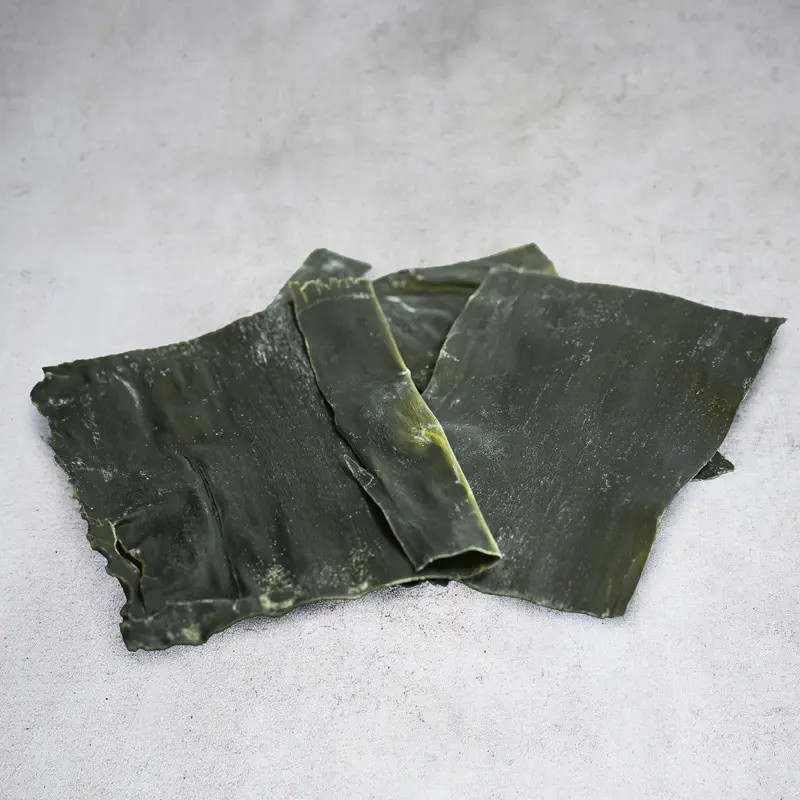
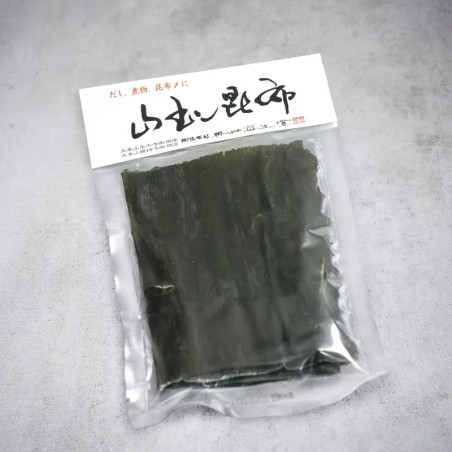
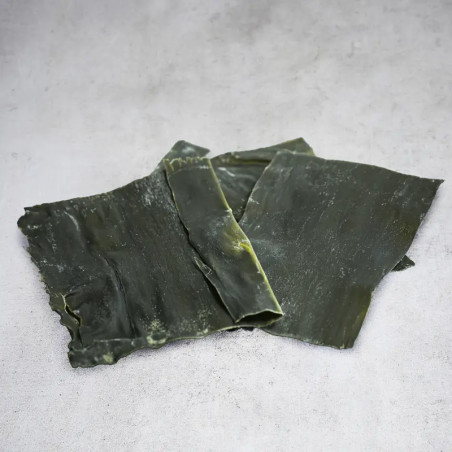
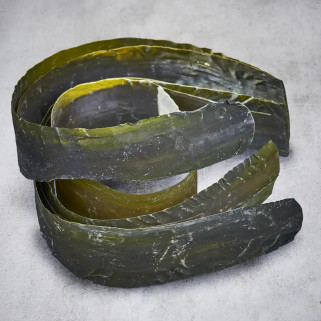
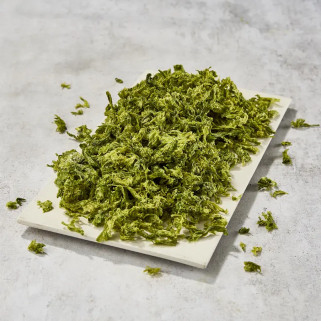
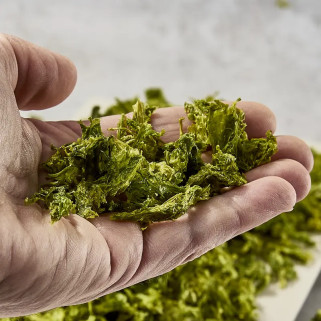
Its shape is wider and thicker than others.
It is used for cooking like Shio-Kombu and TSUO and Tsukudani-Kombu.
It is also privileged to hand in hand from the special forms of Kombu presented at religious events as special offerings.
The kombu proposed here comes from the coast of Donan District, South of Hokkaido Island, a very famous area for its my kombu of very high quality and popular.
Only a few privileged few people have access to which our craftsman, the Okui Kaiseido house.
Our recommendation for making your Dashi:
Soak the Konbu for 24 hours in cold water to soften.
My Kombu's first Dashi, "Ichiban Dashi said, is an almost pure umami broth.
Synergy between Kombu and Katsuobushi produces and strengthens the clear taste of UMAMI. Made from the best ingredients, it has a rich golden color and has no astringency as it is usually the case for the Dashi made from other ingredients.
The clear and subtle aroma of Ichiban Dashi is ideal for preparing boils. The Dashi Ichiban itself is delicious, but it allows to bring out the flavor of other foods without paying too much attention to the other ingredients.
 For a good dashi :
♦ 1800 ml of fresh water
♦ 30 to 40G from my kombu
♦ 50g of Katsuobushi (The blood line must be removed)
1. Put the water and the kombu in a large container and heat over low heat
2. Slowly increase the temperature up to 60 ° C and simmer for 1 hour at this temperature to bring out the maximum umami of the kombu.
3. Remove the kombu and increase the temperature at 85 ° C over high heat.
When the temperature reaches 85 ° C, add the Katsuobushi flakes so that they are completely equipped with water.
4. After waiting about 10 seconds, pass the liquid into a fine mesh cloth and leave it naturally without squeezing Katsuobushi flakes.
 The kombu contains glutamic acid, a type of amino acid with umami. The umami of glutamic acid can be reinforced by the aging of the kombu and it also increases synergistically by combining it with the inosine acid included in the dried bonus. The Kombu is also rich in dietary fiber, calcium and iodine. Its alkaline nature helps maintain balance with acidic foods such as meat and fish.