favorite_border
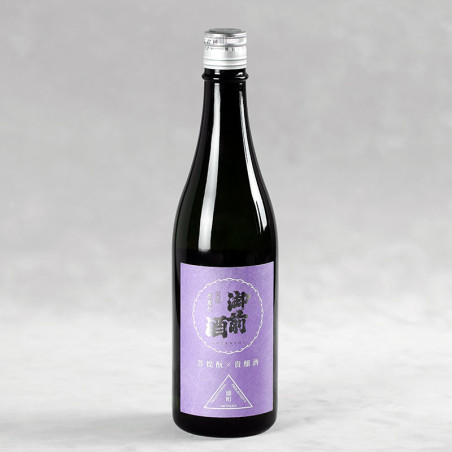
      Sake Gozenshu Kijoshu Hire
      Sake Gozenshu Kijoshu Hire

      Sake Gozenshu Kijoshu Hire

      Ref : NISTSU12

      €43.00
      Tax Included
      €59.72 / L

      The "Kijoshu" is a special saké, some of the brewing water is replaced by saké. The saké is generally made from three main ingredients: rice, rice koji (malted rice) and water.

      For the brewing of the saké, each ingredient is divided into three and added separately in steps to create the starting must which allows fermentation.

      For the kijoshu, we incorporate 2/3 of water and 1/3 of saké. The addition of Sake slows the action of yeasts and therefore the decomposition of rice sugar.

      This results in a saké richer in sugar and more fluffy in the mouth. The more we decrease the share of water replaced by saké, the more the final saké will be sweet.

      Quantity :
      In Stock

      The Tsuji house has been able to brew a Gozenshu Kijoshu saké with a soft sweetness and a clear mouth feeling typical of the Bodaimoto tank foot method.

      Paradoxically, the desired purpose was not to make a dessert saké but a sake particularly suitable for served with foie gras and game dishes. This Kijoshu was tried for the first time during the 2019-2020 season.

      During this brewing season, the Tôji used JunMaishu bodaimoto stored cold as a substitute for brewing water. This time, he used freshly squeezed Junmaian bodaimoto before brewing the Kijoshu, pursuing the fresh shades of the previous brew.

      This Kijoshu has the ability to withstand long-term aging and could book very nice surprise after a custody of a few years. The major aroma is lactic, yogurt dominates on candied accents. The mouth is opulent, caramel, tart tatin, caramelized fruit, fresh acidity.

      Our perfect agreements: This saké will accompany the game dishes (duck, crust, loudly, chip-and-terrine, baked, chocolate desserts, chocolate fruits (banana, banana, pineapple, mango, mature apples ...).

      NISTSU12

      Data sheet

      Origin
      Okayama, Japan
      Brewery
      Tsuji Honten
      Capacity
      720 ml net
      Packaging
      dark bronze bottle
      Ingredients
      omachi rice, sake, malted rice
      Volume of pure alcohol
      15%
      Rice polishing ratio "seimaï-buai"
      65%
      Kobo/yeast/Kyokai
      9
      Acidity
      2.0
      Filtering
      Yabuta. Yabuta filter press is a compressed air system with a horizontal style originally developed by the YABUTA company. Yabuta filter press features superior filtration and dehydration. This system creates no damage to the filtered liquid.
      Appearance
      yellowish
      Palate
      mellow
      Idéal tasting temperature
      +8°C to +10°C or warm +38°C to +40°C
      Service
      white wine glass
      Category
      BODAIMOTO KIJOSHU
      Sake counter value (SMV)
      -20
      Recommendation
      EXCESSIVE CONSUMPTION OF ALCOHOL IS DANGEROUS FOR YOUR HEALTH. DRINK WITH MODERATION. CONSUMPTION OF ALCOHOLIC BEVERAGES DURING PREGNANCY, EVEN IN SMALL QUANTITY, CAN HAVE SEVERE CONSEQUENCES FOR THE CHILD’S HEALTH. THE SALE OF ALCOHOL IS FORBIDDEN TO MINORS UNDER AGE 18
      Excise category
      W200
      Classification
      BODAIMOTO KIJOSHU
      TSUJI HONTEN TSUJI HONTEN

      Katsuyama is located in the Mimasaka region (old name for northern Okayama), long known as "Umasake no Kuni" (literally translated as "the land of beautiful sake"). With its cold climate coupled with fine groundwater and good rice for sake, Katsuyama provides an ideal environment for making sake. Indeed, these regional advantages have helped forge Gozenshu's motto: "Be responsible for making the best sake with local rice, water and genuine local craftsmanship." Over the generations, the philosophy has always inspired brewers to strive to make the best sake without any compromise. Gozenshu sake embodies a clean taste unlike the sake produced in the southern part of Okayama. While southern sake tastes relatively sweet, the crisp taste of Gozenshu is what local drinkers have been asking for, in large part because of the cold winters they have to endure. At Gozenshu, they have been eager to make junmai sake for over four decades, long before the recent junmai fashion emerged. It's safe to say that junmai makes up about 70% of all of their products. In recent years, the brewing has been run by Okayama's first female Tôji, Master Brewer, Maiko Tsuji (7th generation of the family) who inherited the post from her mentor Takumi Harada after his death in 2007 (Japan does not have to date that 20 Tôji women out of 1200 Tôji). Harada was a fine master, famous, who had worked for Gozenshu for over 40 years. With Tsuji at the helm of his team of young brewers, Gozenshu Brewery has been revitalized and continues to dedicate itself to the art of sake making. The Tsuji family was also keen to pursue cultural activities during the Meiji and Showa periods. Since the heads of households at the time were so-called culture lovers, their brewery was visited by famous artists and writers such as Tekkan and Akiko Yosano (author / poet), Saishu Onoe (poet / chirographer), Hekidoto Kawahigashi (poet / essayist) to name a few. Separately, a giant of Japanese literature, Junichiro Tanizaki (also passionate about sake) wrote one of his major novels, The Makioka Sisters, while he was evacuated to Katsuyama during World War II. His temporary residence remains to this day and continues to attract visitors to the city. In the recent past, the list of those who have affectionately visited this brewery includes Tatsuya Naramoto (historian), Yasaburo Ikeda (scholar), Kiyoshi Atsumi (actor) and Rokusuke Ei (lyricist). “Cultural exchange through the best sake” is precisely what the story of Gozenshu consists of. Everything was made possible thanks to the sincere dedication of their ancestors who conveyed the true art of sake making and its culture.
      Finally, it is necessary to remember two major points concerning the Tsuji family: they are at the origin of the rebirth of the Bodaimoto method for the preparation of the starter and Tsuji Honten will be in the coming months the only brewery not to be only make nihonshu from one and the same rice, the omachi. The Bodaimoto method had disappeared 4 centuries ago with the advent of the Kimoto method. In the days of the Bodaïmoto method, sake brewers made their patties all year round, which frequently negatively impacted the stability of the sake. The Kimoto method has favored the manufacture of sake in winter, thus guaranteeing very good stability to the brewed drink. The Bodaimoto Method was rediscovered in 1980, in an ancient Japanese book, "Nihon Sankaimeisan Zue" (Japanese Sake Making Method) unearthed in England by antique dealer Mike Deen, uncle by marriage of the current President of Tsuji Honten.

      Related Products
          €49.90
          €99.80 / L
              €49.90
              €99.80 / L
                  €19.25
                      (2 reviews)
                      €44.40
                      €61.67 / L
                      Gozenshu Sake Kijoshu Hiire  Gozenshu
                      Sake Gozenshu Kijoshu Hire
                      €43.00
                      Tax Included
                      €59.72 / L
                      • Traceability and origin Authenticity and perfect traceability

                        Traceability and origin

                        Authenticity and perfect traceability

                      • Fast Delivery

                        Fast Delivery

                      • Payment 100% secure

                        Payment

                        100% secure

                      • Customer service At your service

                        Customer service

                        At your service

                      Newsletter

                      You may unsubscribe at any moment. For that purpose, please find our contact info in the legal notice.