DDM *: 08/09/2026
Kombu algae are present in many globe countries, particularly in Japan, Russia, China, Tasmanian Islands, Australia, South Africa, in the Scandinavian Peninsula and Canada.
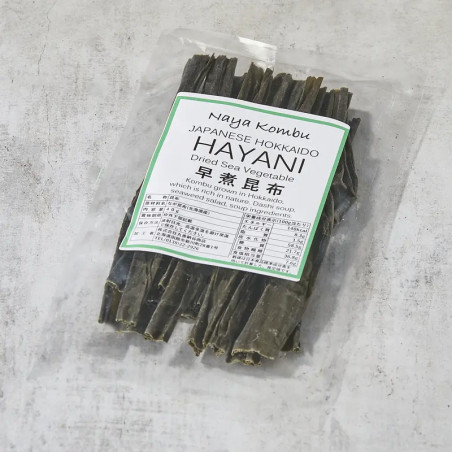
In Japan, most of the kombu is harvested in Hokkaido, accounting for about 90% of total production. The waters of the Arctic Glacial Ocean that derive from Siberia to Hokkaido are rich in minerals and provide an environment that produces delicious kombu.
The equipment used in Japan, to dry the Kombu algae in the sun, meets the most demanding sanitary standards, which makes Japanese Kombu particularly popular around the world. Hokkaido Kombu algae have long been distributed throughout Japan and represent an important commercial issue.
Kombu algae harvested in Hokkaido were, before, transported by boat, moving west along the Japan Sea coast to Osaka, from that time. For this reason, Kombu algae wholesalers and transformers are mainly in or around Osaka.
The route that Kombu took, from Hokkaido to its destination, called the Kombu Road. It extends to China via Okinawa.
Note:
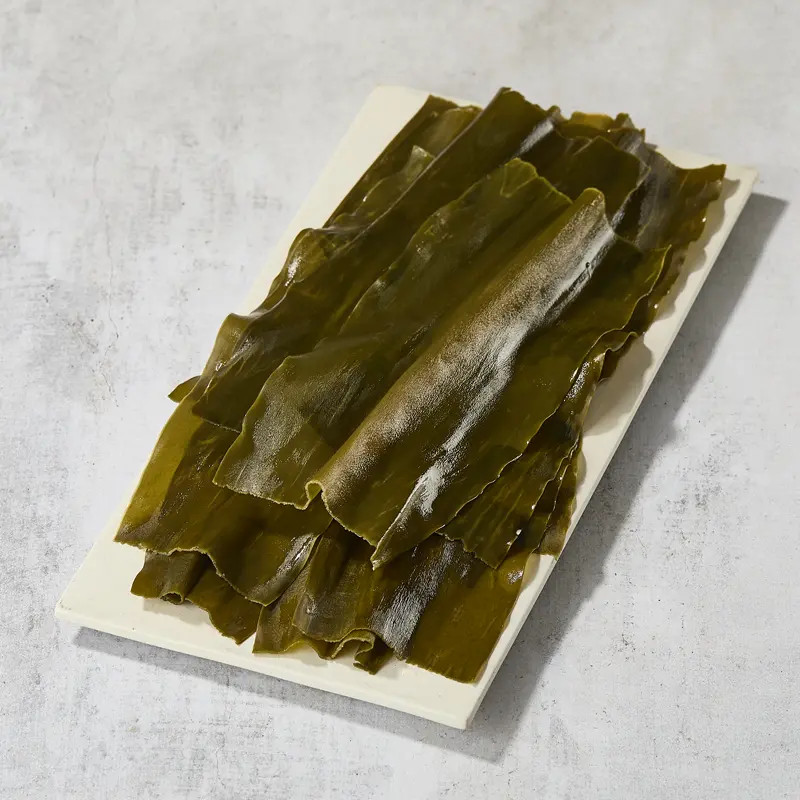
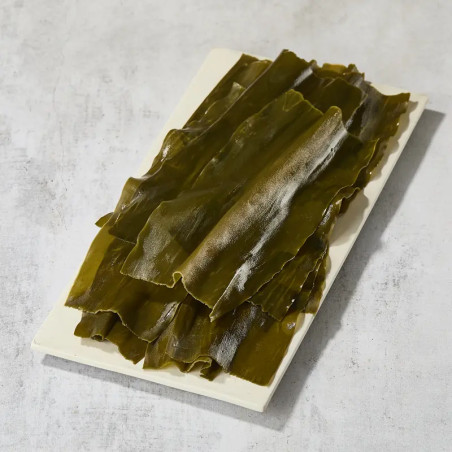
Very often, it can be formed on the surface of Kombu algae or wakame, a whitish powder matter. It is not mildew but "mannitol" contained in algae. It is a type of alcohol sugar naturally present in the algae, and it is the true identity of the white powder that appears on the surface of the kelp.
The mannitol seeps to the surface with moisture during the drying process of the algae and when moisture evaporates, it adheres in the form of a white powder substance. This white powder gives a lot of taste to the Dashis!
* DDM: Minimum durability date
The DDM an indicative date corresponding to the optimal quality period, it does not present any danger to health after exceeding.