The UMAMI, Japanese term designating the flavor and dating back to the early twentieth century, is an important aspect of the wines of Takahiko domain, its philosophy and its sense of the terroir.
Takahiko Soga and her wines are Japanese, and the design of his wines and his project is linked to the tastes and eating habits of the Japanese. Rather than fruits and flowers, SOGA refers to the Dashi, Forest Floors, Mushrooms and Fermetar Notes of the Shoyu, Sake and Miso to describe the flavor flavor and profiles of its wines.
This delicate and tasty aspect of the wines is partly from the fresh, wet, wooded and biodiversity place that produces them, but it firmly believes that these features also emerge from its approach in the cellar.
As of 2019, Yoichi recorded the average annual number of degree-days of growth in northern Burgundy (1366) and again in 2022. In July, before and after flowering, rainfall were less important than usual and the Climate was hot, which led to an ideal harvest volume.
If rainfall was greater in August, at the beginning of the vention, those in September and October were less abundant, which has allowed for an ideal harvest in terms of sugar, color and quantity content.
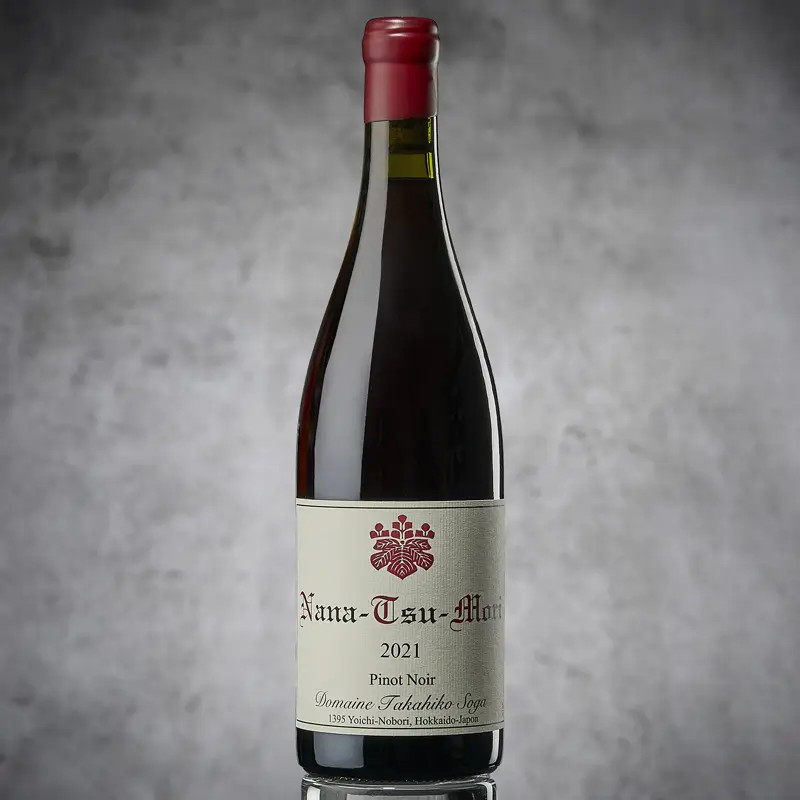
Many people will probably like the 2021 vintage, however the 2022 vintage is the one that best represents the unique style of Takahiko Soga domain. The Nana-Tsu-Mori Pinot Noir is the flagship wine of the Takahiko domain, produced from the vineyard of the domain consisting of 13 clones of Pinot Noir.
Fermented in large neutral vats in an inert resin and aged in French oak barrels (15% new) with 100% whole clusters, it is bottled without gluing or filtering. A very small amount of SO2 is added only when necessary: 10mg / l EN 2020, 0 added EN 2021.
The wine undergoes a long fermentation of 55 days, with a fermentation in whole clusters. No sulphurous acid is used to provide the best conditions with microorganisms (savages) involved in the fermentation process.
Old oak barrels are mainly used for aging, with only 15% new barrels.
It will accompany the pigeonau, a refined beef, not to mention the white meats and the fish in sauce.
It is inevitably predestined for refined Japanese cuisine and umbami ingredients.
Service temperature at the assessment of the sommelier.