favorite_border
      Kombu Tororo Algae
      Kombu Tororo Algae
      Kombu Tororo Algae

      Kombu Tororo Algae

      Ref : NISOKAI11

      €10.35
      Tax Included
      €207.00 / Kg
      Out-of-Stock

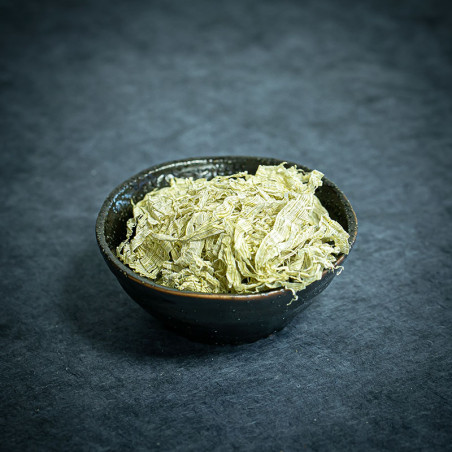
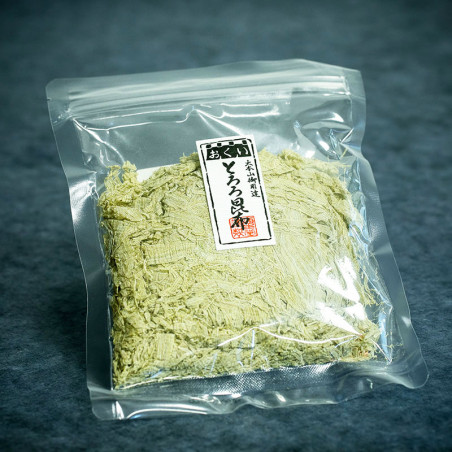
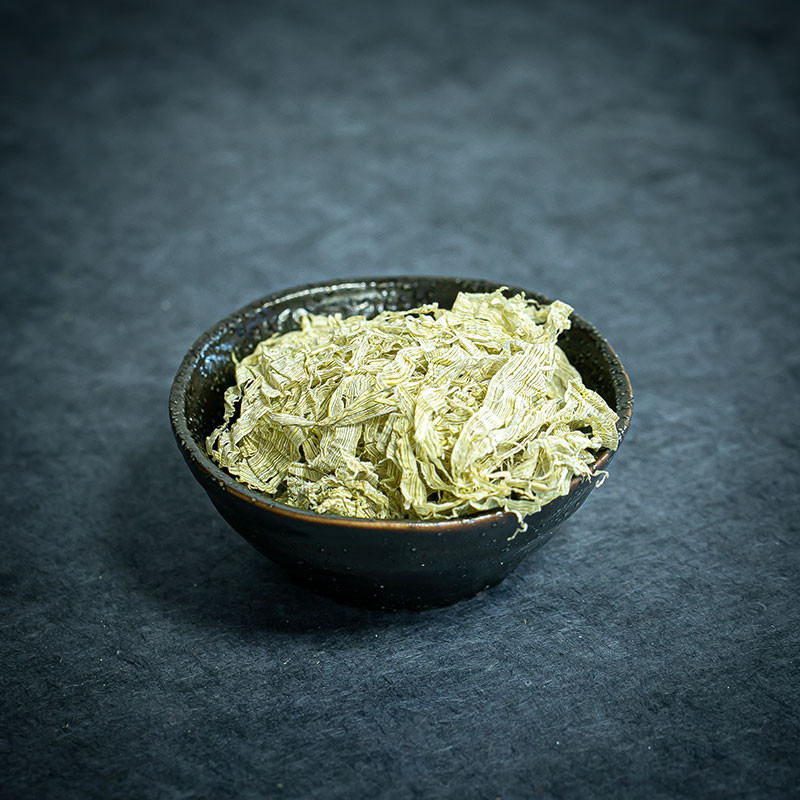
      Tororo alga kombu of the house OKUI KAISEIDO is made from the best Rausu Kombu. The Kombu Rauus has a very flexible fiber and is known for its wide and fine form. When it is soaked in hot water, it gives a sticky and viscous texture as well as a rich umami flavor.

      Quantity :
      No Product available

      Rausu Kombu proposed here comes from the shores of the Shiretoko Peninsula, in the northeastern region of Hokkaido Island and overlooks Okhotsk's Sea, very famous area for its Rausu Kombu. high quality and very popular.
      Only a few privileged few people have access including our craftsman, Okui Kaisiedo house.

      The confection of the Kombu Tororo is totally craft and requires a controlled know-how. Indeed, the Kombu, before plunged into vinegar, then paral and compressed, is very finely planed in long and very fine slats.
      Surface slats, black, are known as Kuro-Tororo and those of the interior, clear, called Shiro-Tororo.
      The smootr and tights, the higher its quality.

      Healthy foodHe is very rich in calcium, iron, minerals and is hypoaloric.

      Our perfect agreements : We recommend it to tasting clear broths that it will perfume, using it to wrap your delicate fish nets (Rouget) cooked and served in light broths, your sashimis shrimp or langoustines (lightweight Linca), in Topping on your broths and soups miso, accompaniment to eggs calves, lining of your onigiris or white rice or okonomiyaki or even some ...

      The kombu contains glutamic acid, a type of amino acid with umami.

      The umami of glutamic acid can be reinforced by the aging of the kombu and it also increases synergistically by combining it with the inosine acid included in the dried bonus.
      The Kombu is also rich in dietary fiber, calcium and iodine. Its alkaline nature helps maintain balance with acidic foods such as meat and fish.

      NISOKAI11

      Data sheet

      Origin
      Rausu, Shiretoko Peninsula, Hokkaido, Japan
      Type
      Kombu
      Weight
      50 g net
      Packaging
      Bag
      Ingredients
      Rausu Kombu (Laminaria japonica Areschoug), vinegar
      Storage
      away from direct light
      in a dry and cool place
      OKUI KAISEIDO OKUI KAISEIDO

      Just like great wines, kombu quality depends on harvesting area, active sea currents in the growing area, relief and rivers near beaches and their alluvial deposits, exposure to the sun... Kombu sought by Okui must be harvested at perfect maturity, from July to September, after at least two years of growth. Seaweed then reaches a length of 2.5 to 3 meters and even 10 meters for the most exceptional specimens. Kombu seaweeds are dried exclusively in the sun until they have a nice dark bronze to black exterior color, while preserving a light interior color.

      OKUI KAISEIDO kombu:

      Rishiri & Rebun Kombu
      Rishiri & Rebun kombu are the kings of kombu and the most expensive in Japan. They are known to have a tough fiber and it is usually difficult to extract the umami. Slowly heated to 60℃ they produce a very clean and rich dashi with a golden color. They are essential ingredients in Kaiseki and Shojin cuisines and are known for their mild flavor.

      Rausu Kombu
      Rausu kombu has a very soft fiber and is known for its broad and thin shape. When soaked in hot water, it gives a slimy, gooey texture and a rich umami flavor. Rausu creates a very richly flavored dashi, with a darker brown color than Rishiri or Makombu dashi. It is well used for Kobujime (raw fish refined by wrapping it in kombu) and Kobumaki (kombu rolls filled with cooked fish).

      Hidaka Kombu
      Hidaka kombu has soft fibers and is usually whole. This whole kombu is used for simmered dishes, Kobumaki (rolled kombu filled with cooked fish) and tsukudani condiments (kombu candied in a mixture of soy sauce, mirin, sake, sugar). It can create a darker brown, less sweet dashi with a strong kombu taste. It is not usually used to make traditional dashi.

      Makombu
      Makombu is a high quality kombu such as Rishiri or Rebun. Its fiber is softer than Rishiri. It is mainly used in the Osaka area, while Rishiri is popular in Kyoto. Makombu dashi has a rich golden color and a mild, sweet flavor. Its shape is wider and thicker than the others. It is used for cooking like shio-kombu and tsuo and tsukudani-kombu. It is also favored for making special forms of kombu by hand and presented at religious events as special offerings.

      Reviews about this product
      Logo Société des Avis Garantis Show attestation

      Reviews subject to control

      0
      1★
      0
      2★
      0
      3★
      0
      4★
      1
      5★
      10/10


      Based on 1 review

      • 5

        Excellent with fish (Translated review)


      Related Products
          (2 reviews)
          from €30.00
          €30.00 / Kg
                      from €320.00
                      Tororo kombu seaweed Seaweeds
                      Kombu Tororo Algae
                      €10.35
                      Tax Included
                      €207.00 / Kg
                      • Traceability and origin Authenticity and perfect traceability

                        Traceability and origin

                        Authenticity and perfect traceability

                      • Fast Delivery

                        Fast Delivery

                      • Payment 100% secure

                        Payment

                        100% secure

                      • Customer service At your service

                        Customer service

                        At your service

                      Newsletter

                      You may unsubscribe at any moment. For that purpose, please find our contact info in the legal notice.