"日 月 jitsugetsu"
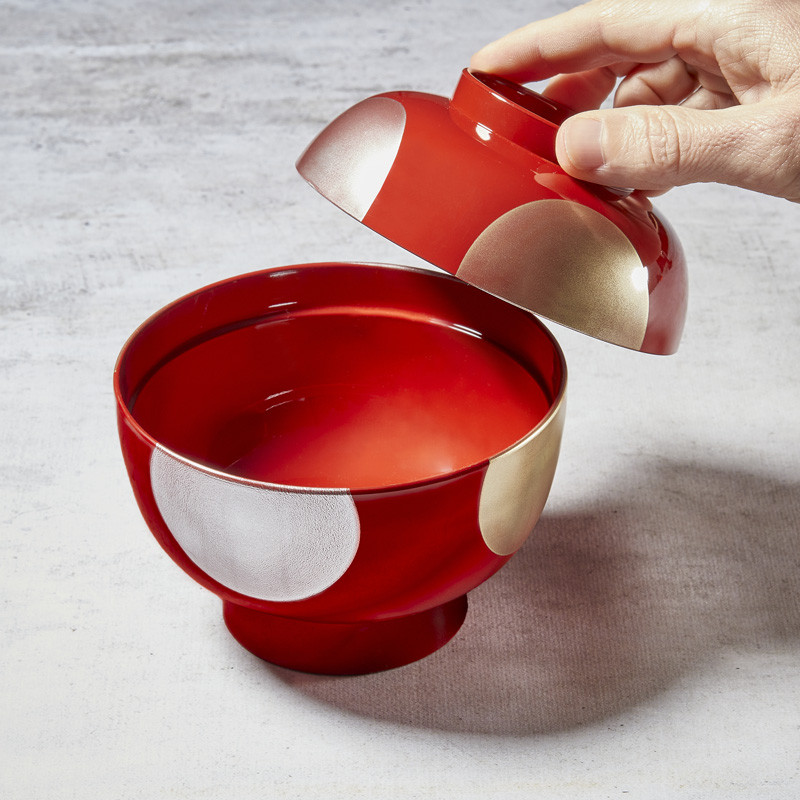
The Kanji "日 Jitsu" means the sun, "月 Getsu" means the moon, and the golden and silver round shapes represent the sun and the moon. This is one of the traditional Japanese motifs and has always been popular. As the sun and the moon are closely associated with our lives, this pattern can symbolize a special day.
Zouni is a traditional Mochi soup, mainly served for the new year Oshogatsu event. This Mochi is a simple Orthodox Mochi, made only glutinous rice. Its texture is hard and thick.
Zōni is written in the Japanese language using two Kanji characters. As the first means "various" or "mixed" and the second "simmer" or "boil", it is thought that the word is derived from the fact that the zōni is to boil together many different foods (like the Mochi, vegetables and seafood) In the past, in the Samurai society, the dish was called "烹雑" (Hōzō), 烹 being also an archaic term to "simmer" or "boil".
It is said that zōni finds its roots in the kitchen of the society of Samurai. It is believed that this is a meal that was cooked during the battles on the ground, boiled with Mochi, vegetables and dry foods, among other ingredients. It is also generally thought that this original meal, first exclusive to the samurai, has finally become a staple of the people of the people. The Zōni was first served as part of a full dinner (Honzen Ryōri), and it is said that it was a considerably important meal for the samurai.
The tradition of eating zōni on the day of the year Date of the end of the period Muromachi (1336-1573). The dish was offered to the gods at a ceremony on the New Year's Eve.
The bowls we offer are made of high quality ABS resin posing the appearance of traditional lacquers.