










What is Yuzu?
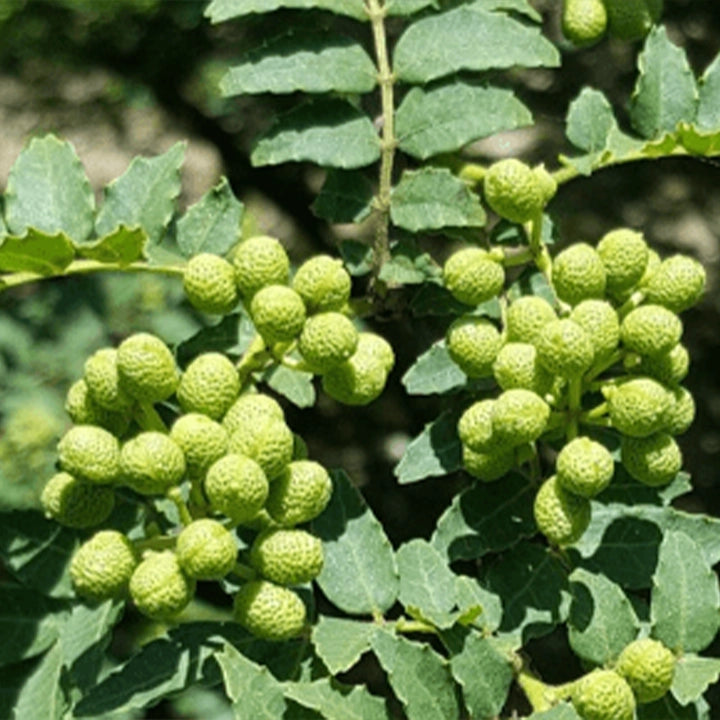
Yuzu is a citrus fruit of the Citrus family (Citrus Junos) from a thorny tree (spines of 2 to 5 cm). A yuzu fruit weighs 120 to 130 g. It has a thick, irregular skin. Its characteristic freshness and aroma are highly prized in Japan, much like the lemon, which is widely used in culinary preparations.
The fruits are ripe and fully yellow.
The skin of the ripe fruit is a deep to golden yellow.
It sometimes displays a few brownish or black, scaly-looking spots. This is a natural physiological reaction of the fruit, characteristic of yuzu. These few unsightly spots do not affect the fruit in any way and are a mark of its authenticity. They are caused by stress on the tree due to weather conditions, soil cultivation, or scarring from the fruit being pierced by the tree's sharp thorns.
History of yuzu
Originally, yuzu was found upstream of the Yangtze River in China and was brought to Japan 1,300 years ago during the Nara period (710–794), via the Korean peninsula. Since the end of Japan's Heian period, it has been used as a medicine. Its juice still serves as a vinegar today. The scientific name "Junos" may derive from "Yu no su" (yuzu vinegar), a term still used in Kôchi.
Yuzu cultivation region
Yuzu is cultivated in Japan, Korea, and China, but Japan is the largest producer and consumer. In Korea, yuzu from the Japanese tree is said to offer less aroma due to its cultivation near the sea, the low daily temperature range, and low rainfall.
Seedling-grown yuzu
In the past, yuzu was grown from planted or naturally occurring seedlings. However, since the first fruits do not appear until fifteen to twenty years later and the tree can reach five to six metres in height, grafting has become widespread as cultivation has expanded, enabling faster and more stable production.
Only 5% of seedling-grown yuzu remains in the oldest production region. In recent years, seedling-grown yuzu juice has been highly prized for its powerful aroma and flavour; however, it remains uncommon due to its variable yield and low extractable juice content (15% compared with 18% in general).
Kôchi yuzu: a 50% market share in Japan
Yuzu is cultivated in prefectures south of Miyagi. However, the main production takes place on the island of Kyushu. Kôchi dominates the Japanese production market with a 50% share.
Kôchi, land of horticulture
Endowed with a mild climate and a favourable geographical location (coastline bordered by the Pacific Ocean and fertile mountains), the prefecture of Kôchi offers many riches. Despite a high level of forestation and little flat land, it benefits from a mild climate in winter.
Kôchi has developed through horticulture, particularly greenhouse market gardening. In recent years, Kôchi has positioned itself as a pioneer in Japan in integrated pest management (IPM), an approach aimed at reducing the excessive use of chemical pesticides by reintroducing predators of harmful insects.
The fruit cultivation method, such as that used for yuzu, also applies to the Tosa pomelo, for example, which holds a high market share in Japan (it is worth noting that yuzu production accounts for 50%).
Evolution of cultivated area and production of Kôchi yuzu
The cultivated area of yuzu and its production in Kôchi are growing faster than in other prefectures, thanks to the particular appreciation of its yuzu and the increased demand from Japan and abroad.
Why did Kôchi become the largest yuzu production region?
It is not known exactly when yuzu cultivation began in Kôchi. However, it has long been known that the climate is conducive to yuzu cultivation, thanks to the presence of wild yuzu in the mountains of Kôchi. Since 1960, with the rise in national demand for yuzu, many production areas have appeared in the mountains of Kôchi.
The mountainous region of Kôchi, where rainfall is abundant and sunshine limited, is ideal for cultivating yuzu, which is highly resistant to cold. The large temperature range of the mountain climate enhances its aroma. This is why Kôchi yuzu, so appreciated and renowned, has become a speciality of horticultural production.
The great renown of Kôchi yuzu in Japan
20% of yuzu production in Kôchi is shipped to the domestic market as fresh fruit. The remaining 80% is used for juice in extraction factories. It is sold to food manufacturing companies for ponzu (vinegar or condiment), beverages, or processed in factories at the production sites to create a variety of products. Producers strive to modernise their extraction and manufacturing equipment, improve the quality of ingredients and products, and implement systematic hygiene controls to earn the trust of their customers.
Annual production and sales of Kôchi yuzu
From yuzu grown under cover in April to December yuzu, which sees a peak in sales during the festive season around the winter solstice and through to March of the following year, yuzu is delivered all year round — something unique in Japan and highly valued by the market.
Yuzu cultivation techniques in Kôchi
Yuzu varieties
Among the yuzu varieties, there is the "Tadanishiki", a seedless yuzu. But in Kôchi, superior varieties are selected from yuzu grown from seedlings cultivated in several production areas, such as the "Nagano-kei", "Kumon-kei", or "Kiyoto-kei" varieties.
Yuzu cultivation management
Among all citrus fruits, yuzu has the most variable yield. As a result, pruning and harvesting the fruit become particularly important tasks. The fruit must also be protected from harmful insects. Producers are responsible for the correct use of pesticides and record production data in order to maintain a stable and healthy output. Furthermore, cultivation intended for processing, such as seedling-grown yuzu, is based on pruning and fertilisation without pesticides. Some producers use other cultivation methods, such as organic farming.
Harvest
Green yuzu grown under glass is harvested between April and June, open-field green yuzu between July and October, and yellow yuzu between late October and late December. After harvesting, the yuzu is sorted for use as fresh fruit or for its juice and dispatched very quickly.
Yield
For open-field cultivation, it is possible to harvest between 15 and 20 kg of fruit (approximately 150 pieces) per tree, i.e. Between 1.5 and 2 tonnes per 1,000 m² (100 trees). Nevertheless, the harvest can vary from one year to the next, particularly for old seedling-grown trees. Since the yield is not stable, scarcity increases its value.
Juice extraction
The juice extracted from a fruit generally represents 18 to 20% of the total weight of the fruit. However, for yuzu grown from seedlings, the fruit is small and the extraction rate is low (15%), meaning it is only possible to obtain 2 to 3 litres of yuzu juice per tree.
Nutritional components of yuzu
|
Main components |
Quantity per 100 g |
Beneficial effects of the component |
|
Dietary fibre |
Skin: 690 mg Juice: 400 mg |
Yuzu is rich in dietary fibre, and particularly in pectin. Dietary fibre stimulates intestinal contractions, slows the absorption of glucose, and helps reduce cholesterol and blood sugar levels. |
|
Potassium |
Skin: 140 mg Juice: 210 mg |
Potassium helps maintain ideal ionic balance and cellular activation. |
|
Vitamin C |
Skin: 150 mg Juice: 40 mg |
Vitamin C strengthens immunity and the body's defences against viral diseases. |
|
Essential oils |
|
The essential oils such as pinene, limonene, and citral contained in yuzu peel stimulate blood flow and produce a heat-retention effect. In former times, it was recommended to "take a yuzu bath at the winter solstice" for relaxation and the prevention of colds. |
Uses of yuzu
|
Type |
Parts used |
Examples of uses |
|
Yellow yuzu |
Fruit (zest) |
Condiments (yuzu chilli), yuzu miso, yuzu tea (marmalade), liqueurs, cakes, cosmetic products, bath salts. |
|
Yellow yuzu |
Juice |
Compound vinegar (ponzu), non-alcoholic beverages, liqueurs, cakes. |
|
Yellow yuzu |
Seeds |
Cosmetic products, oils, dietary foods. |
|
Green yuzu |
Fruit (zest) |
Condiments (yuzu chilli), pickled yuzu, cakes (yuzu-flavoured). |
|
Green yuzu |
Juice |
Compound vinegar (ponzu). |
Yuzu is used in cooking for a wide variety of preparations. It can be incorporated into sauces, such as vinaigrette, or used in salads, grilled fish, tofu, or barbecue dishes. It can be used in condiments (salt, pepper), sushi vinegar, cakes, alcoholic or non-alcoholic beverages.
It can also replace lemon on oysters, carpaccios, ceviche, or tartares.
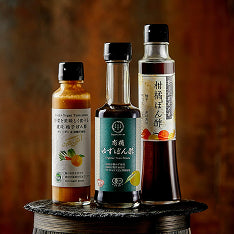
Yuzu is the base of the Japanese condiments Yuzu Ponzu and Yuzu Kosho.
Its magnificent fragrance is also used in the making of lotions, soaps, and essential oils.
What does yuzu taste like?
The taste of yuzu is unique — very acidic and fruity. Its flavour sits somewhere between lime, mandarin, and grapefruit, yet it remains a citrus fruit with a very characteristic, distinctive, and typical taste that must above all be experienced first-hand.
What are the health benefits of yuzu?
Yuzu is rich in vitamin C, which helps strengthen the immune system, and in antioxidants, which combat cell ageing. Low in calories, it is a great ally for a healthy diet and a wonderfully flavoursome ingredient in cooking.
Where to find yuzu?
Every year at the end of the year, your Japanese grocery Nishikidôri offers you fresh yuzu direct from Japan.
What is yuzu sauce?
Yuzu sauce is Yuzu Ponzu, a Japanese sauce highly prized in Japan and rich in umami. It is composed of soy sauce, yuzu juice, kombu seaweed, dried bonito, mirin, and vinegar.
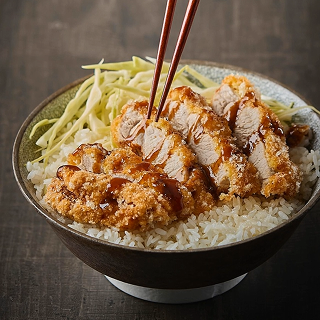
Very easy to use, it perfectly seasons sashimi, sushi, nabe, raw vegetable salads, tempura, gyoza, hot soups, grilled fish, carpaccios, tartares, ceviche…


