











Saga Bay seen from above, with its nori seaweed farms.
The region is emblematic of nori cultivation, a seaweed widely used in Japanese cuisine. This region accounts for 20% of Japan's production, or even 40% when including Fukuoka, Kumamoto and Nagasaki.
Nori seaweed cultivation in Saga Bay
Saga Bay is surrounded by mountains whose alluvial deposits and rivers flow into the sea. The richness of the mineral input generated gave rise, at the beginning of the twentieth century, to the cultivation of nori seaweed.
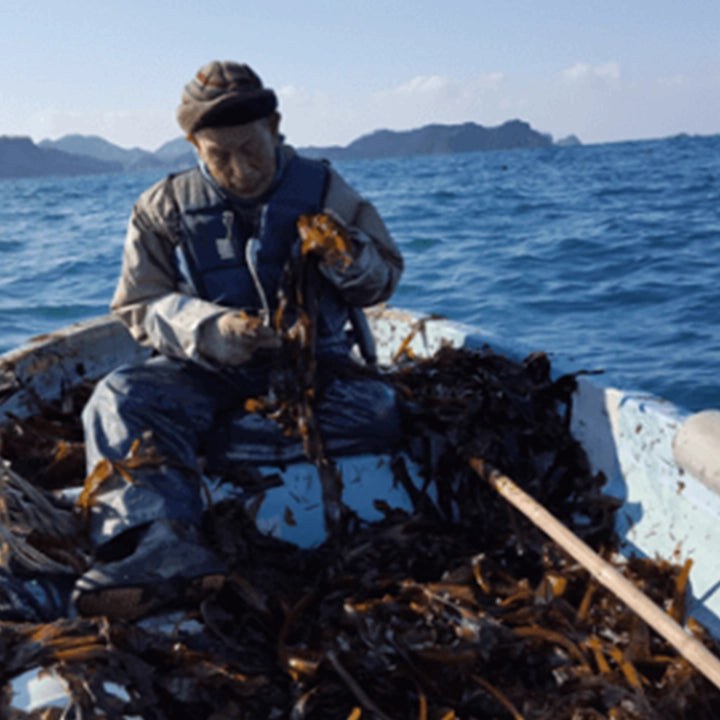
This cultivation is a seasonal supplement for many fishermen and farmers. The seaweed is seeded from September for a harvest that takes place from mid-November through to the beginning of March. Harvests take place at high tide, which alone allows the seaweed to be collected. The fishermen's labour requires daily monitoring to determine the right moment for harvesting.

Nori seaweed from the Ariake Sea on their growing frames.
The nori, at an optimal average length of 25 cm, can be harvested up to 10 times per season in order to guarantee its flavour, aroma, and tenderness.
A total of 850 fishermen share the nori beds of Saga Bay, covering a total area of 9,300 hectares and some 30,000 concessions. Each concession spans 5 rows, 1.50 metres wide and 36 metres long.
The nori is harvested before dawn, when temperatures are cool and wind and swell conditions are favourable.
My discovery of the nori concessions
I visited these offshore concessions and was able to taste fresh nori seaweed directly from the frames.
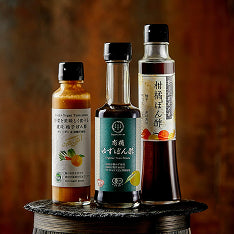
What a surprise: a very pleasant, light salinity, not at all aggressive. It is the cohabitation of freshwater currents from the surrounding mountains with marine saline currents that gives these characteristic, vegetal notes to the highly reputed nori from Saga. The palate is long, pleasant, and fresh, with notes of cucumber skin. I personally enjoy it garnished with a light ponzu (soy sauce, rice vinegar, yuzu or sudachi citrus juice).
It is impressive to see with what energy and success the inhabitants of this coastline have managed to make the most of the sea's resources in an area where agriculture is also flourishing. The waters of Saga Bay are also home to a surprising fish, the mutsugoro, easily recognisable by its two upper limbs, which are legs rather than fins.
Find the entire selection of nori seaweed in our Nishikidori online shop.


