









What is sansho?
This small berry is inseparable from one of the jewels of Japanese gastronomy, the famous grilled eel "Unagi", coated in its sweet sauce and delicately placed on a bed of rice with a perfect shine and texture, as only the Japanese know how to prepare it. The shell of the still-green, dried berry is ground and used to garnish Kabayaki, or Unagi teriyaki eel.
Sansho powder is used to enhance this dish, by toning down the sweetness and helping to maintain a good feeling of fullness. Sansho is also the main ingredient in the Shichimi spice blend, meaning "seven flavours" in Japanese, used to season Yakitori, Soba, Udon…

Ground sansho, with flavours of almost mentholated lemongrass.
The pharmaceutical virtues of sansho
In addition to its use as a condiment in everyday cooking, sansho is also used in large quantities by the medical and cosmetic industry for its pharmaceutical properties. It has been part of the medicines used in Japan since ancient times. Its active ingredients include polyphenol, sanshool and shansho amid. The polyphenol in sansho has an antioxidant effect. It is said to help prevent cancer, heart disease and impaired cerebral blood flow, and to improve blood circulation. Sanshool activates the internal organs and improves digestion. The action of sanshool as a fat burner is one of the reasons for sansho's popularity as a dietary and slimming supplement.
Discovering the finest sansho in the world
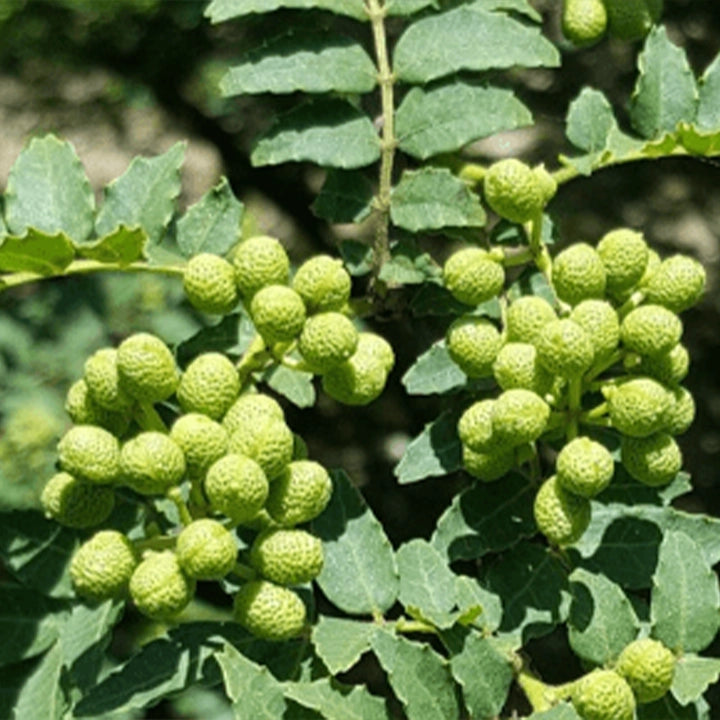
It is in the heart of Wakayama Prefecture that I discovered, without a doubt, the finest sansho in the world. I am particularly fond of grape sansho. The berries grow on the branches of this small tree like a bunch of grapes.
The Sansho flower, which blooms from late April through to the beginning of May, is served in high-class restaurants. Its refreshing minty fragrance is one of the season's great delights.
The harvest of green berries (my favourites, as they are very fresh and very citrusy, with intensely spiced and electric notes that can sometimes be almost numbing on the tip of the tongue) takes place in May, over a single week. Summer is the most intense period of activity for Sansho producers. The harvest is mostly carried out before the seeds begin to ripen on the tree.

The harvest of sansho berries.
What is incredible is that 3 years ago, production was very seriously threatened, due to a lack of consumption by the Japanese themselves. The product was falling into disuse and attracted little attention from younger generations.
My supplier, Kaneichi, then asked me to give a testimonial on a widely watched programme broadcast on the NHK XXX television channel, about the interest and passion that sansho aroused in Europe. Indeed, it was one of the most widely used products by our artisan food trade clients. This contributed greatly to reviving Kaneichi, which had been threatened with closure.
The planting of sansho trees in Wakayama
The great-grandfather of Mrs Yamamoto (3rd generation to head the Kaneishi house), Katsunosuke Yamamoto, spread the sansho trade throughout Wakayama Prefecture in the 19th century. His homeland, Wakayama Prefecture, with its mountains and hills, was not conducive to growing these berries. However, Katsunosuke San found that it was good to plant sansho trees there.
He shared young shansho seedlings with less privileged farmers who only had a few arable plots of land. He showed them how to use knives to achieve good yields, even in a difficult environment such as theirs. He committed to buying the entire production of dried sansho berries in order to supply pharmaceutical companies that subsequently became giant corporations, such as Takeda and Shionogi.

A Sansho tree
The yield and quality of Wakayama sansho quickly earned an established reputation at national level. Today, Wakayama produces 300 tonnes of Sansho per year, accounting for 80% of national production.

Sansho trees on the edge of a rice paddy
The Kaneichi house
The name Kaneichi is made up of two parts, "kane" and "ichi". "Kane" comes from a carpenter's tool used to correct angles: it therefore conveys the idea of integrity in trade, and "ichi" means "the first", signifying that honesty is of the utmost importance.
The company's philosophy since its founding? "If one does not protect oneself against the rain, it will rain."
The founder of Kaneichi explains: "Rain is not predictable. If it rains, we cannot work even if we have an urgent job to do, which causes inconvenience to our clients, and as a result we lose their trust. The most important thing for a merchant is to establish, and then maintain, trust. If you lose it, it means the death of the business. You must always be prepared for rain, plan well in advance and work efficiently, so as not to cause inconvenience to clients."
Sansho in cooking
Sansho is truly a unique spice. It enhances meat and fish tartares, mayonnaises, grilled fish, chocolate, mango, pears… And it stimulates the appetite!
Find sansho berries in the Nishikidori shop.


