








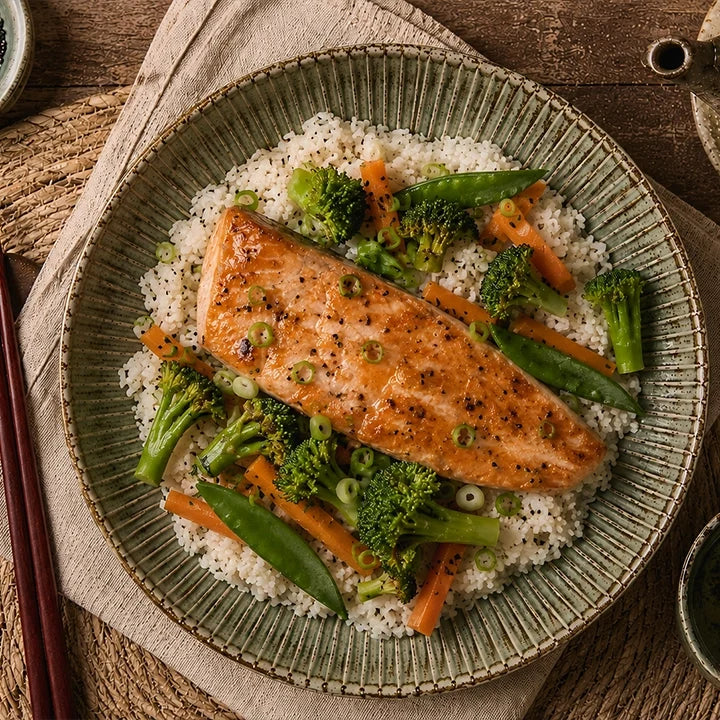

Among the greatest traditional Japanese recipes, few preparations offer such a spectacular result on the palate as miso-marinated salmon, authentically called Saikyo Yaki. Made world-famous under the name "Black Cod" by the greatest Michelin-starred chefs, this dish elevates the seafood through an incomparable interplay of textures and flavours. The flesh of the fish becomes incredibly tender, almost silky, while the exterior is adorned with a caramelised lacquer, rich and deeply umami. Ideally paired with a simple bowl of white rice and a traditional miso soup, this masterpiece of Japanese culinary art is surprisingly easy to recreate at home. The secret lies not in a complex cooking technique, but in the absolute excellence of the ingredients chosen for the marinade and in mastering the resting time.
What is the Saikyo Yaki technique?
The Saikyo Yaki technique has its noble origins in the ancient imperial capital, Kyoto. Located far from the coast, the city historically struggled to source fresh fish. To overcome this preservation problem, local artisans had the ingenious idea of coating the fillets in the region's miso: Saikyo Miso.
Saikyo Yaki is therefore not a simple surface marinade. It is a fascinating chemical process. By resting in a white miso paste rich in natural sugar and enzymes, the flesh of the fish undergoes a gentle cold cooking. The paste will softly draw out the excess water and strong odours from the salmon, replacing them with its own amino acids. The result is an extreme concentration of flavour (umami) and a delicate firming of the fish's texture, which will then literally melt under the heat of the oven.
Ingredients for the gentle marinade (for 4 fillets)
To achieve this characteristic caramelisation, the balance of the marinade (also called "Miso-doko") must be perfect. You will need:
- 4 large, fresh, thick salmon fillets (boneless, ideally with the skin on)
- 4 generous tablespoons of Shiro Miso (white miso)
- 2 tablespoons of real mirin: ref NISKOKO6 or NISKOKO11 or NISMIKM1
- 2 tablespoons of sake: ref NISKING1 or NISYSB
- 1 tablespoon of cane sugar (optional if your mirin is of excellent quality)
- A generous pinch of fine salt (for preliminary salting)
[Chef's Warning: Watch the salt!]
It is recommended not to use red miso (Aka Miso) for this recipe. White miso (Shiro Miso) has a very low salt content (around 5%) and a high sugar content derived from rice. Using a dark, salty miso would turn your fish into a completely inedible dish due to its excessive sodium content.
Step-by-step preparation and cooking
The success of this dish depends on the care with which you follow these steps, particularly the cleaning before cooking, which is often omitted in westernised recipes.
Salting: Sprinkle a generous pinch of salt evenly over both sides of your salmon fillets. Leave to rest at room temperature for 20 minutes. The salt will draw moisture to the surface of the fish, thus eliminating any unpleasant odours.
Cleaning: Wipe the fillets very thoroughly with kitchen paper to remove all traces of moisture and salt.
Preparing the marinade: In a saucepan, pour the mirin and cooking sake. Bring to the boil for a few seconds to allow the alcohol to evaporate. Off the heat, stir in the sugar then the white miso. Mix until you obtain a smooth and glossy paste. Leave to cool completely.
The resting time (Miso-doko): In an airtight container or freezer bag, coat each salmon fillet with this marinade. Make sure the fish is completely covered. Refrigerate for a minimum of 24 hours (up to 3 days for an extremely pronounced flavour).
The secret to cooking: Remove the salmon from the refrigerator. Crucial step: wipe off the marinade thoroughly with kitchen paper. Do not rinse with water under any circumstances, but do remove all visible paste. Miso, which is rich in sugar, burns extremely quickly during cooking.
The caramelisation: Place the fillets on a baking tray lined with baking paper. Place under the grill of your oven (or at 200 degrees) for 8 to 12 minutes, watching constantly. The salmon should cook through while developing a dark, caramelised glaze on the surface.
Food & Sake Pairings: What to drink with this dish?
[Sommelier's Tip]
The aromatic richness of Saikyo Yaki, combining the natural fat of the salmon with the complex sweetness of white miso, calls for a characterful accompaniment. Forget overly dry white wines that would be overwhelmed by the sweetness of the marinade. Opt for a Junmai sake (pure rice), served slightly chilled or at room temperature. Its lactic acidity will cut through the fattiness of the fish, while its cereal notes will harmonise perfectly with the fermented aromas of the miso.
Frequently Asked Questions (FAQ)
Can red miso be used?
No, it is strongly inadvisable. Red miso undergoes a long fermentation process making it far too salty and robust. The salmon would absorb too much salt. The Saikyo technique requires the mildness and high koji (rice sugar) content of white miso.
How long to marinate?
The ideal time is between 24 and 48 hours. However, to obtain a very firm texture and an extremely pronounced flavour, typical of the ancient Kyoto preservation method, you can leave it to marinate for up to 3 days under vacuum in the refrigerator.
Should the fish be rinsed?
Absolutely not. Rinsing the salmon with water would remove the umami flavours acquired during marinating. You should only wipe off the excess paste with dry kitchen paper to prevent the surface from burning under the grill.
Which other fish does the Saikyo Yaki marinade work with?
This method is extraordinary with all fatty, flaky fish. Cod (and particularly Black Cod or Sablefish) is the great classic. It also elevates mackerel (Saba), yellowtail (Hamachi), or even meats such as pork.
Can salmon be frozen in its marinade?
Yes, it is an excellent organisational technique. Coat the fresh fish with the marinade, place it in a tightly sealed freezer bag and put it in the freezer. The marinade will protect the flesh from freezer burn. Leave to thaw slowly in the refrigerator for 24 hours before cooking.
How to cook miso salmon without burning it?
The secret is the prior removal of the miso paste. If your grill is too hot and the fish browns too quickly before being cooked through, loosely cover it with a sheet of aluminium foil towards the end of cooking to protect it from direct heat.
Should the skin be removed from the salmon before marinating?
No, it is recommended to keep the skin on. It will not only help the fillet hold together during handling and cooking, but it will also become deliciously crispy and caramelised under the grill.


