











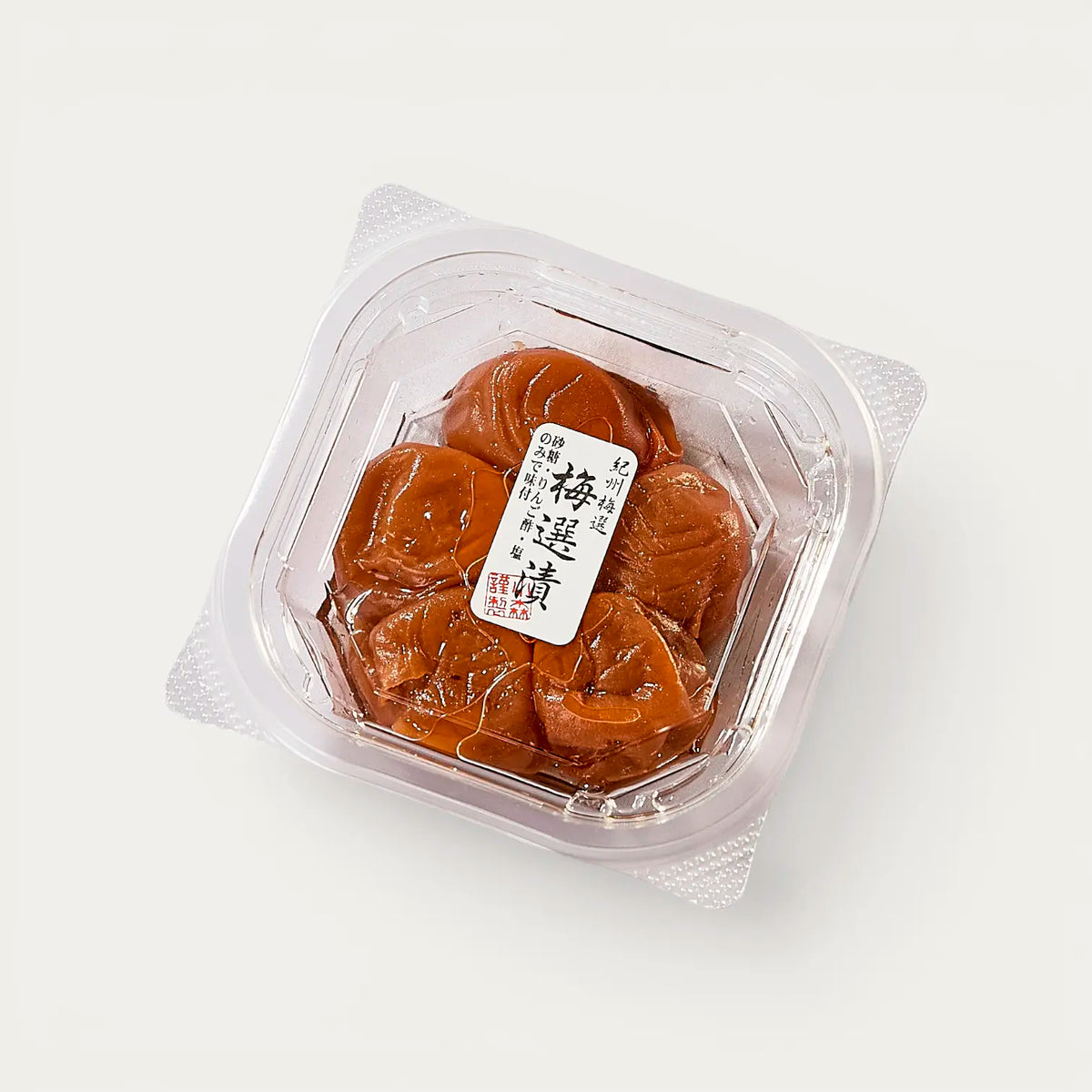

In short: umeboshi is a Japanese plum that is salted and then sun-dried, with a very sour, very salty taste. Eat it in small quantities: one plum on a bowl of rice, in the centre of an onigiri, or mashed into a paste to give a sauce a lift.
In Japan, this little plum has accompanied rice for centuries, in bento boxes and at breakfast. Its flavour can be surprising at first, but it soon becomes a favourite way to liven up a simple dish. Here is where it comes from, how to taste it, which form to buy and our ideas for cooking with it.
Where does the Japanese salted plum come from?
It is the fruit of the ume tree, a close relative of the apricot, picked while still green in early summer. The fruits are salted for several weeks, then dried in the sun for three days and three nights before being left to rest in their brine again. Shiso leaves added to the brine often turn them red. The name says it all: ume means plum and boshi means ‘dried’.
The Kishu region in Wakayama Prefecture is best known for its plump ume, particularly the Nanko variety. Traditional plums are very salty; milder versions, sweetened with honey or made with less salt, are also popular.

What does it taste like?
Very sour and very salty, with a fruity note reminiscent of apricot. Its flesh is soft and comes away easily from the stone. If you are trying it for the first time, have it with plain rice: the rice softens its intensity and brings out its aroma. The milder honey varieties are a good place to start.
Whole plum, paste or flakes: which form should you choose?
| Form | Use | Suggested serving |
|---|---|---|
| Whole plum | on rice, in an onigiri, in ochazuke | 1 plum per bowl |
| Paste (neriume) | sauces, dressings, marinades, toast | 1 teaspoon |
| Flakes | a seasoning to sprinkle over rice, vegetables or fish | 1 pinch |
Explore our umeboshi plums, neriume plum paste, plum flakes and the full range of ume plums.
How can you use it in cooking?
- On rice: a plum placed in the centre of a bowl of white rice makes a hinomaru bentō, a reference to the Japanese flag.
- In an onigiri: it is the most traditional filling. See our onigiri recipe.
- In ochazuke: rice topped with hot green tea or dashi and a mashed plum.
- In a dressing: a spoonful of paste in a vinaigrette with sesame oil.
- On fish: spread a thin layer over a fillet before grilling.
- With chicken: a few chopped plums and shiso leaves with a poached chicken breast, a Japanese summer classic.
Umeboshi, umeshu, umezu: what is the difference?
All three come from the same fruit. Umeboshi is the salted, dried plum. Umeshu is a liqueur made by steeping ume plums in alcohol with sugar. Ume vinegar, or umezu, is the brine collected during the making of salted plums: sour and salty, it seasons vegetables and colours pickles.
Frequently asked questions
How do you eat umeboshi?
In small quantities, with rice: one whole plum on a bowl of rice, or in an onigiri.
Why are these plums red?
Because red shiso leaves are added to the brine.
How should you store them?
Keep them at room temperature in their sealed jar; the salt preserves them. Once opened, keep them refrigerated.
Should you remove the stone?
Yes, remove it before eating or chopping the plum. In Japan, people sometimes keep it in their mouth to savour its flavour to the very end.
Try it for yourself
Start with one plum on a bowl of hot rice: it is the simplest, most Japanese way to discover its flavour.


