









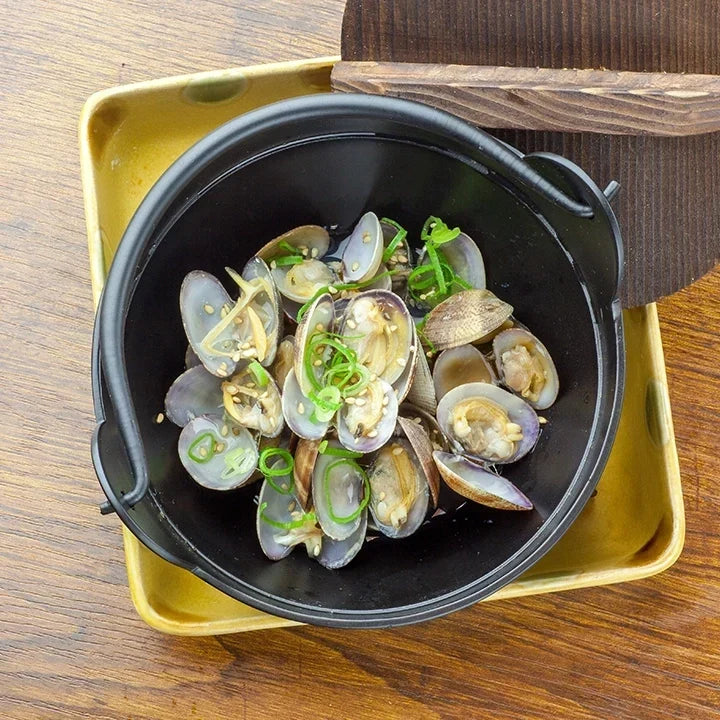

Sake-steamed clams (sakamushi): the authentic Japanese recipe
Ingredients
for 2 people
- 500 g fresh clams (asari)
- 100 ml cooking sake
- 1 clove garlic, minced
- 10 g butter
- Optional: 1 tsp dashi
- 1 tsp soy sauce and sliced spring onion, for garnish
In brief — sakamushi is clams steamed in sake, flavoured with garlic and butter. Purge the shellfish for 30 minutes, then cook them covered with the sake for 4 to 6 minutes, until they open. Finish with a drizzle of soy sauce and spring onion.
Sakamushi — literally "steamed in sake" — is a great classic of izakaya, those Japanese gastropubs. The clams open gently in a broth fragrant with sake, lifted with garlic and a knob of butter. It is quick, spectacular at the table, and beautifully showcases the brininess of the shellfish.
What is sakamushi?
Sakamushi belongs to the family of mushi preparations, meaning steamed. Here, the cooking liquid is not water but sake, whose alcohol evaporates leaving a fragrant and slightly sweet broth. It is traditionally made with asari, the small Japanese clams, but works equally well with our European clams, cockles or mussels.
It is a staple of izakaya, where it is ordered at the start of the meal to share over drinks. Its popularity comes from its radical simplicity: few ingredients, a brief cook, and a broth you mop up to the very last drop.
Choosing and preparing the clams
Freshness is paramount: choose clams that are tightly closed, or that close when touched, and that smell of the sea, not of ammonia. The key step is purging: submerge the shellfish in salted water, approximately 30 g of salt per litre, for 30 minutes, in the dark — a tea towel over the bowl is sufficient. They will expel the sand, guaranteeing a clean broth. Then rinse in cold water and discard any that remain open.
Clams, cockles or mussels?
Clams, and especially Japanese asari, are the traditional choice: briny flesh, fragrant juice. Cockles, smaller and more delicate, produce a very refined broth but require careful purging. Mussels, meatier, offer a more rustic version. Whatever the shellfish, the rule does not change: a brief cook, just long enough for them to open.
The role of sake
There is no need to open a fine tasting sake: a cooking sake is sufficient, as the heat strips away its nuances. Sake tenderises, perfumes and brings that characteristic sweetness. For a deeper broth, add a touch of dashi.
The step-by-step preparation
- Purge the clams: 30 minutes in salted water, then rinse thoroughly. Discard any that remain open.
- Sauté the garlic: in a wide pan or casserole dish, gently fry the sliced garlic until golden, without burning it.
- Add the clams and sake: add the shellfish, then the sake — and the dashi if you are using it. Cover immediately.
- Steam: 4 to 6 minutes over a high heat, shaking the pan once or twice, until the shells open. Discard any that remain closed.
- Bind the broth: off the heat, stir in the butter and a drizzle of soy sauce, which add roundness and depth.
- Plate up: scatter over the spring onion and serve immediately, with the cooking juices.
Chef's tip: never overcook the clams. As soon as they open, they are ready; a few seconds too long and the flesh becomes rubbery.
Variations
- Butter and garlic, bistro style: increase the butter for a more indulgent sauce.
- With chilli: a pinch of togarashi or fresh chilli to add heat.
- Other shellfish: mussels, cockles or razor clams lend themselves to the same method.
Depending on the region and season, sakamushi is also garnished with Japanese nira chives or ginger. Some versions add a dash of soy sauce at the end of cooking, others a knob of butter for a rounder, more Western finish.
Pairing and serving
Serve these clams as a starter or as a main with a bowl of rice to soak up the broth. To drink, a chilled Japanese sake makes a perfect pairing. For an izakaya-style meal, accompany them with other small sharing dishes.
The benefits of clams
Rich in protein and low in fat, clams provide iron, zinc and a remarkable dose of vitamin B12. Steamed in sake, without superfluous fat, they make for a light and briny dish.
Storage
Sakamushi is best enjoyed immediately. Cooked shellfish do not keep and cannot be reheated without toughening. Prepare it at the last moment — that is also part of its charm.
Frequently asked questions
Which sake to use for sakamushi?
A cooking sake is sufficient: there is no need to open a fine bottle, as the heat erases its nuances.
Can you substitute the clams?
Yes: mussels, cockles or razor clams work with the same method and a comparable cooking time.
How do you properly purge clams?
In salted water, approximately 30 g per litre, for 30 minutes, in the dark. They expel the sand, ensuring a clean broth.
Does the alcohol from the sake remain in the dish?
No, it evaporates during cooking. Only the fragrance and sweetness remain.
What to serve with sake-steamed clams?
A bowl of rice to soak up the broth, or as a starter izakaya-style with a light, well-chilled sake.
How long does the dish keep?
It is best enjoyed immediately: cooked shellfish toughen when reheated.


