







Homemade Teriyaki Chicken: The Authentic, Foolproof Recipe
Ingredients
for 4 people
- 600 g boneless chicken thighs, cut into large pieces
- 8 tablespoons of soy sauce
- 4 tablespoons of mirin
- 2 tablespoons of sake
- 2 tablespoons of sugar
- 1 tablespoon of neutral oil
- Sesame seeds and 1 sliced spring onion, to finish
- Japanese white rice and steamed green vegetables, to serve
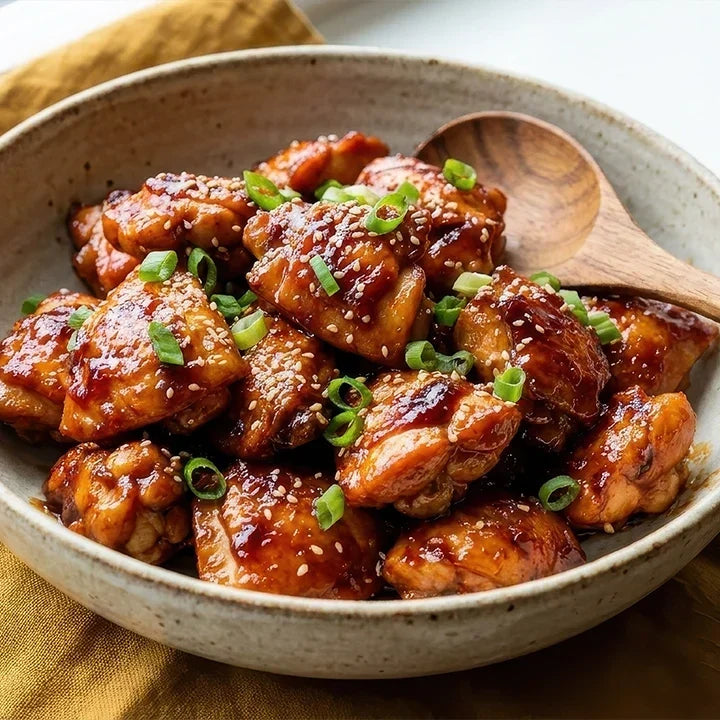
In short — teriyaki chicken is chicken seared and then glazed in a homemade sauce made of soy sauce, mirin, sake and sugar. Sear the pieces, add the sauce and let it simmer for 8 to 10 minutes until you get a glossy glaze. Serve immediately with white rice, sesame seeds and spring onions.
Teriyaki chicken is among the most popular Japanese dishes outside Japan: melt-in-the-mouth meat coated in a glossy sweet-and-savoury sauce, ready in half an hour. The name says it all — teri means "glossy, glazed", yaki means "grilled, seared". All the magic lies in this glaze.
Beware: most online recipes Westernise the sauce with honey, ketchup or excessive garlic. Here is the authentic teriyaki sauce, just like in izakayas, requiring only four ingredients.
What is teriyaki?
Teriyaki is not a sauce but a cooking method: the ingredient is coated in a sweet-and-savoury sauce during cooking until it develops its characteristic glossy glaze. Traditionally, it was mainly used for fish, such as salmon or mackerel; chicken became popular later.
The rise of teriyaki dates back to the Edo period, between the 17th and 19th centuries, when soy sauce production became widespread. The pairing of savoury soy sauce and sweet mirin gave birth to this family of glazed dishes. Note: in Japan, the sauce contains neither garlic, ginger nor honey.
Authentic teriyaki sauce
Each ingredient plays its part. Soy sauce brings saltiness and umami; mirin adds roundness and gloss; sake perfumes and tenderises; sugar binds it all together.
| Ingredient | Quantity for 4 people |
|---|---|
| Soy sauce | 8 tbsp |
| Mirin | 4 tbsp |
| Sake | 2 tbsp |
| Sugar | 2 tbsp |
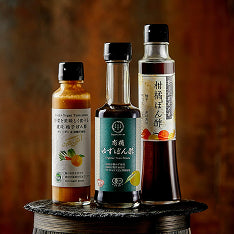
No time to measure everything out? A ready-made teriyaki sauce works perfectly well on a weeknight. The homemade version remains unbeatable for freshness.
The trap to avoid: steer clear of recipes calling for honey and ketchup, which make for a cloying, sticky sauce. The balance comes from the pairing of mirin and sake, not from added sugar.
Which chicken to choose: thigh or breast?
For juicy results, opt for boneless chicken thighs: the meat stays tender even after the sauce has reduced. Chicken breast, being leaner, works well for a lighter version but dries out faster. Allow 600g for four people, cut into evenly sized, large pieces.
The step-by-step preparation
- Make the sauce: combine soy sauce, mirin, sake and sugar until fully dissolved.
- Sear the chicken: heat the oil in a frying pan or wok over medium-high heat. Place the pieces meatiest side down, let them brown well before flipping, and cook until golden on all sides.
- Degrease if needed: if a lot of fat is released, spoon some of it away; this will keep the sauce clean and glossy.
- Add the sauce: pour it in, turn down the heat and let it simmer for 8 to 10 minutes, stirring regularly.
- Glaze: spoon the sauce over the pieces as it thickens, until you achieve a glossy glaze.
- Plate up: off the heat, scatter with sesame seeds and sliced spring onion. Serve immediately over a bowl of white rice.
Chef's tip: do not let the sauce reduce too much; it should coat the chicken without over-caramelising, otherwise it will turn bitter and stick. If it reduces too quickly, add a spoonful of water.
How to achieve the perfect glaze
It all comes down to controlled reduction. As the water evaporates, the sugar and mirin concentrate their aromas and the sauce becomes syrupy: this is the moment to spoon it continuously over the chicken. Cook over medium-low heat — too high, and the sugar will burn and turn bitter; too low, and the sauce will never coat properly. The right consistency is reached when it coats the back of a spoon and a line drawn through it with your finger holds its shape.
Common mistakes to avoid
- Overcrowding the pan: the chicken boils instead of searing and will not brown. Cook in two batches.
- Adding the sauce too early: the chicken must be nicely browned first, otherwise it will remain pale.
- Over-reducing: a caramelised sauce turns bitter and sticky. Turn off the heat as soon as you achieve a good coating consistency.
- Skipping the resting time: let the meat rest for one minute before serving to ensure the meat stays juicier.
Variations
- Teriyaki salmon: the original version. Same sauce, fillets seared then glazed.
- Teriyaki tofu: drained and browned firm tofu, for a vegetarian option.
- Teriyaki beef: thin slices seared very quickly.
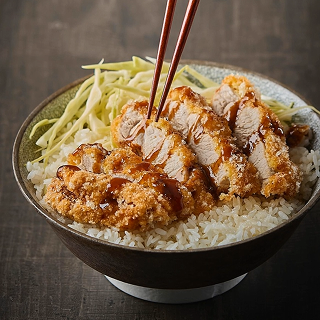
- Donburi: the chicken served over a large bowl of rice, for a complete meal.
What to serve with teriyaki chicken?
Nothing beats a bowl of Japanese white rice to soak up the sauce. Add steamed green vegetables — broccoli, mangetout, green beans — for crunch, and finish with toasted sesame seeds. A touch of Japanese pickles adds a welcome tangy contrast.
What drink to serve with it?
The sweet-savoury flavours call for fresh, low-tannin drinks. A Japanese green tea, sencha or genmaicha, cleanses the palate. On the alcohol side, a light Japanese beer or a dry, chilled sake works wonderfully. For a wine pairing, an off-dry riesling or a gewurztraminer complements the sauce's sweetness. Avoid full-bodied reds.
Storage
Teriyaki chicken keeps for 2 to 3 days in the refrigerator in an airtight container. Reheat gently in a frying pan with a dash of water. Avoid freezing: the glazed sauce loses its shine.
Frequently asked questions
Can you make teriyaki chicken without alcohol?
Yes. Replace the sake and mirin with a little water and an extra pinch of sugar. The sauce will have slightly less depth of flavour but remains delicious; in any case, the alcohol evaporates during cooking.
How to thicken a sauce that is too runny?
Continue reducing over low heat, or add half a teaspoon of cornflour mixed with a little cold water, then simmer for one minute.
What is the difference between teriyaki and yakitori?
Same base ingredients: soy sauce, mirin, sake, sugar. Teriyaki refers to a glazing technique, often in a pan; yakitori refers to chicken skewers grilled over charcoal and brushed with sauce.
Which cut of chicken is best?
Boneless chicken thighs, which are juicier. Chicken breast works for a leaner version but requires careful cooking.
Can the sauce be prepared in advance?
Yes, it keeps for 3 days in the refrigerator in an airtight jar.
Which vegetables should you serve with this dish?
Broccoli, mangetout, green beans or steamed edamame bring crunch and balance the richness of the sauce.
Does the recipe work with other proteins?
Absolutely: salmon, firm tofu, thinly sliced beef or meatballs. The glazing technique remains exactly the same.


