













Traditional miso soup (misoshiru) is the true soul of Japanese gastronomy. Far from the insipid broths hastily prepared with industrial powders, the authentic Japanese recipe is a celebration of umami, delicacy and simplicity.
Consumed daily in Japan, often from breakfast, it warms the body and prepares the palate to appreciate the other dishes. Mastering this great classic is the essential first step to exploring authentic Japanese recipes.
Secret no. 1: A genuine homemade Dashi broth
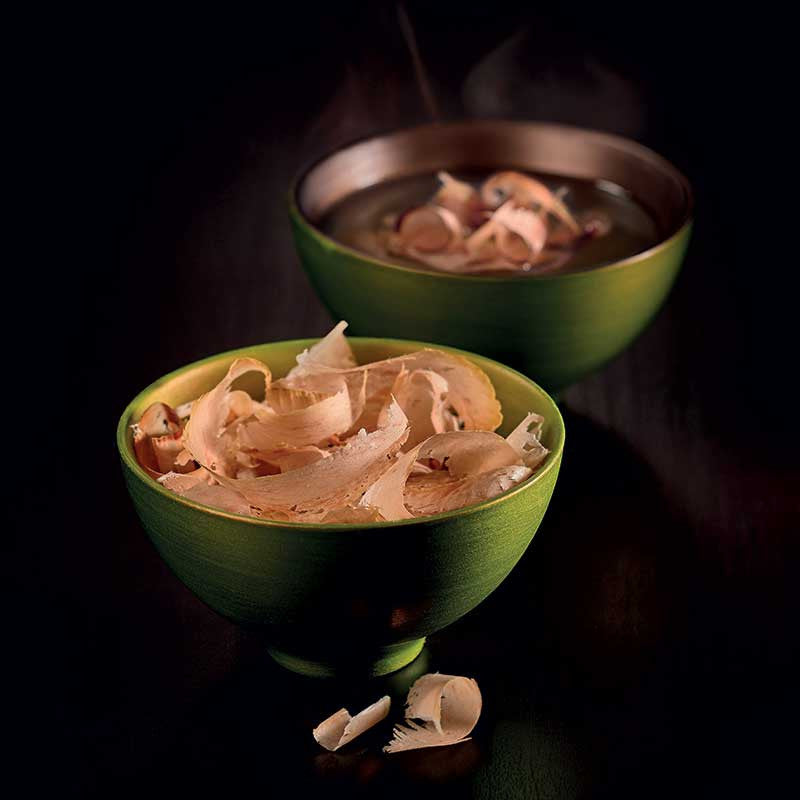
This is the most common mistake in the West: using hot water or a classic vegetable stock. The absolute base of miso soup is dashi. This essential Japanese broth is extracted from dried kombu seaweed and dried bonito flakes (katsuobushi). It is this precise chemical synergy that creates umami, the famous fifth flavour.
If you do not have time to prepare it from scratch, opt for a high-quality artisanal homemade dashi stock base, with no added flavour enhancers.
Secret no. 2: The choice of miso paste (Shiro or Aka?)
- Shiro Miso: Mild, slightly sweet and low in salt. Ideal for light soups.
- Aka Miso: More robust, perfect for winter.
- Awase Miso: A balanced blend of the two.
Secret no. 3: Never boil the miso!
Ingredients for 4 people (The shopping list)
To recreate the authenticity of Tokyo or Kyoto at your table, here are the essential ingredients for 4 bowls:
- 800 ml of spring water
- 1 piece of kombu seaweed (approximately 10 cm): ref NISAMNS2 or NISOKAI8
- 15 g of dried bonito flakes (katsuobushi): ref NISWU003
- 3 to 4 tablespoons of artisanal miso paste (adjust according to desired saltiness): ref NISMKOC or NISMK1
- 150 g of silken tofu (kinugoshi tofu)
- 1 tablespoon of dried wakame seaweed: ref NISAMNS1
- 2 stalks of Japanese spring onion (negi) or finely sliced salad onion
Step-by-step preparation of miso soup
- Preparing the dashi: Wipe the kombu seaweed lightly with a damp cloth (do not wash it). Submerge it in 800 ml of cold water and heat gently. Just before it reaches the boil, remove the kombu.
- The bonito infusion: Add the katsuobushi flakes. Leave to simmer for 1 minute, then turn off the heat and leave to infuse for 3 minutes. Strain finely: your dashi is ready.
- Preparing the toppings: Rehydrate the wakame for 5 minutes in cold water. Cut the tofu into small, even cubes.
- Assembly: Return the dashi to a low heat. Add the tofu and wakame to warm them through (approximately 1 minute).
- Dissolving the miso: Turn off the heat. Dilute the miso using a strainer or ladle to avoid lumps.
- Serving: Serve immediately and add the spring onion.
Variations: How to jazz up your bowl?
The beauty of miso soup lies in its flexibility.
Add shiitake or enoki mushrooms for an earthy touch. For more texture: sesame seeds or sesame oil. For a more complete dish: add root vegetables.
Frequently Asked Questions (FAQ) about miso soup
Can miso soup be prepared in advance?
Prepare the dashi in advance, but add the miso at the last moment. Reheat over a very low heat without ever bringing to the boil.
How to dissolve the miso without lumps?
Use a fine-mesh strainer and gradually dissolve into the hot broth.
Vegan version?
Use a vegetable dashi: kombu + shiitake.
What is the difference between the types of dashi?
Ichiban Dashi (一番だし) — "first broth"
- Classic version: kombu + bonito
- Vegan version: kombu only
Method:
- Cold-steep the kombu overnight
- Heat to ~73°C without boiling
- Remove the kombu
Result: clear broth, rich in umami and vegan.
Niban Dashi (二番だし) — "second broth"
- Classic version: leftover kombu + bonito
- Vegan version: kombu + dried shiitake


