








Katsuobushi: a short history for a great flavour
The Japanese have developed a unique culinary culture around fish, and in particular around "Katsuobushi", produced by simmering bonito in hot water, then smoking and drying it.

Just like sweet, salty, sour, and bitter, the 5th taste category, "Umami", is now recognised the world over.
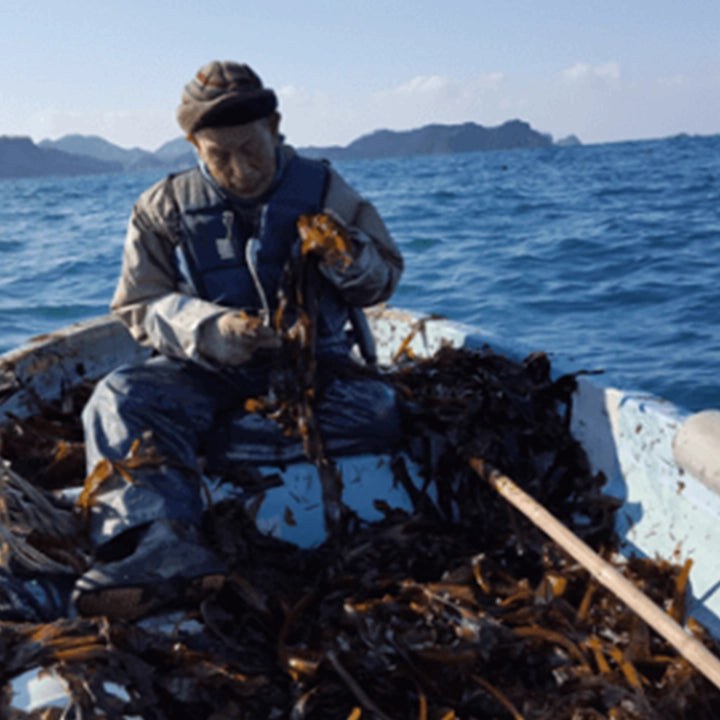
First discovered in Kombu (dried seaweed), glutamic acid, an amino substance, is classified as "Umami". Inosinic acid, a nucleotide acid substance also classified as "Umami", was likewise identified in Katsuobushi. Another decisive discovery, from 1960 onwards, "Awase Dashi" (Dashi Katsuobushi and Kombu) further intensifies "Umami".
The latter considerably improves the flavour of foods with a low salt content.
The Shinmarusho factory, located in Yaizu, Shizuoka Prefecture, produces 400 tonnes of katsuobushi per year, in the finest artisanal tradition.

Katsuobushi made in Japan: a European first by Nishikidôri!
Katsuobushi, as it is consumed in Japan, cannot be exported to the European Union. In order to offer this exceptional Katsuobushi, the Shinmarusho factory, under its president Tokuya Kuno, had undertaken a lengthy and complex certification process. For the Tokuya Kuno family (3rd generation), this was a true challenge — indeed a life's project!
Two main difficulties prevented any importation into the European Union:
– The benzopyrene residues contained in Katsuobushi are well above European tolerance levels.
– In Japan, the addition of Eurotium mould reduces the moisture and fat content of Katsuobushi. It also allows for longer preservation.
Yet this addition, at the final stage, is prohibited by the European Union.
[Our challenge] How, then, to recreate the smoky notes as they exist in the Katsuobushi consumed in Japan?
Could one precisely recreate the taste notes of "Umami"?
The Katsuobushi from Yaizu: a goldsmith's work and the proven mastery of the Shinmarusho artisans. A challenge triumphantly met by our partner, Tokuya Kuno, and his family!
You will find online and in store our Katsuobushi in flakes or in pieces.
What is Katsuobushi?
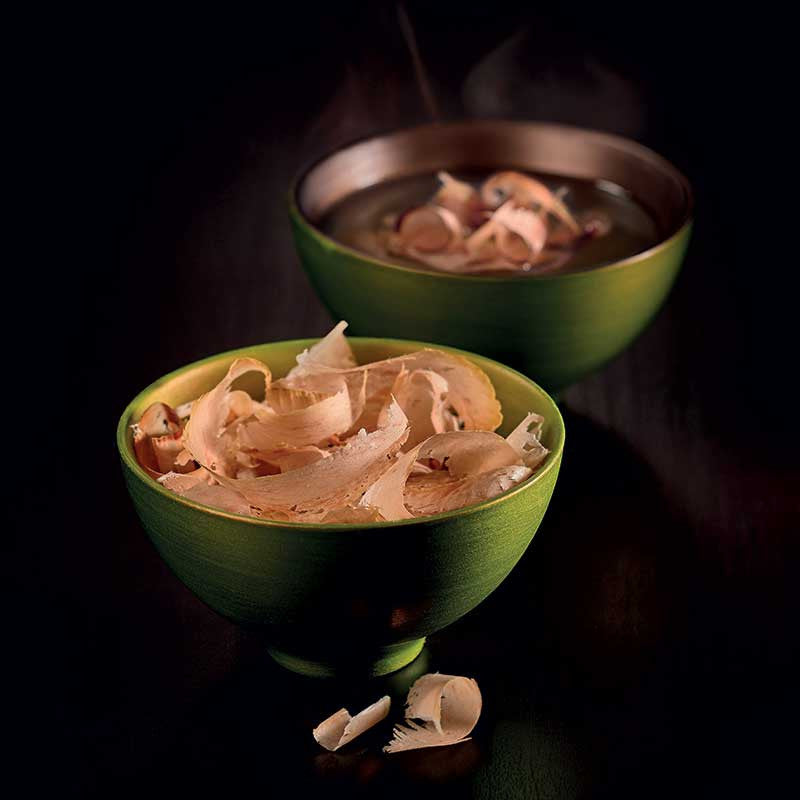
Finely grated using a traditional grater, Katsuobushi brings aromatic, fine, and elegant taste notes. "Umami" is naturally very present. Katsuobushi is a wholesome, good, beautiful, aesthetic, glistening, indulgent, and fragrant product.
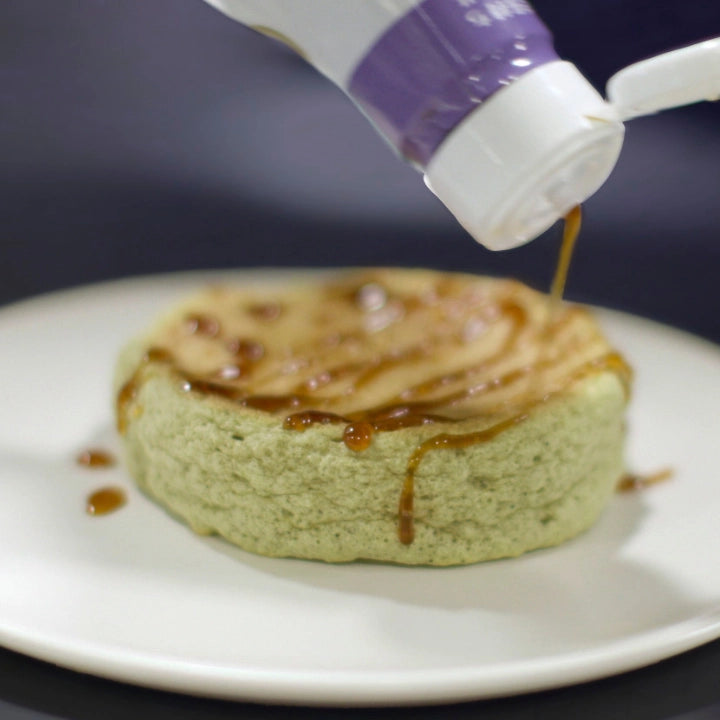
It elevates a dish, enhances a fish, reveals a seafood-based plate. Katsuobushi will make the simplest omelette… Flavoursome and exceptional. The culinary applications of this exceptional product will be limited only by your imagination!
Katsuobushi: what differentiates Katsuobushi packaged as whole quarter fillets from Katsuobushi in shavings?
Naturally, the preservation of Katsuobushi varies according to its packaging. The shavings deteriorate quickly and lose their aroma. A freshly grated and sliced Katsuobushi from Yaizu reveals and preserves all the aromas. The Katsuobushi offered by Nishikidôri is finer and more subtle; the smokiness is less pronounced. More elegant and less acidic, the Katsuobushi from Yaizu is nonetheless recognised by many Japanese chefs — all of whom, incidentally, were unanimously surprised by the result!
The Katsuobushi from Yaizu is wholesome, not saturated with benzopyrene residues nor coated with Eurotium mould.
Japanese katsuobushi is a demanding product, and benefits from refrigerated logistics under controlled temperature by sea and air. The product absolutely requires logistics at a temperature not exceeding 5°C for long-distance transport.
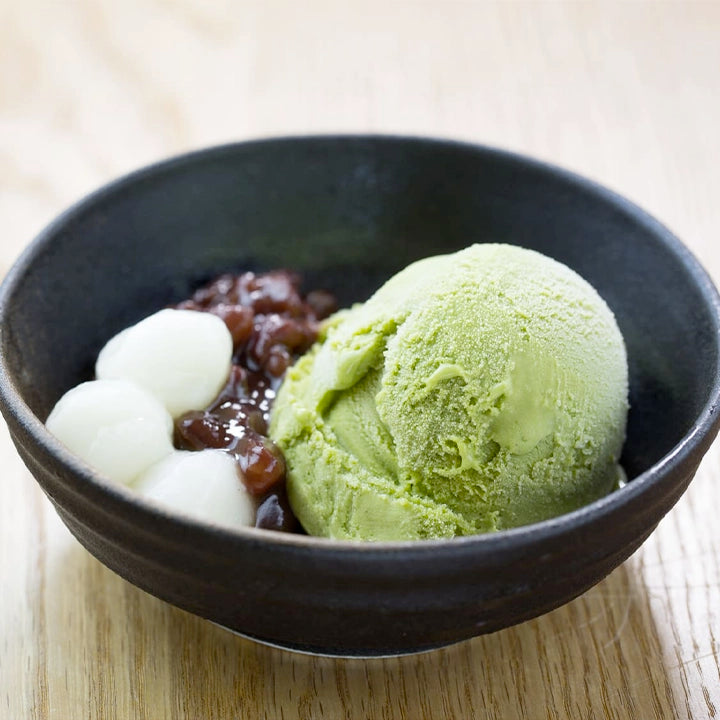
An exceptional product, an exceptional event! For the launch of the Katsuobushi from Yaizu, Nishikidôri had invited around forty Japanese and French chefs to discover Katsuobushi and its many savoury and sweet uses!
Qualitative, original, and subtle proposals agreed upon by two chefs — Jérôme Banctel (Restaurant Le Gabriel) welcomed into his kitchen Kenichi Koyama (Le Jardin Gourmand, Hiroshima). Katsuobushi variations around an exceptional menu: the guests were won over.
Chefs speak about the Katsuobushi from Nishikidôri:
Jérôme Banctel (Restaurant Le Gabriel) and Kenichi Koyama (Le Jardin Gourmand):
"We prepared the event remotely. We sought to produce new flavours around Katsuobushi, including in the dessert course. Our objective was to open up new perspectives. So naturally, it was necessary to revisit a few classics, then bring some truly original creations.
Giving the product a French interpretation: it is a small thing and yet it makes all the difference. The atmosphere in the kitchen was wholesome and rather cheerful. This event is a first that we hope will be repeated!"
Gilles Chesneau (SPRING):
"We don't know everything — taking part in events of this kind is always interesting! We owe it to ourselves to keep learning and discovering in our profession. Katsuobushi brings that Japanese touch, and enthusiasm for it is very much present. More and more Japanese chefs are coming to Paris: it's shifting the boundaries. It's very positive!"
Kazumi Hatakenaka (Kazumi):
"Katsuobushi is a very important element in Japanese cuisine. How can one understand Umami? Smell, drink, and analyse the flavours emanating from this broth… The umami of this Katsuo dashi across four variations is delicious. Taste it and see how it gently fades from the palate."
Nathalie Nicolas-Ianniello (Nana):
"Between French and Japanese people, in the kitchen, the connection is perceptible. There is mutual respect and probably even a fascination with one another's techniques.
Japanese cuisine: it is the cuisine of less; French cuisine, that of more. The risk when a meal is created by four hands is finding each of the restaurants involved. Here, this lunchtime, we have a true four-hands collaboration. It is a success!"
Andréas Mavrommatis (Mavrommatis):
"In Greece, we have bonito but it is so different — less red and much closer to tuna. We eat it fresh or half-cooked, marinated, for example.
Naturally, we have work and are very busy. Even so, an occasion such as this had to be honoured. We are here to discover new products, in search of new ideas. Raw ingredients — we chefs find them on our travels. Katsuobushi reminds me of some Mediterranean notes."
Katsuobushi: it has not finished making people talk!


