






Okinawa KOKUTO®
KOKUTO: 100% Okinawan raw black cane sugar from eight islands, with endless possibilities
KOKUTO (non-centrifugal cane sugar) is renowned as an Okinawan speciality. The sugar cane used to make it is bathed in the island’s intense sunshine and grown on land that was once coral reef. This sugar cane is rich in minerals carried by the sea breeze from the beautiful ocean surrounding the island, giving KOKUTO its rich flavour and intense sweetness. It is a premium product because it contains essential nutrients often lacking in women’s diets, such as iron and calcium.
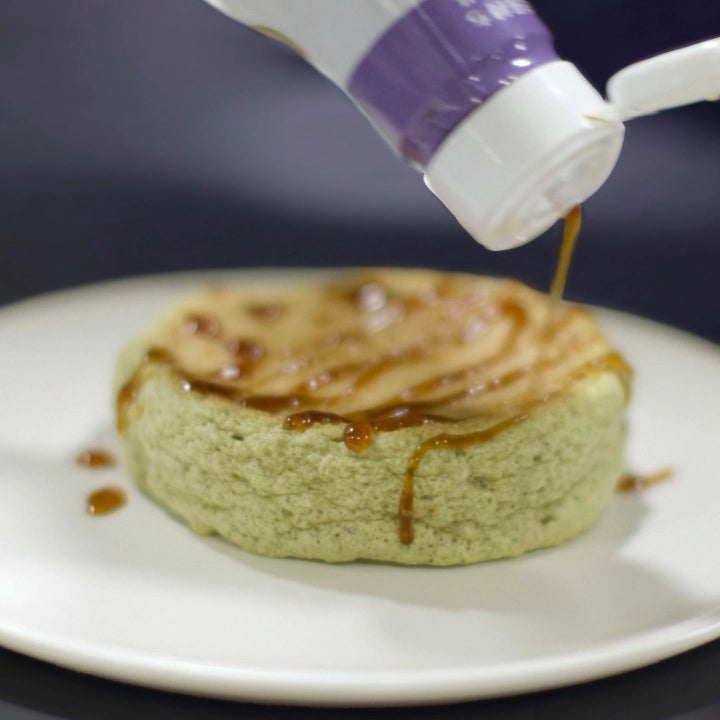
Today, Okinawan KOKUTO is commonly used as a secret ingredient in cooking and as a seasoning. A pinch of KOKUTO can add a little something extra to a curry. Sprinkle a little powdered KOKUTO into a homemade latte. Combine soy sauce and black sugar to make an easy teriyaki sauce.
Okinawan KOKUTO is made from 100% sugar cane. Okinawan black sugar is made by pressing the juice from sugar cane and boiling it.
Okinawan black sugar has a rich, deep flavour that will enhance all your dishes. Its secret lies in the carefully cultivated sugar cane grown on each island.
The island’s factories operate from December to April, when the sugar cane stores the most sugar. Because the quality of harvested sugar cane deteriorates over time, only enough for each day’s production is harvested and transported by lorry to the factory.
The sugar cane stalks, around 2 metres long, are first cut into small pieces, then pressed several times to extract the juice. Impurities are allowed to settle, and the filtered liquid is heated and concentrated in several stages. It is then stirred to incorporate air and cooled to form black sugar. Finally, it is packed into boxes or moulded before it has completely solidified.
Although the process varies slightly between islands, Okinawan kokuto, an unrefined black cane sugar, is made by boiling fresh sugar cane juice in this way.
By contrast, when the ‘molasses’, which contains non-sugar components, is removed from the filtered liquid and refined, it produces white sugar, granulated sugar, black sugar and rock sugar. These sugars are classified as ‘separated sugars’, while black sugar is classified as a ‘molasses sugar’.

The kokuto from Shinryo, selected by Nishikidori, is unique in the world
The science of terroir: the foundations of flavour
Environmental factors on each island give the eight varieties of kokuto their unique character: soil properties, local temperatures, rainfall and sunshine all influence their flavour, aroma and texture.
- Soil properties
- Temperature
- Precipitation
- Hours of sunshine
Each island produces a variety of kokuto with a unique taste that goes beyond simple sweetness: umami, acidity, bitterness and saltiness.
Production methods vary little from island to island, but differences in soil, climate, sugar cane cultivation methods and other factors are directly reflected in KOKUTO sugar. Colour, shape, taste, aroma, texture… each of the eight islands has its own distinct character.
Our kokuto is unique in the world
This is the only aged kokuto. It has been stored and aged under optimal temperature and humidity conditions. What are the key features of this kokuto?
- Colour: the colour deepens, taking on a darker black or slightly greyish hue depending on where it is produced.
- Aroma: the grassy smell and sharp, powerful aroma present at the start of production fade. Compounds associated with savoury, roasted aromas and sweet aromas develop.
- Flavour: distinctive flavours such as acidity, bitterness and astringency become less pronounced, resulting in a milder taste. The sweetness also intensifies.
- Preservation: ageing within a suitable temperature range limits oxidation and mould growth. This makes it suitable for long-term transport and storage.
- Amino acids: the levels of amino acids such as asparagine, aspartic acid, alanine, glutamic acid and GABA change. Unpleasant flavours such as bitterness, astringency and acidity are reduced, resulting in a milder flavour.
- The Maillard reaction: dimethyl sulphide, a sulphur compound responsible for a grassy smell, decreases considerably during ageing. As the Maillard reaction slowly progresses, a savoury, sweet aroma also develops.
The benefits of kokuto, ‘unrefined’ raw black cane sugar
Okinawan kokuto is unrefined, meaning nothing is unnecessarily added or removed. It retains essential nutrients, including minerals such as calcium, directly from the sugar cane.
- High polyphenol content: contains more polyphenols than red wine (per 100 g).
- Benefits: antioxidant effects, cholesterol reduction, prevention of arteriosclerosis and inhibition of sugar absorption.
- Rich in potassium: helps regulate blood pressure by promoting sodium excretion.
- Potassium content: 7 times higher than cane sugar, 17 times higher than honey and 550 times higher than white sugar.
- ‘High in’ nutrition labelling: in Japan, the product is legally permitted to bear the claim ‘high in’ for five nutrients: potassium, calcium, iron, vitamin B6 and biotin.
Nutritional values of Okinawan black sugar
Okinawan raw black cane sugar is rich in vitamins and minerals. Many people believe black sugar is ‘good for you’, but what are its actual benefits?
As the table shows, unrefined black cane sugar contains more vitamins and minerals (inorganic substances) than white sugar and honey. Like these sweeteners, it consists mainly of carbohydrates (sugar) and provides energy. By making black sugar part of your daily diet, you can also take in vitamins and minerals essential to your health, even in small amounts.
Comparison of the nutritional content of black sugar and other sweeteners (per 100 g)
| Ingredients | Kokuto (black sugar) | White sugar | Honey |
|---|---|---|---|
| Energy (kcal) | 352 | 391 | 329 |
| Moisture (g) | 4.4 | 0.7 | 17.6 |
| Protein (g) | 1.7 | 0 | 0.3 |
| Fat (g) | Tr | 0 | Tr |
| Carbohydrates (g) | 90.3 | 99.3 | 81.9 |
| Ash (g) | 3.6 | 0 | 0.1 |
| Sodium (mg) | 27 | 1 | 2 |
| Potassium (mg) | 1100 | 2 | 65 |
| Calcium (mg) | C | 1 | 4 |
| Magnesium (mg) | 31 | Tr | 2 |
| Phosphorus (mg) | 31 | Tr | 5 |
| Iron (mg) | 4.7 | Tr | 0.2 |
| Zinc (mg) | 0.5 | 0 | 0.1 |
| Copper (mg) | 0.24 | 0.01 | 0.04 |
| Vitamin B1 (mg) | 0.05 | 0 | Tr |
| Vitamin B2 (mg) | 0.07 | 0 | 0.01 |
| Niacin – Vitamin B3 (mg) | 0.8 | 0 | 0.3 |
The components of kokuto
89.3% sucrose, 5.3% moisture and 5.6% non-sucrose components. The non-sucrose components contribute both flavour and health benefits.
| Component | Content (mg/100 g) |
|---|---|
| Free amino acids | |
| Asparagine | 512 |
| Aspartic acid | 96 |
| Alanine | 35 |
| Glutamic acid | 32 |
| GABA | 17 |
| Organic acids | |
| Aconitic acid | 223 |
| Malic acid | 81 |
| Citric acid | 77 |
| Minerals | |
| Potassium | 921 |
| Magnesium | 119 |
| Polyphenols | |
| Total polyphenols | 344 |
In Japan, KOKUTO is believed to have potential benefits such as lowering blood sugar levels compared with ordinary sugar, preventing arteriosclerosis, reducing stress, improving skin health, preventing tooth decay and stimulating the immune system.
A highly eco-friendly sugar mill
The residue left after extracting sugar cane juice is called bagasse. Bagasse weighs around a quarter as much as the sugar cane. If discarded, it would amount to a considerable quantity of industrial waste. Production workshops on the eight islands use it as fuel for their boilers.
The impurities removed by settling are also returned to the fields as compost and used to grow sugar cane. The black sugar production facility is highly environmentally friendly and produces no waste.
Made by hand and by nature: how kokuto is produced
- Harvesting sugar cane: the tops of the sugar cane plants are removed, the stalks are cut near the ground, the leaves are stripped off and the stalks are bundled. Depending on quality considerations, harvesting may be done by hand to avoid contamination by defective raw material and ensure product quality. Alternatively, a harvester may be used, with leaves and other material removed during pre-processing at the factory.
- Cutting the sugar cane: the sugar cane is transported to the factory, where cutters and crushers break the stalks into small pieces to improve pressing efficiency.
- Pressing: the juice is extracted by passing crushed sugar cane through a press three or four times. Finally, hot water is added to recover the sugar.
- Filtering: a small amount of food-grade lime is added to the sugar cane juice, which is then heated, causing non-sugar particles to solidify. The solidified impurities settle, and the clear liquid above is drawn off.
- Reduction: the clear liquid extract is heated in several stages, using heat from the boiler while gradually reducing the atmospheric pressure. It is then rapidly heated to 130 °C in a finishing vessel to concentrate the liquid.
- Mixing and cooling: the concentrated liquid is stirred and aerated to encourage crystallisation, forming KOKUTO.
- Inspection: before packaging, a metal detector is used to check for foreign matter contamination. A final inspection then determines the grade and classification. The grading inspection checks the product’s qualities, its appearance when the packaging is opened, its response and hardness when pricked, and whether the pricked part of the KOKUTO feels moist to the touch.
- Packaging: while it is still soft and has not fully solidified, the KOKUTO is packed in boxes or bags to create the finished products. These are then shipped from each island by ferry or other means.
Nothing goes to waste:
- Sugar cane residue used as fuel: the bagasse (fibrous residue) left after pressing is used to fuel boilers, supplying steam to electricity generators and heating equipment.
- Impurities used to fertilise crops: solidified impurities are removed and used as agricultural fertiliser.
Kokuto black sugar in three main forms
Block – chunks – powder
In cooking
The key to using brown sugar in cooking is to use less salt! Compared with refined white sugar, KOKUTO has a gentler sweetness and a slight salty note. When replacing white sugar with KOKUTO in your recipes, use a little more KOKUTO and reduce the amount of salt and other salty ingredients.
The eight varieties of kokuto at a glance
| Island | Colour | Sweetness | Bitterness | Saltiness | Aromas | Our formats |
|---|---|---|---|---|---|---|
| Iheya | ★★★ | ★★★ | ★★ | ★ | dried fruit, smoky notes | Powder |
| Ie | ★★ | ★★ | ★★★ | ★★★ | milky, grassy, cocoa notes | Powder |
| Tarama | ★★★ | ★★★★ | ★★★ | ★★★ | corn, cereal, potato, a slightly smoky note | Powder · Chunks |
| Hateruma | ★ | ★★★ | ★ | ★ | corn, potato, spicy notes | Powder · Chunks |
| Iriomote | ★★★★ | ★★ | ★★★★ | ★★ | dried fruit, honey | Powder · Chunks |
| Kohama | ★★★★ | ★★★ | ★★★★ | ★★★ | woody, roasted notes | Chunks |
| Yonaguni | ★★★★ | ★★★★ | ★★★ | ★★★ | lightly roasted, smoky notes | Chunks |
| Aguni | ★★ | ★★★ | ★ | ★★ | woody, milky notes | — |
The eight varieties of kokuto, island by island
Iheya
Sugar cane grown on Iheya Island, surrounded by mountains rising over 200 m and by the sea, grows healthily and absorbs many nutrients. The kokuto, or unrefined black cane sugar, produced on Iheya has a sweet taste followed by slight bitterness and saltiness, creating a flavour that adults find hard to resist.
Iheya Island is a remote island in the East China Sea, at the northern end of Okinawa Prefecture. It can be reached by ferry in 80 minutes from Unten Port in Nakijin Village, about 40 km away. The island has a circumference of 34.23 km and is long and narrow.
The highlight is nature in its unspoilt state. Kumaya Cave, home to legends associated with Amaterasu Omikami, is one of Okinawa’s foremost spiritual sites. The views from Mount Kuba, covered in dense forest, and Nzomiji, with its legend of divination, offer a vivid encounter with Okinawa’s natural beauty. The shallow waters are exceptionally clear, while the pristine white natural beach, rare on the main island, promises a truly moving experience.
Colour ★★★ | Sweetness ★★★ | Bitterness ★★ | Saltiness ★
Aromas: dried fruit, smoky notes
Taste: mild and well-balanced, with subtle acidity and bitterness and a distinctive raw black cane sugar aroma.
Ingredients: 100% kokuto raw black cane sugar · Packaging: bag · Origin: Iheya, Okinawa, Japan
Store away from light, heat and moisture · HS CODE 1701139000 · Gross weight 1.05 kg · Net weight 1.0 kg
- SHINRY1 – KOKUTO - IHEYA raw black cane sugar powder 1 kg
- SHINRY6 – KOKUTO - IHEYA raw black cane sugar chunks 1 kg
Ie
Production of kokuto, or unrefined black cane sugar, began on Iejima in 2011. Iejima has long been known for its agriculture, and its black sugar has a gently sweet and salty taste. For example, mix it with something sweet, such as chocolate, and its salty note comes through, making it delicious.
Iejima is a secluded island with a circumference of 22.4 km, 9 km north-west of the Motobu Peninsula in Okinawa Prefecture, about 30 minutes away by ferry. Nicknamed ‘the island of flowers, sunsets and romance’, Iejima offers spectacular sunsets. Those seen from Gusukuyama, the island’s landmark, are among the most beautiful in Okinawa.
Ie Island was the scene of fierce fighting during the Battle of Okinawa, in which many precious lives were lost. Amid this tragedy, Nyatia Cave served as an air-raid shelter and saved many islanders’ lives. Today, many people visit it as a place believed to hold special power for children. Around mid-April, during Golden Week, a lily festival takes place: 100 species of lilies bloom, filling the island with their sweet fragrance. The island’s emblem is Mount Gusuku, a mountain the locals call “Tacchu”, much loved by residents and visitors alike.
Colour ★★ | Sweetness ★★ | Bitterness ★★★ | Saltiness ★★★
Aroma: milky, grassy, cocoa notes
Taste: a rich, deep flavour with pronounced saltiness, subtle bitterness and a mellow, milky, cocoa taste. A rich, distinctive flavour that pairs well with drinks.
The powdered version is made by carefully breaking up the sugar and then ageing it for several weeks. The sugar melts in the mouth and tastes of chocolate. It pairs well with Okinawan awamori, rum and coffee.
Ingredients: 100% kokuto raw black cane sugar · Packaging: bag · Origin: Iejima, Okinawa, Japan
Store away from light, heat and moisture · HS CODE 1701139000 · Gross weight 1.05 kg · Net weight 1.0 kg
- SHINRY2 – KOKUTO - IE raw black cane sugar powder 1 kg
- SHINRY7 – KOKUTO - IE raw black cane sugar chunks 1 kg

Tarama
The kokuto, or unrefined black cane sugar, from Tarama Island is known for its pronounced sweetness, probably because the cane is grown in an environment less exposed to sea breezes. Its dark brown colour and hard, firm grains distinguish it from the sugars of the other islands at a glance.
Tarama Village, the only village in Okinawa Prefecture to be certified as one of the ‘Most Beautiful Villages in Japan’, lies by the sea between Miyako Island and Ishigaki Island. It prospered as a key link between Okinawa’s main island and the Miyako and Yaeyama regions during the Ryukyu Kingdom era.
Tarama Island, a raised coral reef, is surrounded by one of Okinawa’s most beautiful coral reefs and is a renowned diving destination. Rows of Fukugi trees protect crops and homes from typhoons, giving the area an exotic atmosphere. Its savannah-like landscape captivates visitors.
Colour ★★★ | Sweetness ★★★★ | Bitterness ★★★ | Saltiness ★★★
Aromas: corn, cereal, potato, a slightly smoky note
Taste: a well-balanced flavour with pronounced bitterness, acidity and saltiness.
Ingredients: 100% kokuto raw black cane sugar · Packaging: bag · Origin: Tarama, Okinawa, Japan
Store away from light, heat and moisture · HS CODE 1701139000 · Gross weight 1.05 kg · Net weight 1.0 kg
- SHINRY3 – KOKUTO - TARAMA raw black cane sugar powder 1 kg
- SHINRY10 – KOKUTO - TARAMA raw black cane sugar chunks 1 kg
Hateruma
Kokuto, raw black cane sugar from Hateruma Island, is characterised by its concentrated umami and sweetness. It has a rich, deep flavour and a satisfyingly chunky, crunchy texture.
Hateruma Island is part of the Yaeyama Islands. It is Japan’s southernmost inhabited island: a small, remote island with a circumference of 14.8 km. Its lack of light pollution and the stable air currents above it make it an ideal place for stargazing, attracting many visitors with its spectacular view of the Southern Cross.
Colour ★ | Sweetness ★★★ | Bitterness ★ | Saltiness ★
Aromas: corn, potato, spicy notes
Taste: the purest, best-balanced flavour of the eight islands, with a spicy note on the finish.
Ingredients: 100% kokuto raw black cane sugar · Packaging: bag · Origin: Hateruma, Okinawa, Japan
Store away from light, heat and moisture · HS CODE 1701139000 · Gross weight 1.05 kg · Net weight 1.0 kg
- SHINRY4 – KOKUTO - HATERUMA raw black cane sugar powder 1 kg
- SHINRY11 – KOKUTO - HATERUMA raw black cane sugar chunks 1 kg
Iriomote
The kokuto, or unrefined black cane sugar, from Iriomote Island has a deep, rich flavour and pronounced sweetness, with little saltiness or bitterness, making it suitable for a wide variety of recipes.
Iriomote is Okinawa’s second-largest island after the main island. Located 400 km from Okinawa’s main island, it is surrounded by nature and, judging by its average temperature alone, has an environment resembling a tropical rainforest. It is also renowned for its unique ecosystem, including the Iriomote wildcat, yellow-margined box turtle and crested serpent eagle, which are exceptional natural monuments, and for its precious natural resources, conserved for the world.
Iriomote Island is listed as a natural World Heritage Site. It has a unique ecosystem and is popular for canoeing, hiking and other activities that let visitors immerse themselves in nature.
Colour ★★★★ | Sweetness ★★ | Bitterness ★★★★ | Saltiness ★★
Aromas: dried fruit, honey
Taste: a complex flavour combining richness, character and acidity, with a subtle dried-fruit aroma and light honey notes.
Ingredients: 100% kokuto, raw black cane sugar · Packaging: bag · Origin: Iriomote, Okinawa, Japan
Store away from light, heat and moisture · HS CODE 1701139000 · Gross weight 1.05 kg · Net weight 1.0 kg
- SHINRY5 – KOKUTO - IRIOMOTE raw black cane sugar powder 1 kg
- SHINRY12 – KOKUTO - IRIOMOTE raw black cane sugar chunks 1 kg
Kohama
Kokuto, raw black cane sugar from Kohama Island, is a long-established local product and the island’s main industry, as the Sugar Road attests. Neither too sweet nor too bitter, it has a wonderfully refreshing flavour. Its colour is reminiscent of chocolate.
Kohama Island is part of the Yaeyama Islands. It is about 30 minutes by ferry from Ishigaki Island. A small, remote island, it has a circumference of 16.6 km. Kohama became famous as the setting for the television series “Churasan”, broadcast on NHK in the first half of 2001. One of its filming locations, Sugar Road, featured as the route to school in the series. This distinctive road is lined with sugar cane fields, preserving a nostalgic landscape from the past.
When you visit Kohama Island, its crystal-clear emerald-green sea is a must-see. Sekisei Lagoon, in Iriomote-Ishigaki National Park, is one of the world’s finest snorkelling spots. Surrounded by one of Japan’s largest coral reef areas, the island is a popular snorkelling destination. Yonara Strait, visible from the island, is famous as a route taken by manta rays and is commonly known as “Manta Way”.
Kohama Island is also known for its magnificent night sky. A breathtaking star-filled sky, including the Milky Way, stretches as far as the eye can see.
Colour ★★★★ | Sweetness ★★★ | Bitterness ★★★★ | Saltiness ★★★ | Acidity ★★
Aromas: woody, roasted notes
Taste: a rich, distinctive flavour combining saltiness, bitterness and a pronounced roasted aroma. Renowned for enhancing ingredients, it is ideal for cooking.
Ingredients: 100% kokuto raw black cane sugar · Packaging: bag · Origin: Kohama, Okinawa, Japan
Store away from light, heat and moisture · HS CODE 1701139000 · Gross weight 1.05 kg · Net weight 1.0 kg

Yonaguni
The kokuto, or unrefined black cane sugar, from Yonaguni Island is not overly sweet. Its flavour is not too heavy, so it can be used in a variety of dishes. As it is not sticky, it lends itself to many culinary uses. It is also the mildest of the kokuto varieties, making it enjoyable for people of all ages. It has a light ochre colour, similar to caramel.
Yonaguni Island, 130 km west of Ishigaki Island, is Japan’s westernmost island and is known for its border town overlooking Taiwan. Rice is grown in the lowlands and sugar cane on the plateau.
Yonaguni Island has also been home to the Yonaguni horse since ancient times. Until recent decades, these horses worked alongside people, carrying heavy loads such as sugar cane on their backs. Today, visitors can interact with Yonaguni horses at several facilities, making this a popular experience with tourists.
Yonaguni Island is where the Kuroshio Current, flowing north from Asia, enters Japan. Marlin and tuna are among the fish caught there, and Taiwan can be seen from the island on a clear day. It is also renowned for diving sites with underwater ruins.
Colour ★★★★ | Sweetness ★★★★ | Bitterness ★★★ | Saltiness ★★★
Aromas: lightly roasted, smoky notes
Taste: the most distinctive flavour of the eight islands, with bitterness, a roasted aroma and a pronounced character. Highest mineral content. Recommended for adding a bold flavour.
Ingredients: 100% kokuto raw black cane sugar · Packaging: bag · Origin: Yonaguni, Okinawa, Japan
Store away from light, heat and moisture · HS CODE 1701139000 · Gross weight 1.05 kg · Net weight 1.0 kg
Aguni
The island of Aguni has a long tradition of making unrefined black cane sugar, and sugar cane has supported the islanders’ livelihoods since ancient times. Kokuto, an unrefined black cane sugar produced in the recently rebuilt sugar mill, has less astringency and bitterness, with an exquisite balance of saltiness and gentle sweetness. It has a pleasant flavour and is known for its vitamin, mineral and calcium content.
Aguni is a small, remote island about 60 km north-west of Naha, with a circumference of around 12 km. It is very popular for the tropical beauty concentrated within its small area. Fudenzaki, on the island’s south-west coast, is a striking white tuff cliff formed by accumulated volcanic ash. From the broad open area above it, known as Mahana, you can see Kume Island, the Kerama Islands and Tonaki to the south, and Okinawa Island and Ie Island to the south-east, making it a scenic spot.
Aguni Island is also renowned for its salty products bearing the name “Aguni”.
Colour ★★ | Sweetness ★★★ | Bitterness ★ | Saltiness ★★
Aromas: woody, milky notes
Taste: mildly bitter and refreshing, with a salty taste and a milky aroma. A versatile variety, free from impurities and delicious even on its own.
Ingredients: 100% kokuto raw black cane sugar · Packaging: bag · Origin: Aguni, Okinawa, Japan
Store away from light, heat and moisture
- SHINRY13 – KOKUTO - AGUNI raw black cane sugar chunks 1 kg
- SHINRY14 – KOKUTO - AGUNI raw black cane sugar powder 1 kg
The heritage of Ryukyu (Okinawa): 400 years of craftsmanship
As soon as it was produced, kokuto raw black cane sugar sparked a ‘historic revolution’ in Japan. It is produced on just eight remote islands: Aguni, Hateruma, Ie, Iheya, Iriomote, Kohama, Tarama and Yonaguni.
This ‘sustainable food’ is made using the same environmentally friendly techniques, unchanged since the beginning of the Edo period. This 100% KOKUTO raw black cane sugar is not processed; it is made using the traditional sugar-making method of simply pressing and concentrating sugar cane juice.
This sugar is part of a food tradition that Okinawa has cherished for centuries. It is a resource that keeps the traditions of Okinawa’s outlying islands alive, a sustainable, environmentally friendly product and a mineral-rich source of nutrition for future generations. It is also an important industry that will support Okinawa’s outlying islands in the near future: a regional resource that the eight outlying islands of Okinawa can take pride in worldwide.
| Date | Event |
|---|---|
| 1429 | King Sho Hashi (China) unifies the fragmented kingdoms of Ryukyu. |
| 1609 | The Satsuma clan (Japan) takes control of the archipelago |
| 1623 | Gima Shinjo introduces brown sugar production to Ryukyu. Kokuto is then born |
| 2026 |
Kokuto became:
- A valuable trading commodity
- A local staple in Okinawa
- A way to pay taxes with
Okinawa Kokuto is a 400-year-old heritage product, a local speciality made on just eight islands and protected by the Okinawa Prefecture KOKUTO Cooperative Association under strict quality standards!
Geographical exclusivity
| Annual global sugar production | Volume | Share |
|---|---|---|
| Total sugar | 175 million tonnes (excluding black sugar) | |
| Black sugar | 5 million tonnes | 2.8% |
| Okinawa Kokuto | 10,000 tonnes | 0.02% |
Authentic Okinawan kokuto is produced exclusively on eight islands, the chosen eight: Aguni, Hateruma, Ie, Iheya, Iriomote, Kohama, Tarama and Yonaguni. Each island’s unique environment makes Okinawan black sugar impossible to reproduce elsewhere. Supply is limited by each island and the seasons.
Sources: USDA FAS · kokutodesign.com · okinawa-kurozatou.or.jp
Kokuto and other sugars
How to distinguish kokuto from other sugars
- Authentic kokuto is made by pressing sugar cane, boiling down the juice and leaving it to solidify. Its raw ingredient is sugar cane.
- Processed KOKUTO: sugar made by mixing raw sugar (the raw material for white sugar) or other ingredients such as molasses with KOKUTO.
- Processed sugar: products made by adding raw sugar or molasses. KOKUTO is not used.
| Sugar | Category | Examples |
|---|---|---|
|
Refined sugar Cultivation for white sugar → raw sugar → refined sugar |
Powdered sugar | white granulated sugar, brown granulated sugar, granulated sugar, powdered sugar |
| Mild sugar | brown sugar, mild brown sugar | |
| Processed sugar | sugar cubes, crystalline sugar, icing sugar, absorbent granulated sugar | |
| Unrefined sugar | KOKUTO, wasanbon sugar, Crimson sugar, refined sugar | |
The logo guaranteeing authentic 100% kokuto from the Okinawan archipelago
This logo guarantees that the KOKUTO (non-centrifugal Okinawan cane sugar) comes from the eight islands: Aguni, Hateruma, Ie, Iheya, Iriomote, Kohama, Tarama and Yonaguni.
“Okinawa KOKUTO®” is a regional collective trademark of the KOKUTO Cooperative Association of Okinawa Prefecture. The Okinawa KOKUTO® logo is a registered trademark used for brown sugar made from sugar cane grown entirely on eight islands in Okinawa Prefecture.
Know what you’re buying: the other logos
- This label is intended for products made with Okinawa KOKUTO. It may only be used for products containing at least 10% molasses as an ingredient. The molasses sugar used must, however, be 100% Okinawa KOKUTO.
- This label is certified by the Food Industry Centre (FICEC), a general foundation. It attests to the manufacturer’s commitment to an “authentic” taste, achieved through carefully selected “raw ingredients” and “production methods” developed over many years.
Frequently asked questions
What is kokuto?
An Okinawan black sugar made from 100% sugar cane by pressing the cane and boiling down its juice, without refining or separating out the molasses.
What is the difference between kokuto and brown sugar?
Most brown sugars have had their molasses separated out and are sometimes recoloured. Kokuto retains all the concentrated sugar cane juice, giving it a richer, more mineral flavour with a slight saltiness.
Which kokuto should I try first?
A mild, balanced kokuto, such as one from Hateruma or Iheya.
Which kokuto is best for cooking?
The bold, roasted kokuto sugars from Kohama or Yonaguni, which enhance sauces, stews and marinades.
How do I replace white sugar with kokuto?
Use a little more kokuto than you would white sugar, and reduce the salt in the recipe slightly, as kokuto has a salty note.
What does ‘aged kokuto’ mean?
The sugar is aged at a controlled temperature and humidity: its grassy notes and bitterness mellow, while its roasted and sweet aromas develop.
How should I store kokuto?
Store away from light, heat and moisture in a tightly sealed container.
Is kokuto healthier than white sugar?
It contains minerals (potassium and magnesium) not found in white sugar, but is still nearly 90% sucrose. Like any sugar, it should be consumed in moderation.


