









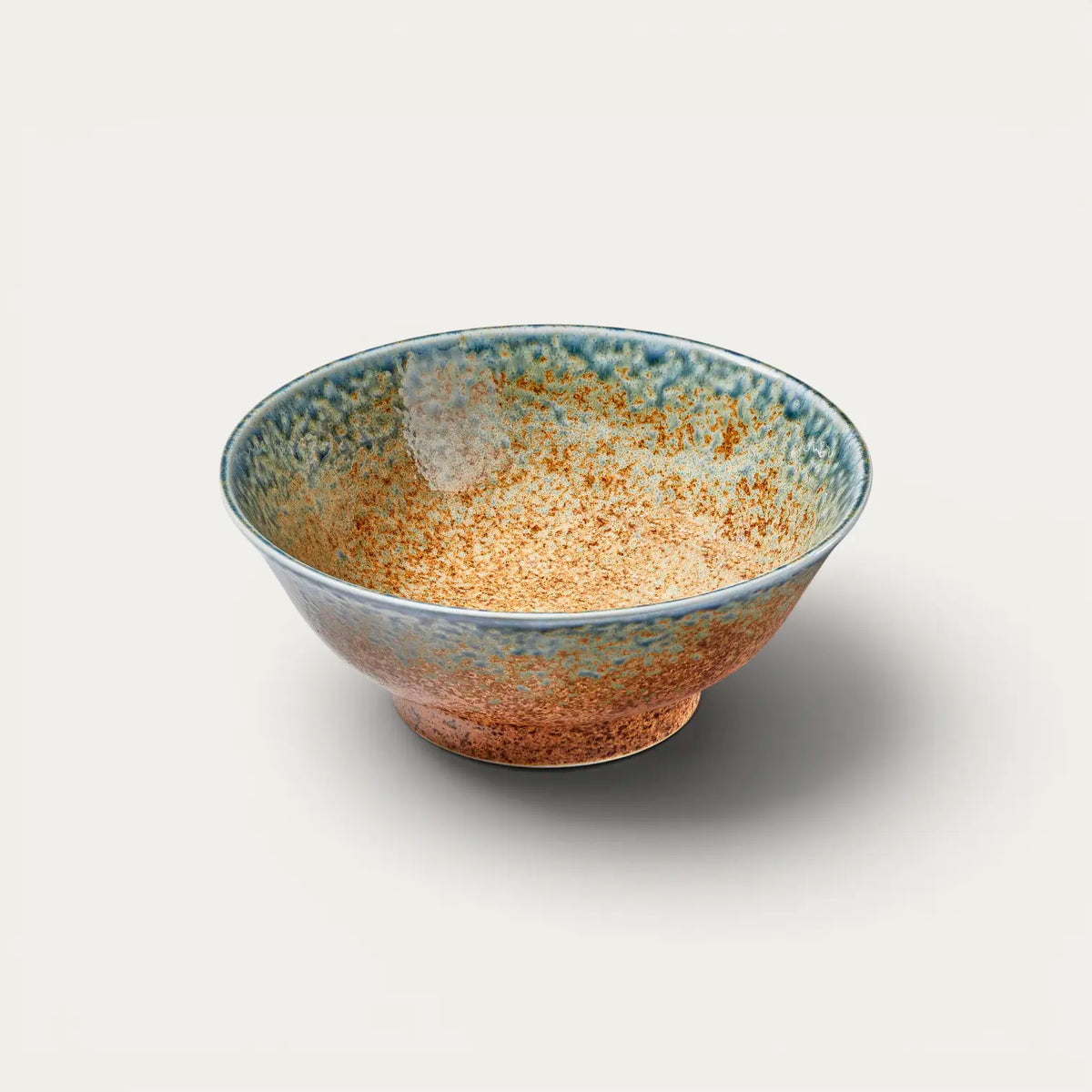

A proper ramen bowl is more than just a vessel: it keeps the broth hot, accommodates noodles and toppings, and lends the dish its table presence. Japanese ramen bowls typically measure 20 to 25 cm in diameter and 7 to 10 cm in depth — dimensions carefully designed to hold a complete serving without spilling over. Choosing the best ramen bowl comes down to three criteria: size, material, and shape. This guide explores each, explains what makes Japanese craft unique, and helps you assemble a matching set, from the bowl to the renge spoon.
The right size: function before form
A complete ramen brings together noodles, around half a litre of broth, and toppings — slices of pork or chicken, marinated egg, nori seaweed, spring onions. The ramen bowl must hold everything while leaving breathing room: this allows you to pick up noodles with chopsticks without splashing, and sip broth straight from the bowl at the end, as custom dictates.

In practice, a capacity of around one litre is the ideal starting point for a generous individual portion of ramen. Consider the weight in hand as well: a full bowl easily approaches 1.5 kg, and a stable foot that is easy to hold makes serving and cleaning far more enjoyable day to day. Smaller bowls are better suited to cold noodles or smaller portions; larger ones enter the realm of big appetites and counter-style service.
Ceramic, stoneware, porcelain: how material transforms ramen
The material influences two key aspects: heat and character. Thick ceramic stores heat effectively — a bowl preheated with hot water keeps broth steaming hot much longer. Stoneware, with its substantial walls, excels in this regard and provides a rustic, artisanal feel. Porcelain, being finer, offers elegance and lightness, though with slightly less thermal retention.

A note on professional kitchens: lightweight, shatterproof melamine dominates high-volume service. It certainly has its place at the noodle bar, but for home dining, nothing beats the tactile quality and heat retention of authentic Japanese ceramic.
The choice primarily comes down to use: robust, generous everyday bowls, or a refined set for hosting guests. In both cases, a high-quality, uniform glaze free of micro-cracks ensures the durability of the bowl.
Japanese bowl shapes and their uses
Japanese tableware offers a dedicated shape for every dish — which is what makes a Japanese table setting so harmonious. The following table places the ramen bowl within the family of Japanese bowls.

| Bowl | Approximate diameter | Depth | Use |
|---|---|---|---|
| Ramen bowl | 20 to 25 cm | Deep | Ramen, complete noodle soups |
| Udon bowl | 18 to 22 cm | Large, flared walls | Udon, hot soba, hearty donburi |
| Rice bowl | 10 to 12 cm | Medium | Single portions of rice, side dishes |
| Donburi bowl | 15 to 18 cm | Medium to deep | Rice bowls (oyakodon, gyudon) |
If you are hesitating between ramen and udon, udon bowls, which are slightly more flared, are the most versatile of the two; the ramen bowl remains the most impressive choice for hearty soups.
Made in Japan vs generic: why origin matters
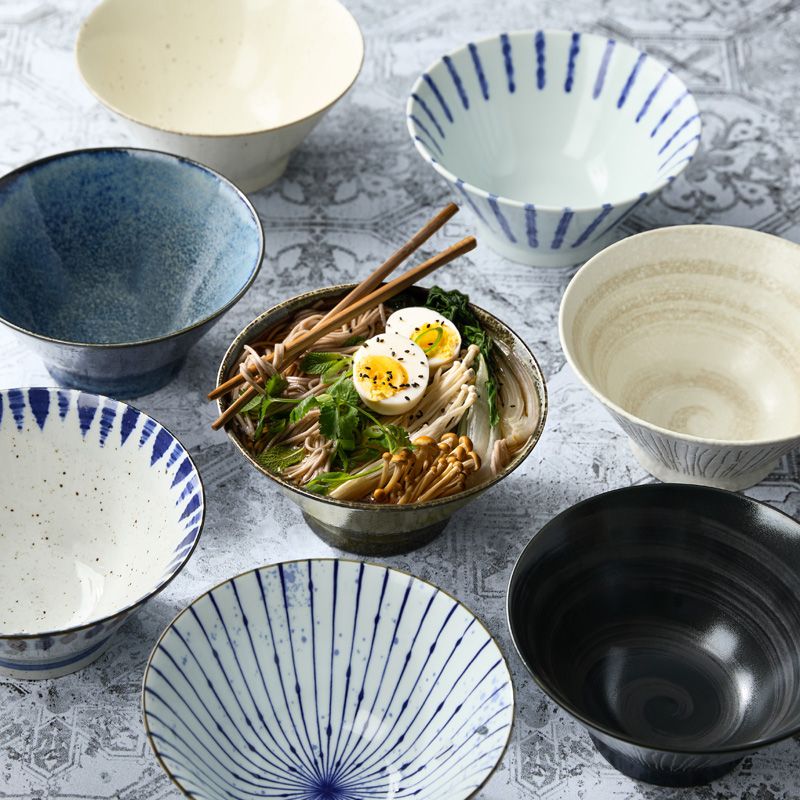
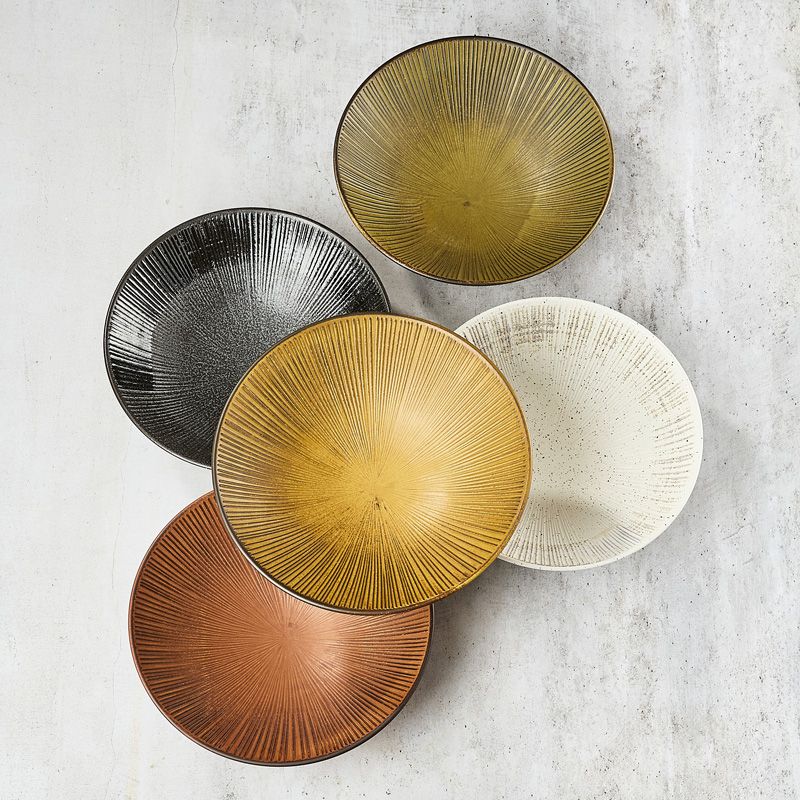
The market is filled with mass-produced “Japanese-style” bowl sets, often sold with matching chopsticks and spoons. While perfectly fine for beginners, the difference is clearly felt in everyday use. A bowl made in Japan stands out for the quality of its clay and glaze, the evenness of the firing, and its unique patterns — each series carries its own character, often featuring subtle variations that showcase artisanal craft.

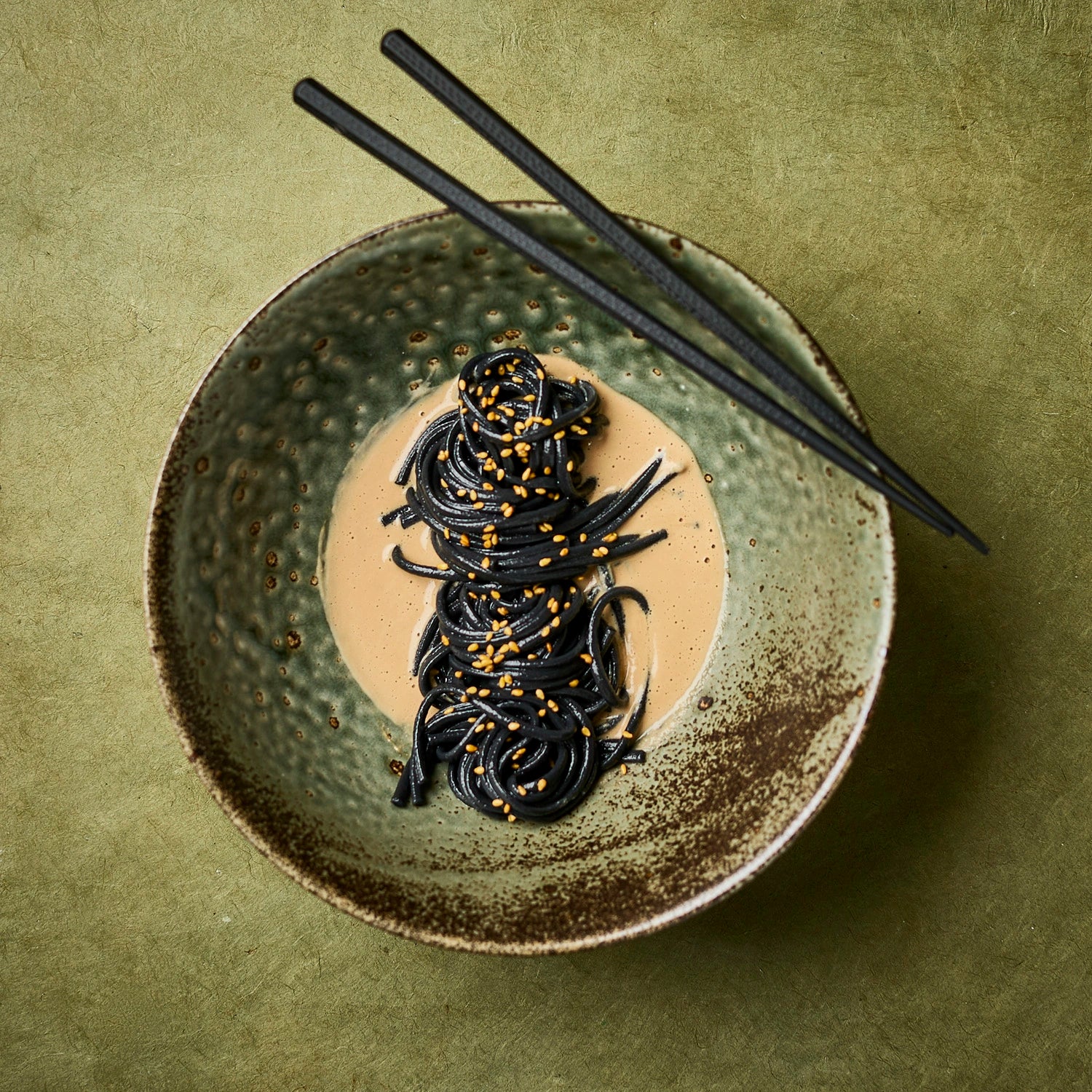
Two examples from our selection highlight this diversity: the deep green wasabi ramen bowl, and the more mineral-toned brown and blue ramen bowl. Same proven size, two distinct personalities — ideal for creating an intentionally eclectic set, true to the spirit of ramen bars.
Accessories to complement your bowl
Serving ramen relies on a trio: the bowl, chopsticks, and the renge spoon — a deep, flat-bottomed spoon designed to sip broth and scoop up toppings. There are two main options:

- The renge porcelain ramen spoon, a restaurant classic, stable and easy to rest on the rim of the bowl;
- The bamboo ramen spoon, gentler to the touch and naturally insulating.
Preheat the bowl, arrange the noodles, ladle in the piping-hot broth, and add your toppings: it is ready to serve. Preheating is well worth turning into a habit: filling the bowl with hot water while boiling the noodles, then emptying it just before plating, keeps the broth hot for minutes longer — a classic ramen bar trick that transforms the meal.
From the bowl to the recipe

The ultimate test of a bowl remains a proper homemade ramen. Our chicken ramen recipe details broth, noodles, and toppings step by step — the perfect opportunity to inaugurate your bowl and see how a generous capacity truly elevates the meal. To build or expand your tableware, our selection of ramen bowls made in Japan brings together classic shapes and artisan designs.
FAQ: your questions about ramen bowls
What size ramen bowl should you choose?
Allow for 20 to 25 cm in diameter and 7 to 10 cm in depth, for a capacity of around one litre. This size comfortably accommodates noodles, broth, and toppings without overcrowding.
What capacity should you choose?
Around 1 litre for a generous single ramen serving. Slightly less for smaller portions and cold noodles, slightly more for hearty appetites or noodle-bar-style service.
Which material retains heat best?
Thick ceramics, especially stoneware: preheated with hot water, they keep the broth piping hot for significantly longer. Fine porcelain, though more elegant, retains heat slightly less.
Can a ramen bowl go in the microwave or dishwasher?
It depends on the clay and glaze of each bowl: this is stated on each product page. When in doubt, hand washing always protects decorative patterns best.
What is the difference between a ramen bowl and an udon bowl?
Close cousins: the udon bowl is usually slightly more flared, while the ramen bowl is a little deeper. The former is more versatile, while the latter is the most generous for complete soups.
Why are there so many types of bowls in Japanese tableware?
Because every dish has a dedicated vessel: rice, miso soup, donburi, noodles. Inherited from traditional dining, this specialisation genuinely improves the eating experience for each recipe.
Which bowl to start with?
A 20 to 22 cm ramen bowl in thick ceramic, with a design you love. It can also be used for udon, large salads, and stews — making it the most versatile first purchase.


