









Direct answer — the best nori seaweed for sushi and maki is yaki nori (roasted, unseasoned) with a deep, glossy green-black colour that is thick and crispy. Quality nori dissolves cleanly without toughness or holes. For snacking, seasoned nori (ajitsuke) is ideal.
| Type | Use | Characteristic |
|---|---|---|
| Yaki nori (plain roasted) | Sushi, maki, onigiri | Crispy, neutral flavour, easy to handle |
| Ajitsuke nori (seasoned) | Snack, over rice | Sweet-savoury, ready to snack on |
Nori seaweed is indispensable in Japanese cuisine: it wraps maki rolls, covers onigiri, and garnishes bowls of ramen. Yet quality varies considerably from one product to another. Here is how to choose good nori.
What is nori?
Nori is a seaweed (from the genus Pyropia) that is cultivated and processed into thin dried sheets, much like paper. Most culinary nori is roasted (yaki nori), which enhances its flavour and crispness. The finest comes from renowned areas such as Japan's Ariake Sea.

How to recognise quality nori
- Colour: a deep, glossy green-black indicates top-grade nori; a dull or reddish tint reveals inferior quality.
- Thickness and uniformity: an even sheet, free of holes or thin spots, is easier to handle.
- Crispness: good nori snaps when dry and melts pleasantly in the mouth.
- The harvest: the first harvest (shinnori) yields the most tender and aromatic sheets.
Yaki nori or seasoned nori?

Yaki nori (plain roasted) is the best choice for cooking: sushi, maki, temaki, onigiri, or ramen toppings. Neutral and sturdy, it cuts and rolls easily. Seasoned nori (ajitsuke nori), which is sweet, savoury, and often lightly oiled, is meant to be eaten as a snack or placed over a bowl of rice.
How to store it
Nori is sensitive to moisture, its number-one enemy. Store it in an airtight container with a desiccant pack, away from air. Soft nori can be revived for a few seconds over a low flame or in a dry pan to restore its crisp texture.
How to use it
| Dish | Type of nori |
|---|---|
| Maki / sushi rolls | Yaki nori (full sheets) |
| Onigiri | Yaki nori (strips) |
| Ramen / soups | Yaki nori (squares) |
| Snack, over rice | Ajitsuke (seasoned) |
The nutritional benefits of nori
Beyond its culinary role, nori is packed with nutrients. Very low in calories, it is rich in protein (up to a third of its dry weight), fibre, minerals, and iodine, and provides vitamins (including provitamin A and B vitamins). Its iodine content, beneficial in normal amounts, simply calls for moderate consumption. A sheet of nori remains a light, healthy snack, which explains the popularity of ready-to-eat varieties.
Where does the best nori come from?

The most famous nori comes from Japan, particularly the Ariake Sea in the southwest of the archipelago, where nutrient-rich waters and dramatic tides produce seaweed of exceptional quality. The nori is grown on nets, harvested, washed, chopped, and dried into thin sheets, much like washi paper. The season's first harvest (shinnori) is the most prized: its sheets are the most tender, fragrant, and glossy. Origin and harvest timing are therefore key indicators of quality.
Common mistakes to avoid
- Leaving the packet open → nori absorbs moisture and turns soft in a few hours. Reseal airtight.
- Confusing yaki and ajitsuke → do not use seasoned nori (sweet and savoury) for maki: it upsets the flavour balance.
- Choosing based solely on price → dull, thin nori tears easily and lacks aroma; deep colour is a reliable sign of quality.
Our comparative selection
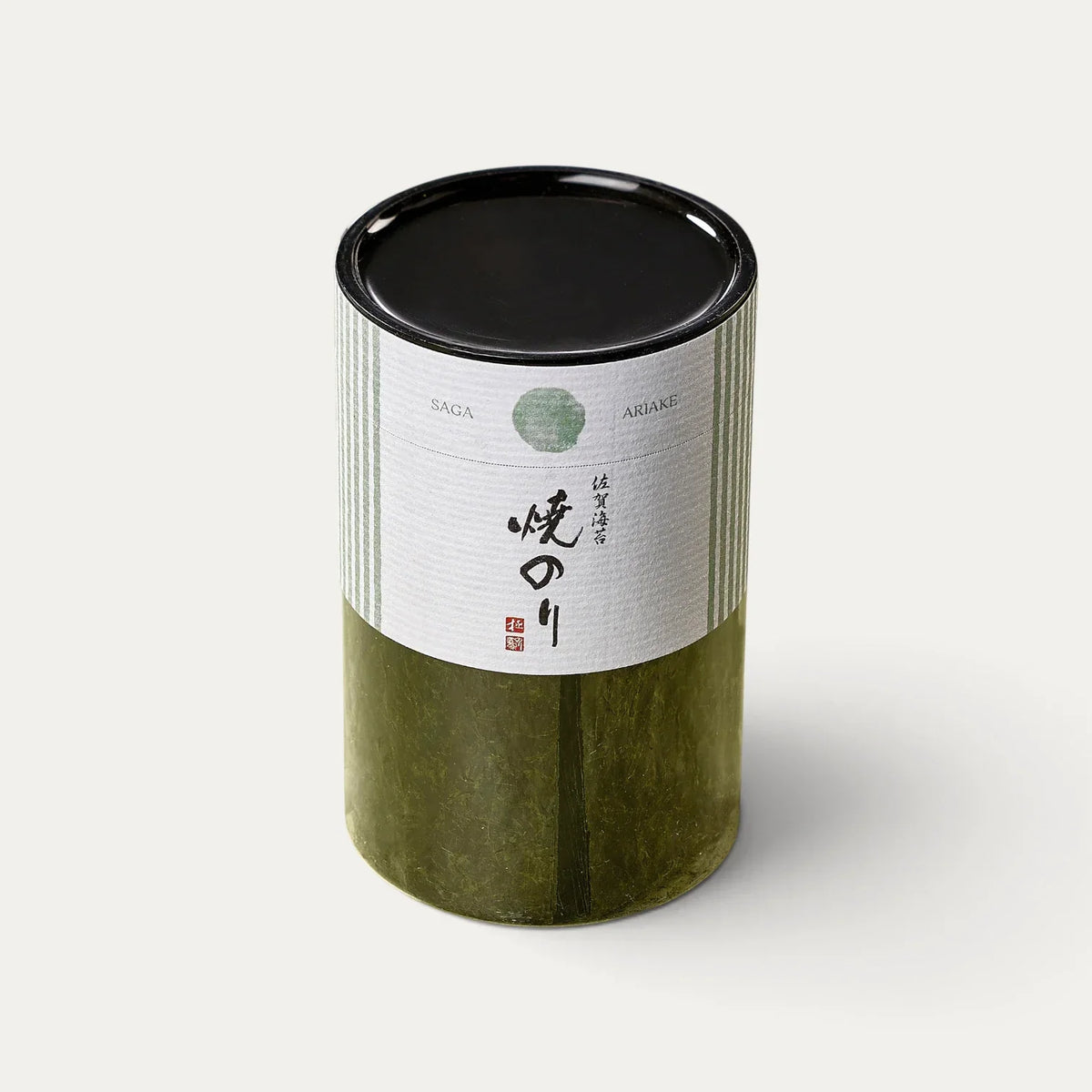
All our nori seaweed comes from the Ariake Sea or renowned artisan producers. Comparison by format:
| Our product | Format | Ideal for |
|---|---|---|
| High-quality plain roasted nori | 40 portions, glossy green-black | Maki, sushi (the all-rounder) |
| High-quality plain roasted nori | Full sheet, 30 g | Sushi, aperitif |
| Premium half-sheet nori | Half-sheets | Onigiri, convenient |
| Kinshi nori angel hair strips | Fine shreds | Rice, noodles, salads |
Pair with a quality sushi rice.
Frequently asked questions
Which nori should you choose for sushi?
Yaki nori (roasted, unseasoned), glossy green-black in colour, thick, and crispy: it is easy to handle and slice.
What is the difference between yaki nori and seasoned nori?
Yaki nori is plain roasted, ideal for cooking; seasoned nori (ajitsuke) is sweet and savoury, meant for snacking.
How can you tell high-quality nori?
By its deep, glossy green-black colour, even thickness, and crispness. A dull shade indicates inferior quality.
How to store nori seaweed?
In an airtight container with a desiccant, away from moisture, its main enemy.
How to revive soft nori?
Pass it for a few seconds over a gentle flame or in a dry frying pan to restore its crispness.
Is nori good for your health?
It is rich in minerals, iodine, and protein, and very low in calories — a great nutritional asset, best enjoyed in moderation for its iodine.
Which side of the nori should you use for maki?
The shiny side facing outward, the matte (rough) side against the rice, so the rice adheres better.
Can you eat nori as it is?
Yes, especially seasoned versions. Plain yaki nori also makes a great snack.
Our verdict
For cooking, choose quality yaki nori: deep, glossy colour, clean snap, and uniform sheets. Keep some seasoned nori on hand for snacking. Above all, keep them away from moisture — that makes all the difference over time.


