








The short answer — the best kombu depends on how you plan to use it. For a rich, full-flavoured dashi (and simmered dishes), choose Rausu. For a clear, refined broth (kaiseki cuisine), opt for Rishiri or Ma-kombu. For versatile, economical everyday use, Hidaka is the best place to start. And for an exceptional dashi, the pinnacle of the range is cellar-aged kombu, known as Kura-gakoi.
| Type | Resulting dashi | Ideal for |
|---|---|---|
| Rausu | Rich, deep, dark amber | Simmered dishes, shabu-shabu, hot pot |
| Rishiri | Clear, fragrant, delicate | Refined cuisine (kaiseki), clear broths |
| Ma-kombu | Clear, umami + sweetness | Premium dashi, special occasions |
| Hidaka | Mild, versatile | Everyday use: miso, simmered dishes, simmered fish |
| Cellar-aged (Kura-gakoi) | Highly concentrated, elegant umami, without a pronounced marine flavour | Exceptional dashi, cold infusion |
Kombu is an essential seaweed in Japanese cuisine: it is the base of dashi, the umami-rich broth that flavours miso soups, stews, and sauces. However, several varieties exist, each with very different profiles. Here is how to choose the right one.
What is kombu?
Kombu is a large brown seaweed (Saccharina japonica) harvested after two to three years of growth. Around 90% of Japan’s production comes from Hokkaido, its northernmost island. Its high glutamic acid content makes it one of the richest sources of natural umami. It is soaked in cold water, then heated gently without ever bringing it to the boil to extract the dashi.

The 4 main types of kombu
All belong to the same species, but grow along different coastlines of Hokkaido, giving them distinct profiles.
- Rausu: harvested along the Shiretoko Peninsula, with soft fibres. It yields a very rich, deep, and aromatic dashi with a darker brown hue. Perfect for simmered dishes, shabu-shabu, and hot pots.
- Rishiri: firmer in texture, it produces a clear, fragrant, and delicate dashi, prized by kaiseki chefs because it does not overpower other flavours.
- Ma-kombu: thick and wide (from the Hakodate region), it yields a clear, umami-rich dashi with a natural sweetness. A premium kombu for special occasions.
- Hidaka: the most common and versatile type. With its supple fibres, it is used for both dashi and simmered dishes (tsukudani, kombumaki). It is also widely used to wrap fish fillets, such as salmon, for gentle simmering: the kombu is then eaten with the fish. Affordable and easy to use, it is the best kombu to start with.

Cellar-aged kombu (Kura-gakoi): the pinnacle of quality
Like a fine wine, some kombu is aged after harvesting using a technique called Kura-gakoi. The seaweed is stored in a Japanese cedar-wood cellar under controlled temperature and humidity. This ageing softens its marine aroma and concentrates its umami. The result is exceptionally high-quality kombu that infuses well in cold water and releases outstanding flavours.
Our Kura-gakoi cellar-aged kombu from the Rishiri and Rebun islands comes from Okui Kaiseido, a leading Japanese producer specialising in this technique.
Which kombu for which dish?
| Your needs | The right choice |
|---|---|
| A single versatile kombu | Hidaka — affordable and forgiving |
| A clear, refined broth | Quality Rishiri or Ma-kombu |
| Shabu-shabu, hot pot, stews | Rausu — stands up to long cooking |
| Simmered fish wrapped in seaweed | Hidaka — eat it with the fish |
| For cold-infused or exceptional dashi | Kura-gakoi cellar-aged kombu |
| A special occasion | High-end Hakodate Ma-kombu |
How to judge quality
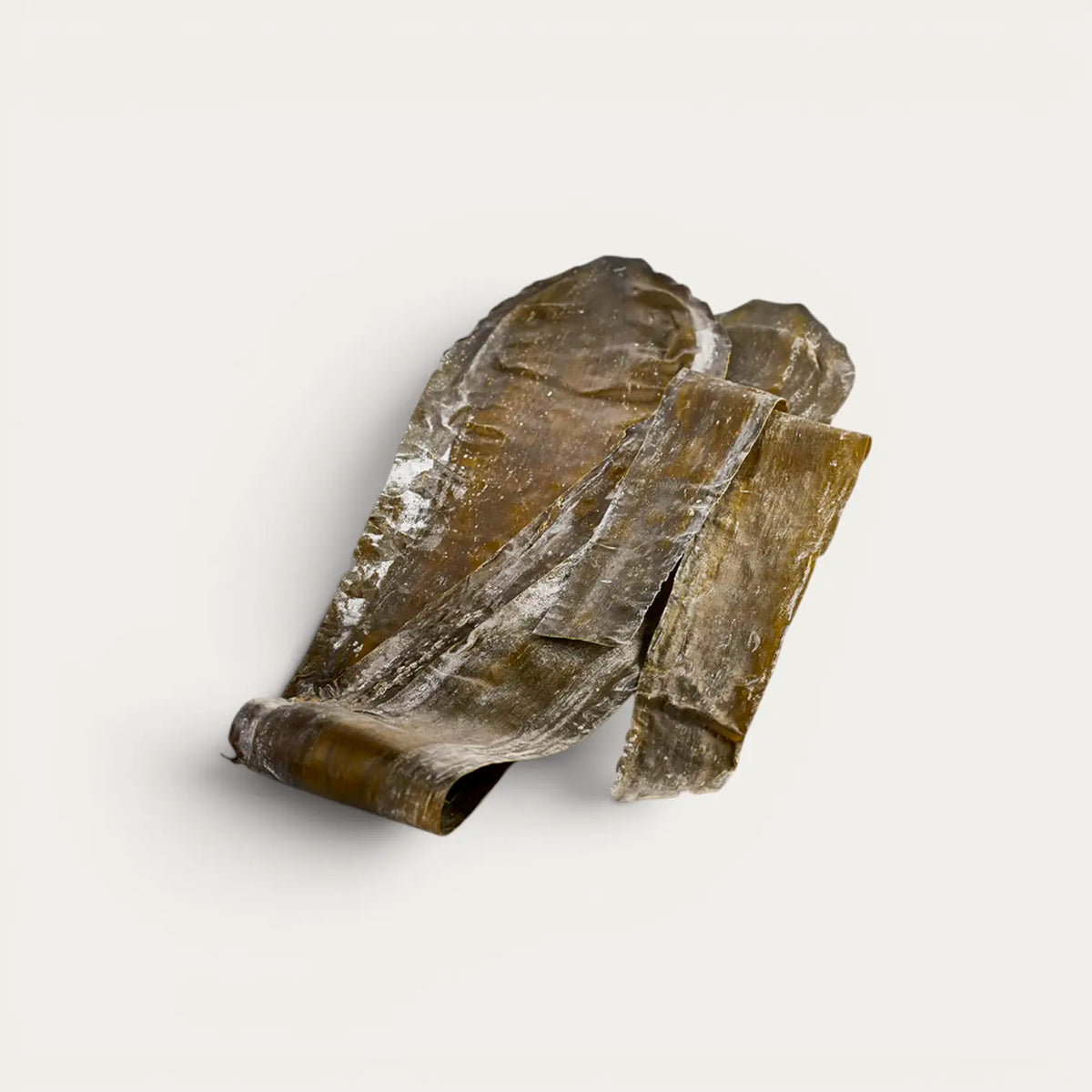
Good kombu is thick, broad and evenly shaped, sometimes with a natural white coating on its surface (mannitol, a sign of umami) — do not mistake it for mould, and do not wash it off. Some kombu, such as Hidaka, are graded from 1 to 5: the higher the grade, the thicker and more flavourful the seaweed. Cellar-ageing is another sign of exceptionally high quality.
Umami: the science of kombu
Kombu holds a special place in the history of taste: it was by studying its broth at the beginning of the 20th century that a Japanese scientist identified glutamic acid as the source of umami, the “fifth taste” alongside sweet, salty, sour, and bitter. Kombu boasts one of the highest natural concentrations. This umami pairs exceptionally well with the inosinate in dried bonito flakes: this synergy provides all the power of awase dashi, the essential blended stock of Japanese cuisine.

Kombu beyond dashi
Once you have made your dashi, do not throw away the kombu: make it into tsukudani (simmered in soy sauce, mirin, sake and sugar), cut it into strips for simmered dishes, or use it for kombumaki (kombu rolls stuffed with fish). Hidaka can also be used to wrap salmon fillets or other fish for gentle simmering; the seaweed is eaten with the fish. Some kombu can also be shaved into fine flakes (tororo or oboro kombu) and sprinkled over soup or a bowl of rice. Finally, kombu is used for kobujime, a technique for curing raw fish wrapped in seaweed. Nothing goes to waste.
How to make dashi
- The night before, wipe the kombu (without rinsing it) and soak it in the water you will use for cooking.
- On the day, put the kombu in cold water and heat gently.
- Stop heating between 68 and 75 °C, depending on the flavour you want: around 68 °C for a delicate dashi, or 75 °C for a fuller flavour. Never let it boil, as the broth may turn bitter and slimy.
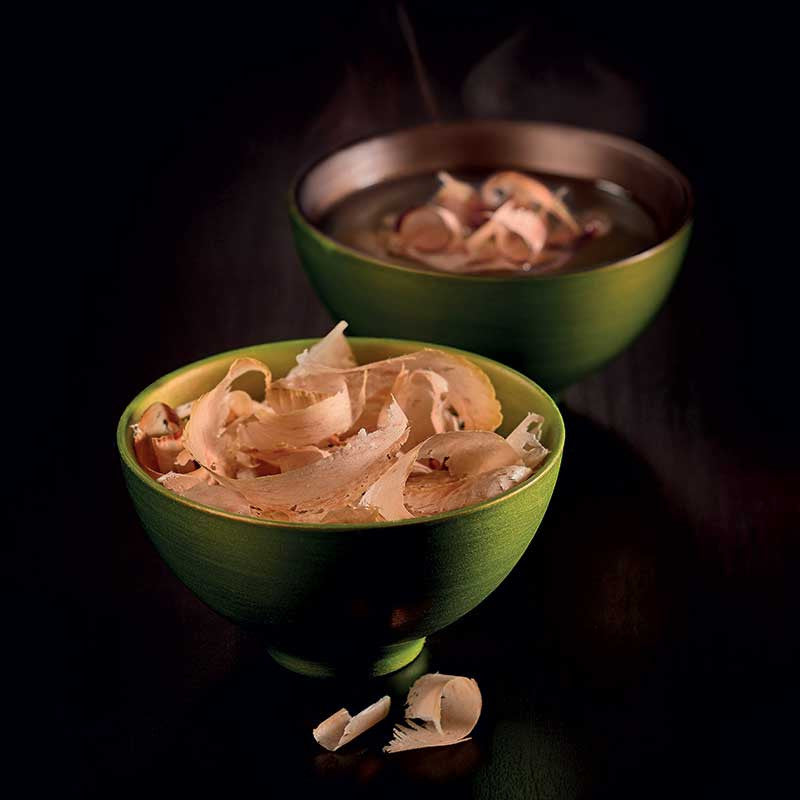
For awase dashi, add flakes of dried bonito, or katsuobushi. With Kura-gakoi aged kombu, simply infusing it in cold water in the fridge already produces a remarkably delicate dashi.
Our comparative selection
Our range of kombu covers the main styles, from clear dashi to the richest dashi. Here is how our products compare:
| Our product | Type / Profile | Ideal for |
|---|---|---|
| Kura-gakoi cellar-aged kombu, Rishiri and Rebun islands | Cellar-aged, with highly concentrated, elegant umami | Exceptional dashi, cold infusion |
| Premium Rausu Kombu | Rausu, very rich dashi | Simmered dishes, hot pot |
| Ma Kombu | Refined sweetness, clear broths | Premium dashi, special occasions |
| Cultivated Hokkaido Ma Kombu | Clear, umami, and sweetness | Everyday dashi with a refined twist |
| Hokkaido Hidaka Kombu | Hidaka, mild and versatile | First kombu, miso, simmered dishes, wrapped fish |
Frequently asked questions
Which is the best kombu for dashi?
For a rich dashi: Rausu. For a clear, refined broth: Rishiri or Ma-kombu. For everyday use: Hidaka. For an exceptional dashi: Kura-gakoi cellar-aged kombu.
What is Kura-gakoi kombu?
Kombu aged in a cedar-wood cellar under controlled temperature and humidity. Ageing softens its marine notes and concentrates its umami; these kombu are excellent for cold infusion.
What is the difference between Rausu, Rishiri, Ma-kombu, and Hidaka?
All are Saccharina japonica from Hokkaido, but harvested along different coastlines: Rausu yields a powerful dashi, Rishiri and Ma-kombu a clear broth, and Hidaka a mild, versatile profile.
Should you boil kombu?
No: start with cold water after soaking the kombu overnight, and stop heating between 68 and 75 °C. Too much heat makes the dashi bitter and slimy.
Should kombu be rinsed or washed?
No, simply wipe it with a cloth. The white powder on the surface is umami (mannitol), not mould.
Which kombu should you choose as a beginner?
Hidaka: affordable, forgiving, and versatile, it works just as well for dashi as it does for simmered dishes.
How to store kombu
In a dry place, in an airtight container away from moisture. It keeps for a very long time.
Is kombu good for your health?
Yes: it is rich in minerals, fibre, and iodine. Due to its iodine content, consume it in moderation.
What is kombu's umami?
Kombu is exceptionally rich in glutamic acid, the source of umami, that savoury and deep “fifth taste”.
Our verdict
In the Nishikidôri range: to explore kombu, Rausu offers a rich, approachable broth; for a clear, refined dashi, choose Ma Kombu; for everyday use and simmered fish, Hidaka is the most forgiving; and for an exceptional dashi, choose Kura-gakoi cellar-aged kombu. The quality of the kombu comes through directly in the depth of your dashi.


