








Which rice should you choose for onigiri?
The right rice for onigiri is Japanese short-grain rice that stays soft when cold: Nanatsuboshi, Fukkurinko or Sumidaya special onigiri rice, prepared for this purpose. Don’t season it with vinegar: shape it while warm, with a little salt.
All these varieties are in our Japanese rice selection, imported from three Japanese producers (Hakodate Beikoku, Sumidaya and Wakai Noen) and sold at our grocery shop at 6 rue Villédo in Paris’s 1st arrondissement, rated 4.7/5 from 327 Google reviews. This guide compares the four varieties suitable for onigiri, explains why some rice stays soft when cold, and shows you how to cook, salt and shape it.
Rice for onigiri: Japanese short-grain rice that is sticky enough to shape by hand and stays soft for several hours after cooking, when the onigiri is eaten cold.
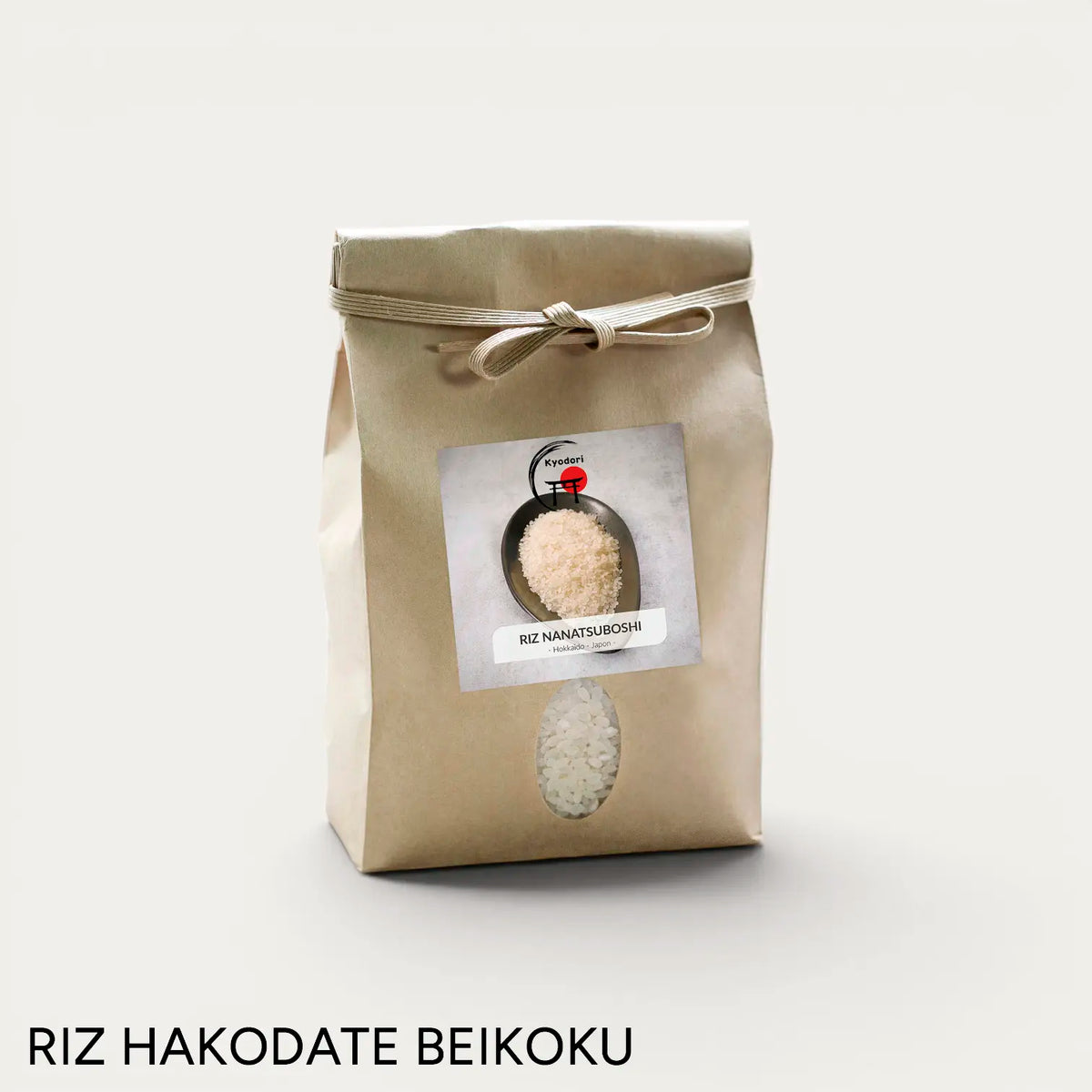
A time-specific fact: Hokkaido Nanatsuboshi, described by its producer as “delicious cold”, received a “Special A” rating for 11 consecutive years.
Onigiri rice or sushi rice: what’s the difference?
Both are Japanese short-grain rice, often sold in the same packet. What differs is how they’re prepared and when they’re eaten.
| Sushi rice | Onigiri rice | |
|---|---|---|
| Seasoning | rice vinegar, sugar, salt | salt, sometimes nothing |
| Eaten | straight away, at room temperature | often cold, later in the day |
| Desired texture | firm, well-separated grains | soft, cohesive grains that hold together in your hand |
A recipe for onigiri that calls for “sushi rice” will work, on one condition: don’t add vinegar to the rice. Vinegar gives sushi rice its tangy flavour; onigiri rice is salted instead. Find the step-by-step method in our traditional onigiri recipe.
The 3 criteria for good onigiri rice
- Round-grain japonica rice: only this type is sticky enough to shape. Long-grain rice, such as basmati or Thai rice, falls apart in your hand.
- Grains that stay soft when cold: that’s what sets these rice varieties apart. The Fukkurinko product page attributes this to a low amylose content, which makes the grains more tender and stickier.
- Just the right stickiness: enough to hold together, but not so much that it becomes pasty. Glutinous rice, or mochigome, is used for mochi, not onigiri.
The final criterion comes down to cooking: rinse and soak the rice, then cook it covered so the grains keep their shape. Our step-by-step method is detailed in how to cook Japanese rice.
Our onigiri rice varieties compared
| Rice | What the product page says | Ideal for | Price per kilo |
|---|---|---|---|
| Nanatsuboshi | “delicious cold” · “Special A” for 11 consecutive years | bento boxes, onigiri eaten the next day | €8.95 (1 kg) |
| Sumidaya special onigiri rice | a blend designed for onigiri · polished in 6 to 9 stages | rice made for the purpose | €22.17 (1.8 kg) |
| Fukkurinko | tender and sticky, low in amylose · “Special A” for “several years”, according to its product page | onigiri that hold together well, on a budget | €8.00 (2 kg) |
| Yumepirika | melt-in-the-mouth texture, pronounced sweetness · “Special A” for 10 consecutive years | onigiri eaten warm | from €9.51 (1 kg) to €6.46 (5 kg) |
For onigiri packed in a bento box, choose Nanatsuboshi rice. For rice prepared specifically for the purpose, choose Sumidaya special onigiri rice. For the best price per kilo and grains that hold together particularly well, choose the 2 kg pack of Fukkurinko rice.
The “Special A” grade is the highest in the annual Japanese rice rankings compiled by the Japan Grain Inspection Association. Six criteria are assessed: appearance, aroma, taste, stickiness, firmness and overall rating.
The price per kilo ranges from €6.46 to €22.17, more than threefold. Sumidaya special onigiri rice costs more because it’s blended and polished for this purpose; the Hokkaido rice varieties, sold in 1, 2 and 5 kg packs, are the most economical for everyday onigiri.
Cook, salt and shape the rice for onigiri
- Allow 40 g of uncooked rice per onigiri: our recipe uses 80 g for two.
- Cook rice that has been rinsed three times and soaked for 30 minutes to 2 hours, using the same weight of water as rice. Simmer for 10 minutes after it comes to the boil, then leave covered for 15 minutes (details in how to cook rice in a saucepan). Let it cool until warm: too hot and it will burn your hands; cold and it will no longer stick together.
- Wet your hands with salted water: it salts the onigiri rice in place of vinegar.
- Shape into a triangle with three gentle presses, keeping the filling in the centre.
- Add the nori just before eating so it stays crisp.
Find fillings and illustrated step-by-step instructions in our onigiri recipe.
What can you put in an onigiri?
Place the filling in the centre, in a hollow made with your thumb, then close the rice around it. The filling should be fairly dry: liquid seeping out will make the rice soggy and the onigiri will fall apart.
- Plain or shio: just salted rice, so you can taste the grains.
- Salted plum: umeboshi plum, sour and very salty, is a traditional filling.
- Flaked grilled salmon, or well-drained tuna mayonnaise.
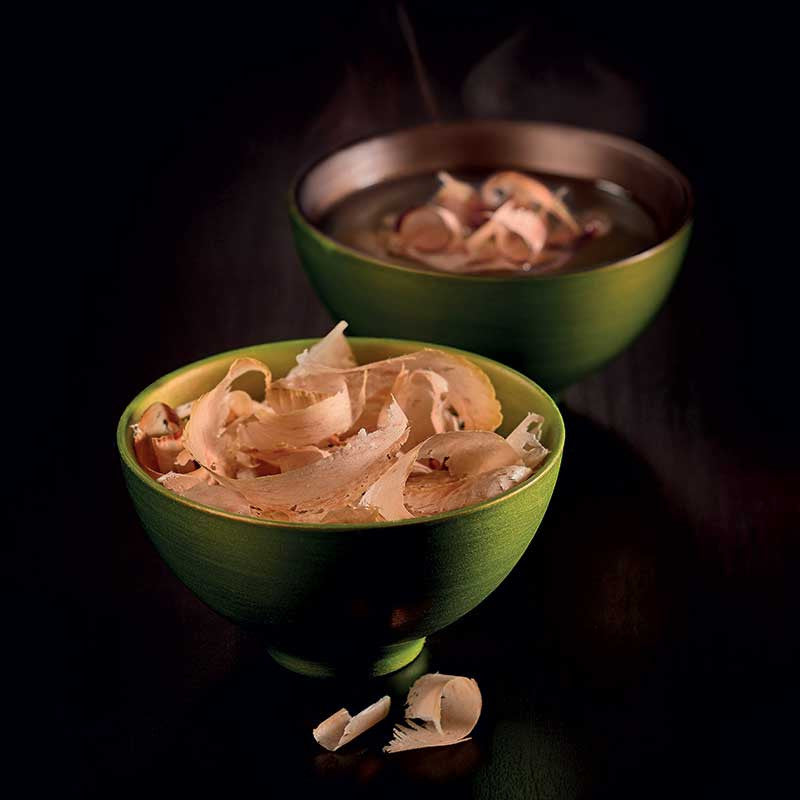
- Katsuobushi and soy sauce: dried bonito flakes bound with a dash of soy sauce.
- Furikake: a seasoning sprinkled over the rice, with no filling in the centre.
Use one teaspoon of filling per onigiri, no more, so the rice remains the main flavour. Find fillings, moulds and nori in our onigiri selection.
What you need to shape your onigiri
- An onigiri mould for even triangles without burning your hands.
- Nori sheets for onigiri, pre-cut to the right size.
- The homemade onigiri kit has the essentials for your first attempt.
You don’t need a mould: wet your hands with salted water to stop the rice sticking while seasoning it at the same time. A mould is mainly useful for making onigiri all the same size, handy for a bento box or a group picnic.
See all our onigiri-making equipment
Your questions about rice for onigiri
Which rice is best for onigiri?
Japanese short-grain rice that stays soft when cold: Nanatsuboshi, Fukkurinko or rice prepared for the purpose, such as Sumidaya special onigiri rice.
What are onigiri?
Balls or triangles of Japanese rice shaped by hand, often filled with salmon, tuna or umeboshi plum and wrapped in a sheet of nori. In Japan, people take them along like a sandwich.
What is the original onigiri recipe?
Cooked Japanese rice, salt, a filling and a strip of nori. The simplest version, shio onigiri, is just salted rice shaped by hand.
Do you eat the seaweed on onigiri?
Yes, you eat the nori sheet with the rice. Add it just before eating so it stays crisp.
Can you make onigiri the day before?
Yes. Shape them, then refrigerate them tightly wrapped no later than 2 hours after cooking, as the French food safety agency Anses recommends for cooked food; don’t leave them at room temperature. Keep perishable fillings, such as tuna mayonnaise or salmon, chilled, and put an ice pack in the bento box. Rice that stays soft when cold, such as Nanatsuboshi, hardens less in the fridge.


