








The perfect lump-free iced matcha latte recipe
Ingredients
for 1 tall glass
- 2 to 3 g premium Japanese matcha, about one heaped teaspoon
- 40 ml pure water heated to 75°C, 80°C maximum
- 150 to 200 ml chilled milk, preferably oat or almond
- A generous handful of large ice cubes
- Optional: a dash of agave syrup, maple syrup or liquid cane sugar
As soon as the warm weather arrives, Tokyo and Kyoto cafés switch to summer mode with a drink that has gained cult status. Aesthetic, delicious and refreshing, the iced matcha latte combines the vegetal intensity of Japan with creamy sweetness.
Mastering this recipe at home requires a bit of technique. All too often, the result is bland, bitter, or flecked with lumps of undissolved powder. Here are the techniques used by Japanese baristas for an iced latte with a flawless emulsion.
Which matcha powder should you choose for an iced matcha latte?
It is the most common mistake: assuming that milk and sugar will mask the flaws of poor-quality tea. The opposite is true. Cold locks in volatile aromas and heightens astringency. With a low-grade culinary powder, often yellowish and poorly shaded, the drink develops an unpleasant bitterness.
For the umami to cut through cold milk, you need a premium or ceremonial grade. A quality matcha powder, slowly stone-ground, provides a vibrant emerald-green colour and a natural sweetness that reduces, or even eliminates, the need for added sugar.
Ingredients and equipment
Proportions for a tall glass
- 2 to 3 g of premium Japanese matcha, roughly a rounded teaspoon or two chashaku scoops
- 40 ml pure water, heated to 75°C (80°C maximum)
- 150 to 200 ml cold milk — oat and almond pair exceptionally well with the grassy notes
- A generous handful of large ice cubes
- Optional: a dash of agave syrup, maple syrup or liquid cane sugar
Equipment
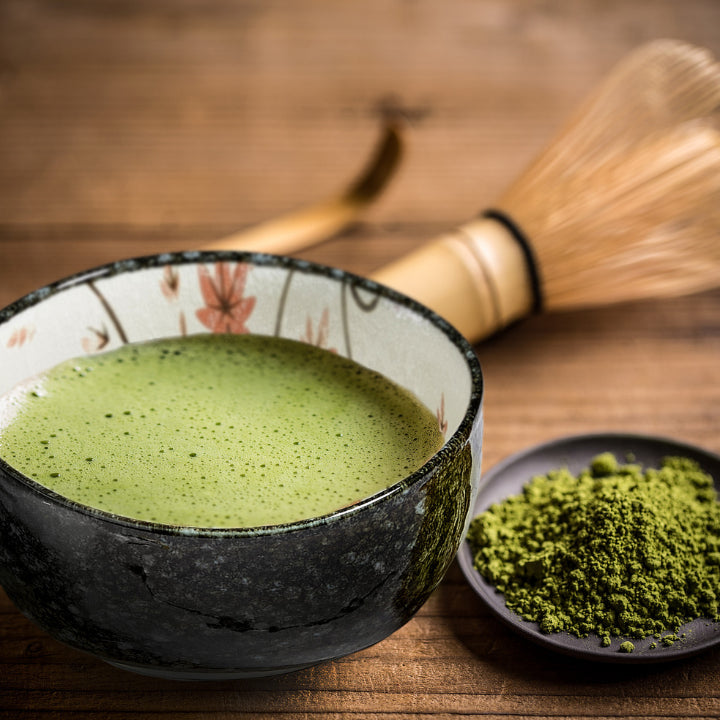
- A chasen, the bamboo whisk essential for emulsifying
- A chawan (ceremonial bowl) or a wide, flat-bottomed bowl
- A small fine sieve
Preparation: the secret to two-tone layering
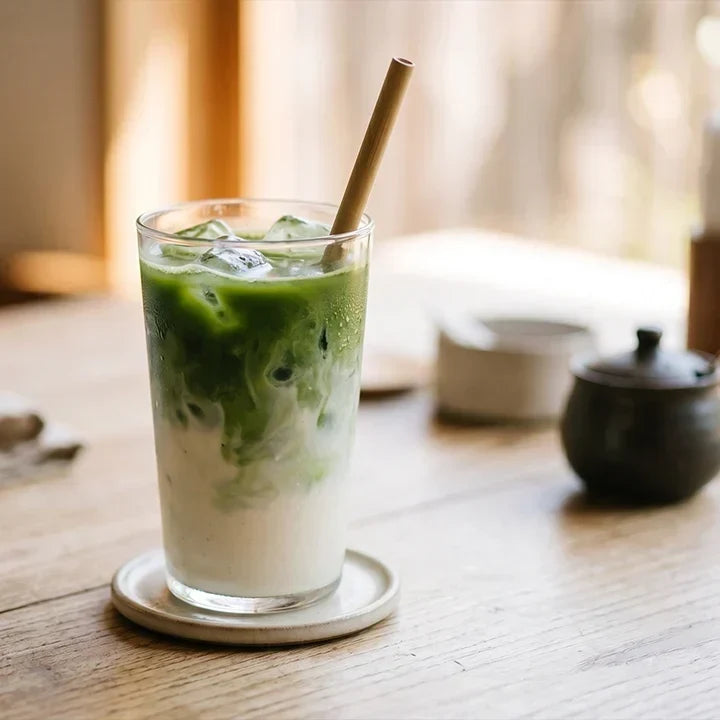
Presentation matters. The aim of an authentic iced matcha latte is that striking layered effect: pristine white at the bottom of the glass topped with intense green, blending only when you take a sip.
- Sifting: sift the powder through a fine sieve into the bowl. A non-negotiable step to aerate it.
- The matcha shot: pour the water at 75°C over the sifted powder.
- The emulsion: using the bamboo whisk, whisk vigorously in a "W" pattern across the bottom of the bowl. The movement should come from your wrist, not your arm. Within 15 seconds, a dense froth will form. If sweetening, add the syrup now and whisk briefly once more.
- Assembly: fill a tall glass right to the top with ice cubes.
- The milk: pour the cold milk over the ice cubes, filling about three-quarters of the glass.
- Layering: gently pour the frothy matcha shot over the ice cubes. The cold slows the descent of the tea, allowing it to float atop the milk. Serve immediately.
The trick to avoiding clumps
A common beginner's mistake is pouring all the hot water onto the dry powder at once. The barista secret is the paste technique: before adding hot water, add a few drops of cold water to the sifted powder and gently rub with the whisk to break down micro-clumps until a smooth, glossy paste forms, almost like paint. Then pour in the remaining water at 75°C and whisk vigorously.
Turning your break into a ritual
Making your own iced latte is an act of hospitality towards yourself, and this ritual deserves quality ingredients. To recreate the flavour of Kyoto teahouses, equip yourself with organic matcha powder and traditional utensils imported directly from Japan.
Frequently asked questions about iced matcha
What is the best plant-based milk for an iced matcha latte?
Oat milk is the top choice among baristas: its natural sweetness and subtle toasted grain flavour balance the vegetal notes. Almond milk, being lighter, adds a delicate touch; coconut milk offers a richer, more indulgent take.
Can you make a matcha latte without a bamboo whisk?
Yes, but the result will be less frothy. If you do not have a chasen, a small electric milk frother dissolves the powder effectively. As a last resort, a cocktail shaker with a few ice cubes breaks up clumps, though it will not produce the same emulsion.
Why is my iced matcha latte bitter?
Three possible reasons: culinary grade powder that is naturally astringent, water that is too hot (above 80°C it scorches the leaves and releases tannins), or an incorrect ratio of too much powder to too little liquid.
Should you sweeten your matcha latte?
It is not essential, especially with naturally sweet oat milk and ceremonial grade tea that is naturally mild. If you do sweeten it, opt for a liquid syrup: granulated sugar will not dissolve in an iced drink.
Does it contain as much caffeine as an iced coffee?
One serving of matcha provides 30 to 40 mg of caffeine, compared to 70 to 100 mg for an espresso. L-theanine slows down its absorption, providing a smoother, longer-lasting energy boost without the jitters.
How to achieve a beautiful green froth?
The whisking technique makes all the difference. Avoid circular motions as if making a vinaigrette; instead, make rapid back-and-forth movements from top to bottom with the whisk held vertically. Using water at 75°C also helps significantly.
Can the matcha shot be prepared in advance?
It is not recommended. Matcha oxidises very quickly upon contact with water and air: the colour turns khaki green, the foam collapses, and the fresh aromas vanish. It should be whisked fresh to order.


