







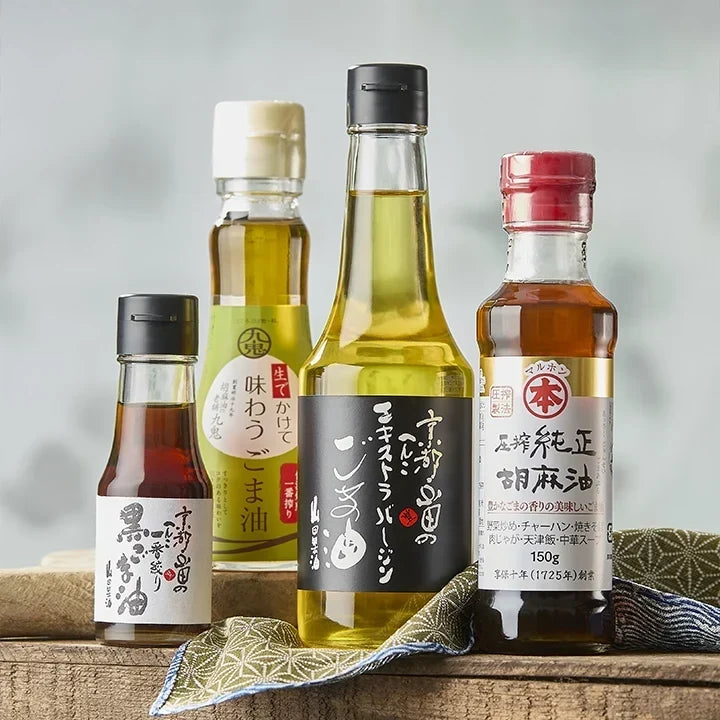

The best sesame oil is not a brand: it is a degree of roasting suited to your use. In the Japanese sesame oil category, three families coexist: toasted oil, golden and balanced, designed for everyday seasoning; roasted oil, dark and powerful, reserved for finishing; and white oil, virgin and unroasted, the only one truly designed for cooking. Choosing the best sesame oil therefore comes down to answering a simple question: do you want to cook, season or flavour? This guide compares the three families — colour, intensity, heat resistance and uses — and directs you towards the right bottles from the Japanese tradition of goma abura, sesame oil as crafted by Japan's master oil producers.
Toasted sesame oil: everyday aromatic balance
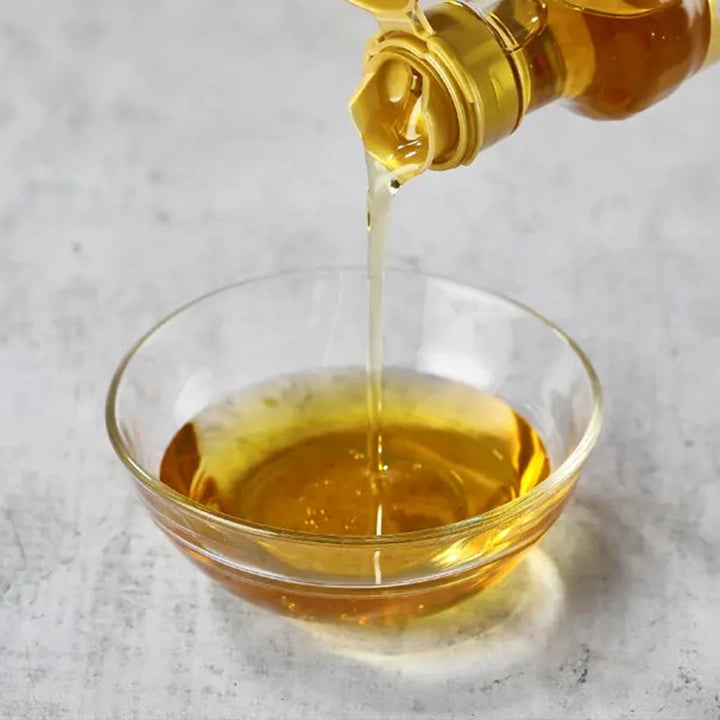
Toasted sesame oil comes from seeds roasted through before pressing. Its golden to amber colour signals a rounded profile: notes of hazelnut and roasted seed, with a clear but non-aggressive finish. It is the most versatile oil in the family.
It excels wherever you want the presence of sesame without overpowering the dish: Japanese dressings, sauces for cold noodles, poultry marinades and stir-fried vegetables added at the end of cooking. A product such as toasted golden sesame oil illustrates this profile: expressive enough to define a dish, yet mild enough for everyday use.
Some Japanese oil producers also use low-temperature roasting, which preserves more delicate aromas — an approach to discover if you find classic oils too pronounced.
Roasted sesame oil: the power of dark roasts
Roasted sesame oil takes the roasting process further. Its colour turns mahogany, almost dark brown, and its aroma becomes intensely roasted, smoky, almost toasted like coffee. A few drops are enough: it is a finishing oil, never a cooking oil.
Add it at the last moment to a bowl of ramen, gyoza, fried rice, tataki or roasted vegetables. The heat of a wok would destroy its aromas and develop bitterness: the aromatic compounds created by roasting are fragile. A dark roasted sesame oil is a typical example of this powerful profile.
Alongside it, roasted black sesame oil, pressed from black sesame seeds, offers an even deeper, slightly cocoa-like profile, sought after by chefs for spectacular finishing touches.
White sesame oil: the finesse of unroasted virgin oils
White sesame oil, known as taihaku in Japan, is pressed from raw seeds without any roasting. Its colour is pale, almost transparent, and its flavour subtle: vegetal sweetness, a hint of fresh seed, with no roasted notes.
It is the great unknown in France — and yet the only sesame oil truly suited to cooking. Fine Japanese frying, especially tempura, is traditionally done with this type of oil: it withstands heat, coats without weighing down and lets the ingredient shine. Two products illustrate this family: Taihaku virgin unroasted sesame oil and premium extra virgin unroasted white sesame oil, first pressed.
In baking, white oil elegantly replaces a neutral oil in a cake or shortcrust pastry, adding discreet roundness.
Comparison table: which sesame oil for which use
| Criterion | Toasted | Roasted (dark) | White (virgin) |
|---|---|---|---|
| Seed roasting | Medium | Intense | None |
| Colour | Golden to amber | Mahogany to dark brown | Pale, clear |
| Aromatic intensity | Medium, hazelnut | Strong, roasted, smoky | Subtle, vegetal |
| Heat resistance | For finishing only | Cold finishing only | Cooking, frying, tempura |
| Typical uses | Dressings, marinades, stir-fries | Ramen, gyoza, tataki, fried rice | Tempura, baking, gentle cooking |
| Dosage | Moderate | A few drops | Flexible, like a neutral oil |
Remember the Japanese chefs' rule: the darker the oil, the more it should be used by the drop and added late; the lighter it is, the more it withstands heat.
These three families are complemented by flavoured variations born of the same expertise: sesame oils infused with ginger or spiced with chilli, such as goma ra-yu, traditionally drizzled over gyoza. They follow the same usage logic as roasted oils: a few drops for finishing, never for cooking. In professional kitchens, this range makes it possible to build a precise aromatic signature, from the most subtle to the boldest, with a single ingredient in different forms.
How to choose the best sesame oil: the criteria that matter
Beyond the aromatic family, four criteria distinguish a great sesame oil from a generic one:
- The stated roasting level: Japanese oil producers offer ranges from mild to full-bodied, allowing you to adjust the intensity precisely to your cooking;
- The pressing method: pressing that respects the seeds, without aggressive extraction, preserves aromatic finesse;
- Origin and expertise: goma abura is a craft in Japan, where some oil producers have perfected roasting for generations;
- Size: a small bottle is used before oxidation alters the aromas, while a large format is justified for professional use.
Three ways to use it in the kitchen tonight
Theory is only worthwhile on the plate. Three simple ways to put each family in its place: a toasted sesame dressing on finely shredded cabbage — our sesame oil dressing recipe in three minutes; a few drops of dark roasted oil added to a steaming bowl of ramen just before serving; vegetable tempura fried in white taihaku oil, to understand why Tokyo's temples of tempura use nothing else.
One final tasting tip to decide between two bottles: pour a drop of each oil onto some plain, warm white rice. Neutral rice immediately reveals the length, any bitterness and the quality of the roasting — it is the most reliable test for judging a sesame oil, far more so than tasting it by the spoonful.
Explore the full selection of Japanese sesame oils and create your trio: a toasted oil for everyday use, a roasted oil for finishing and a white oil for cooking.
FAQ: your questions about sesame oil
Which sesame oil should you choose to get started?
A golden toasted oil, the most versatile: it seasons, marinates and flavours stir-fried dishes at the end of cooking. Then add a dark roasted oil for finishing and a white oil for cooking.
Which sesame oil is best for health?
The three families share the same profile of predominantly unsaturated fatty acids. The difference is aromatic, not nutritional: choose according to culinary use, and vary oils as part of a balanced diet.
What is the difference between toasted and roasted sesame oil?
The degree to which the seeds are roasted before pressing: medium for toasted oil, more intense for roasted oil. The latter is darker, more intense, and reserved for cold finishing.
Can you cook with roasted sesame oil?
No: heat destroys its roasted aromas and develops bitterness. For cooking, use unroasted white sesame oil, designed for frying and tempura.
What is white taihaku sesame oil?
A virgin oil pressed from raw sesame seeds, without roasting. Clear and subtle, it is the traditional cooking oil for tempura in Japan.
How should sesame oil be stored?
Keep it away from light and heat, with the bottle tightly closed. Use it within the months following opening: roasted oils gradually lose their aromatic intensity as they oxidise.
Does sesame oil contain allergens?
Yes: sesame is among the allergens that must be declared. People allergic to sesame should avoid it in all forms, including oil.


