









To make the most of your summer meals the Japanese way, finding the best somen noodles is an essential step. These fine white noodles are the ultimate symbol of freshness and refinement in Japan. But faced with a multitude of choices, how do you decide? We guide you in selecting authentic somen noodles, imported directly from the archipelago's finest artisans.

What defines authentic somen?
Crafted from ingredients of great purity (clear water, salt, and carefully selected wheat flour), somen stand out above all for their fine texture and incredible delicacy on the palate.
In Japan, the name of these noodles is protected by strict JAS legislation. To earn this name, the diameter of the finished noodle must strictly be under 1.3 millimetres. Amongst all Japanese noodles, they are therefore the finest. This high-precision result is not achieved by simple industrial cutting, but by successive stretching of the dough, giving it suppleness, elasticity and perfect resistance to cooking.
Artisanal vs industrial: the secret of tenobe noodles
In our constant quest for excellence, Nishikidôri favours jealously guarded ancestral craftsmanship. Where industry offers noodles that are simply rolled out and machine-cut (kikai-men), the true gastronomic treasure lies in the famous tenobe somen.

These exceptional noodles are hand-stretched, a laborious process spanning several days. Master artisans twist and stretch the dough to create strands of incredible fineness. To prevent the strands from drying out, they are delicately coated with sesame or cottonseed oil. A crucial ageing period follows (often called hine if aged over a year). This resting period allows the dough to mature, lose excess oil, and develop a firmness that will not turn sticky upon boiling. Ibonoito Yoritsumugi somen and Shimabara somen perfectly illustrate this expertise.
Somen, soba or udon: how to tell them apart
It is common for home cooks to confuse these three pillars of Japanese gastronomy. Yet each noodle has its own distinct identity, unique texture, and specific seasonal use.
- Somen (the queens of summer): made from wheat, they are the thinnest on the market (less than 1.3 mm). They cook in under two minutes and offer an incredibly smooth, light texture. Perfect as soon as warm weather arrives, for cool, refreshing meals.
- Udon (winter comfort): also made from wheat, they are diametrically opposed to somen. Thick (over 1.7 mm), dense and chewy, they offer an addictive texture that the Japanese call mochi-mochi. Choose them in winter for rich, hot soups or simmered curry dishes.
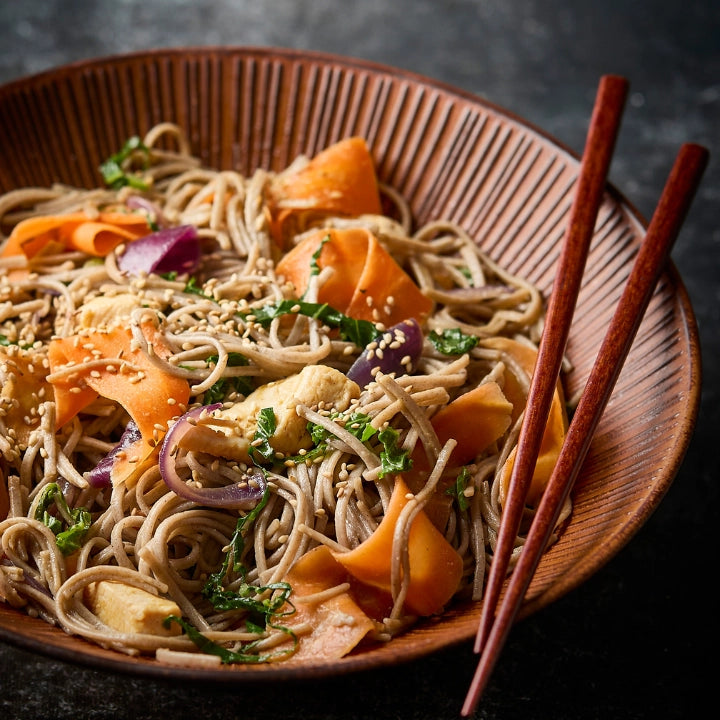
- Soba (the rustic terroir): unlike the other two, they are made primarily from buckwheat, which gives them their brown colour and deep, nutty aroma. Thin (approx. 1.5 mm), they can be enjoyed year-round, cold on a bamboo mat in summer or hot in a light broth in winter.
| Characteristic | Somen | Soba | Udon |
|---|---|---|---|
| Main grain | Soft wheat | Buckwheat (+ wheat for binding) | Soft wheat |
| Thickness | Very thin (less than 1.3 mm) | Thin (approx. 1.5 mm) | Thick (over 1.7 mm) |
| Mouthfeel | Light, smooth, slippery | Delicate, slightly porous | Plump, chewy, springy |
| Aromatic profile | Mild, neutral (elevates the sauce) | Rustic, nutty aroma | Soft, deeply comforting |
| Ideal season | Summer (cold dishes) | All year round | Winter (hot soups) |
How to prepare and enjoy your cold somen?
Tasting is a true summer art. Although they can be eaten hot in winter (when they are called nyūmen), the best somen reveal their full refreshing potential when served cold.

- Rapid boiling: plunge them into a large volume of boiling water. The cooking time is lightning fast, between 1 minute 30 seconds and 2 minutes at most.
- The thermal shock: drain them immediately and plunge them into ice-cold water. Rub them gently between your hands to stop the cooking instantly and remove excess starch.
- Plating: serve the noodles on a zaru (bamboo tray) or directly in a bowl filled with ice cubes for absolute freshness.
- Tasting: pick up a bite of noodles with your chopsticks and dip it into an umami-rich Japanese tsuyu, garnished with finely sliced spring onion and grated ginger.
- The nagashi somen experience: in Japan, purists do not hesitate to catch them on the fly. Nagashi somen are noodles sent down long bamboo flumes through a stream of clear, running water. A meal that is as playful as it is refreshing.
Somen FAQ
How much should you allow per person?
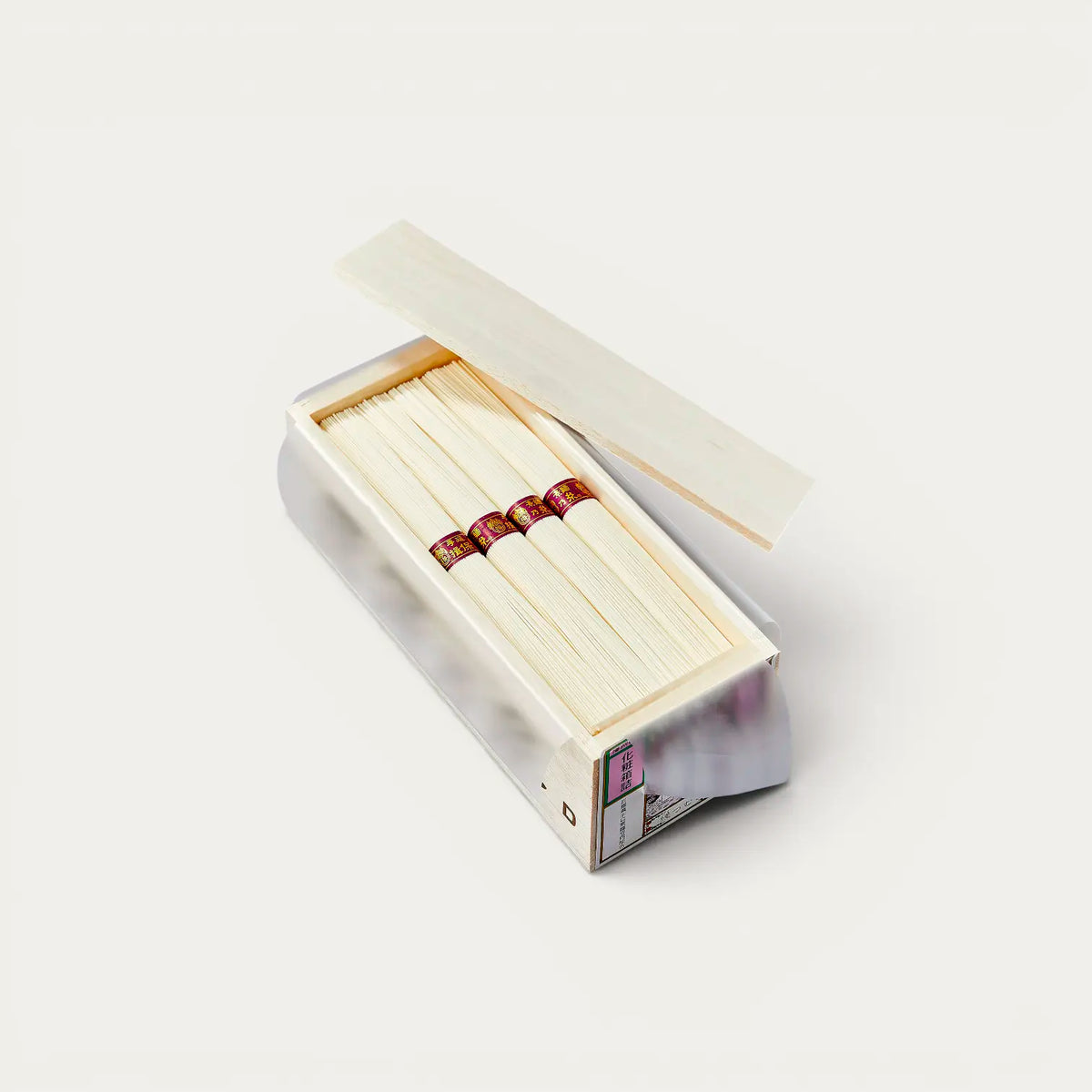
Somen are usually sold in small bundles tied with a ribbon. The recommended amount is two bundles (around 100 g of dried noodles) for a main meal, or a single bundle if served as a side dish.
Are these noodles eaten exclusively cold?
No. Although they are the stars of cold summer dishes, they can certainly be eaten hot. In winter, they are served in piping-hot dashi broth: a comforting dish known as nyūmen.
Are these Japanese noodles gluten-free?
No, they are not gluten-free because they are prepared exclusively from protein-rich soft wheat flour, which enables this extreme stretching of the dough. For a gluten-free alternative, opt for 100% buckwheat soba or rice noodles.
How to store them best?
The shelf life of artisanal dried noodles is excellent. Store them in a dark, cool, dry place away from moisture. Fascinating fact: very high quality tenobe somen actually gain firmness and flavour with age. However, do not store them next to strongly scented products, as they tend to absorb ambient aromas.


