







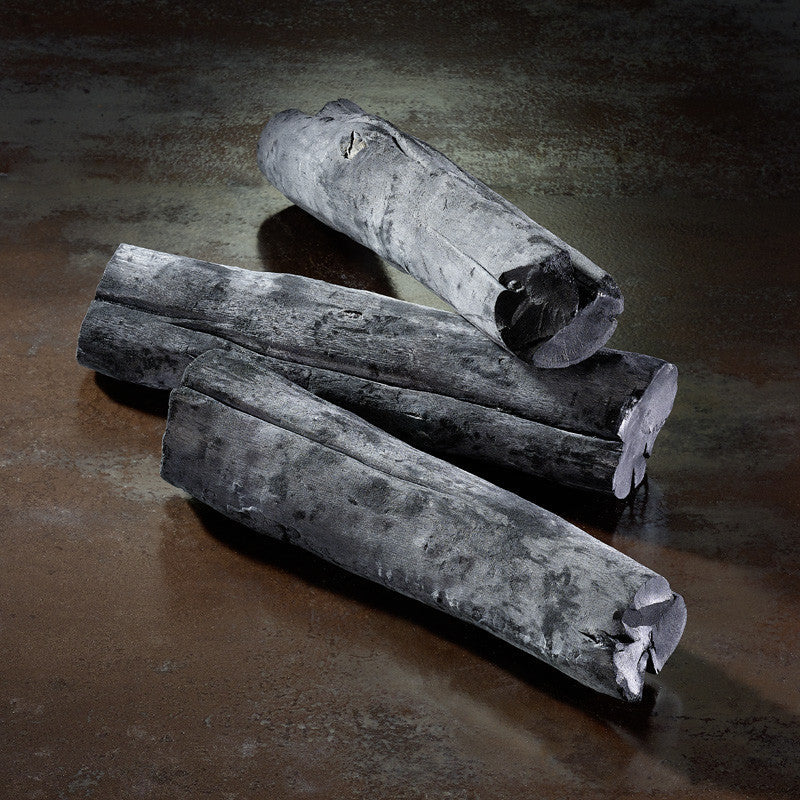

Binchotan charcoal and bamboo charcoal are the two main families of Japanese charcoal, each with a primary use: barbecue cooking for the former, water filtration and food use for the latter. Authentic binchotan charcoal can be recognised by its source wood (ubamegashi oak), its carbonisation at very high temperatures and its exceptional density, which produces an almost metallic sound when two sticks strike together. Bamboo charcoal, called takesumi in Japan, comes from the slow carbonisation of bamboo stems: it is available as water-filtering sticks and food-grade powder for cooking. This guide compares the two families, use by use, to help you choose the best charcoal for your needs: yakitori grilling, water purification or naturally colouring your preparations black.
Binchotan: the white charcoal of Japanese tradition
Binchotan is often referred to as white charcoal (hakutan): at the end of carbonisation, the glowing sticks are covered with a mixture of sand, earth and ash that leaves a pale coating on their surface. This technique, perfected in the Kishu region (Wakayama Prefecture), the historic birthplace of Japanese binchotan, produces an extremely hard and dense charcoal.

This density changes everything in use. Binchotan burns slowly, at a stable temperature, without high flames, with very little smoke and virtually no odour. This is precisely what makes it Japanese chefs' preferred charcoal for cooking on a konro, the small ceramic tabletop barbecue: yakitori skewers, kabayaki eel or grilled vegetables cook by radiant heat, never masked by an unwanted smoky flavour.
Bamboo charcoal: the versatile option, from filtration to pastry-making
Takesumi is obtained by carbonising bamboo stems, a fast-growing resource. Its extremely porous internal structure develops a large adsorption surface: this explains its uses outside cooking.
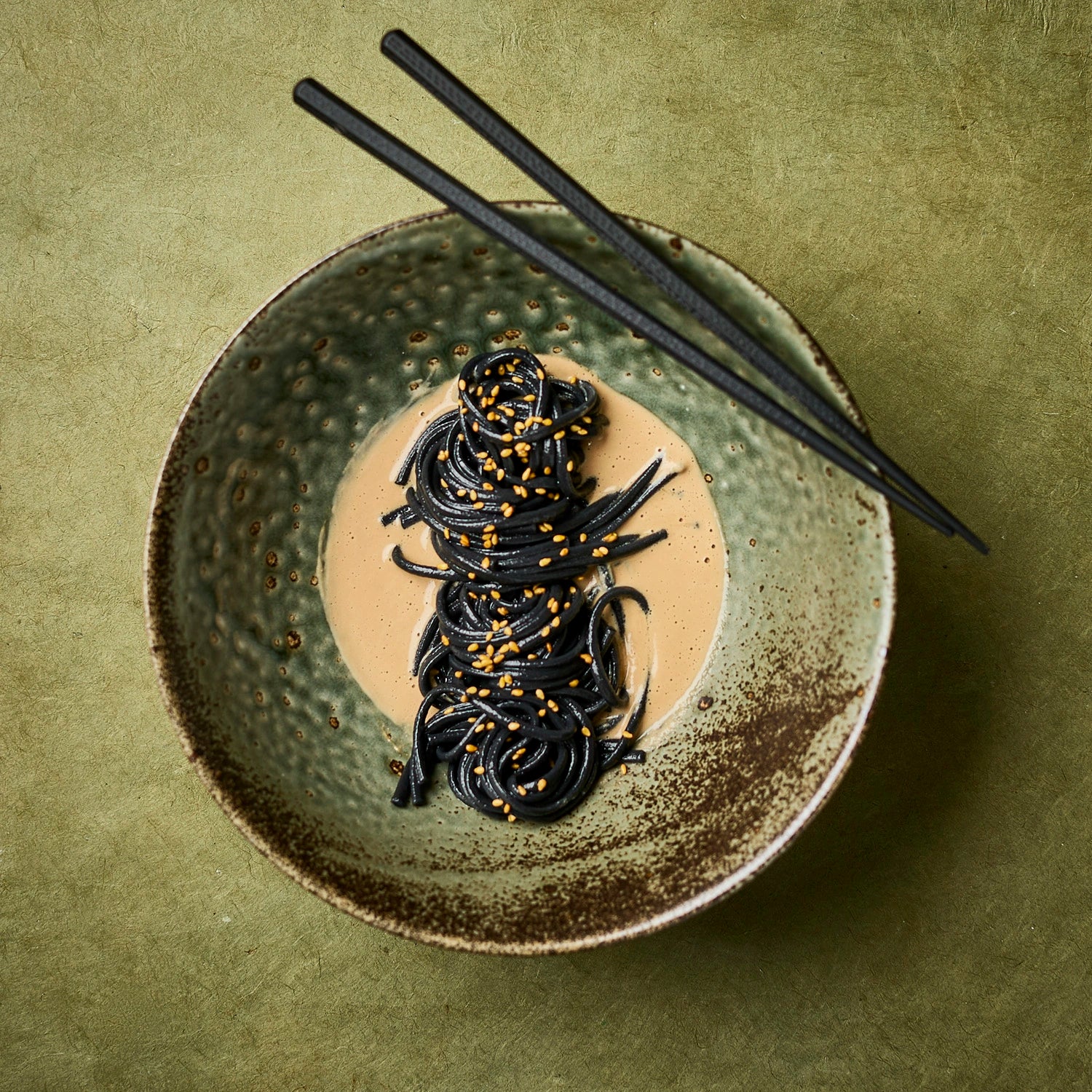
In stick form, bamboo charcoal water filter is placed directly in a carafe: it is known for reducing the chlorine taste of tap water and rounding out its mouthfeel. In powder form, bamboo vegetable charcoal powder has become an ingredient in its own right: a natural black colouring with a neutral taste, used by pastry chefs and artisans to colour breads, brioches, noodles, ice creams or lattes without altering their flavour.
Three uses therefore define the bamboo charcoal family:
- Water filtration: a stick to immerse in a carafe and regenerate regularly in boiling water;
- Food use: fine powder incorporated directly into doughs and batters;
- Air freshening: used sticks can be recycled as odour absorbers for the refrigerator or cupboards.
Binchotan or bamboo charcoal: comparison by use
The best charcoal is not the same depending on what you cook — or do not cook. The table below summarises the choice.
| Criterion | Binchotan charcoal | Bamboo charcoal |
|---|---|---|
| Raw material | Oak (including ubamegashi) | Bamboo stems |
| Main use | Cooking: barbecue, konro, yakitori | Water filtration, food-grade powder |
| Combustion | Long-lasting, stable, without flames or smoke | Not recommended as cooking fuel |
| Flavour imparted | Neutral, radiant cooking | Neutral-tasting powder (colouring) |
| Common format | Dense sticks with a metallic sound | Filtering sticks, fine powder |
| Lifespan | Reusable for several cooking sessions | Filtering stick to replace after prolonged use |
Confusion is common: many sticks sold as “binchotan” for water purification are actually bamboo charcoals. Both work in a carafe, but only oak binchotan offers the combustion qualities sought for barbecuing.
Which binchotan charcoal should you choose for barbecue and konro cooking?
For cooking, two criteria guide the choice: the size of the sticks and the planned cooking time. Smaller sizes light more quickly and are suitable for tabletop konro; larger sizes last through entire restaurant services.

- For a tabletop konro and yakitori, short-sized charcoal such as IGP Iwate Japanese charcoal for konro and yakitori lights quickly and is easy to distribute in the firebox;
- For long services and large pieces, a generous pack such as Lau binchotan Jowaridai charcoal provides a reserve of stable embers;
- For accessories, dedicated charcoal tongs allow you to rearrange the embers safely.
A simple quality indicator: good binchotan is heavy for its size, difficult to break and rings clearly. Light, crumbly charcoal will burn quickly and produce sparks.
When lighting it, binchotan's density requires patience: allow around twenty minutes in a charcoal chimney or on a burner, until the sticks are glowing through to the core. This is the price of its stability: once started, the fire holds without intervention. At the end of service, the embers can be recovered: smothered in an airtight cast-iron container, they go out without burning away and can be relit for the next cooking session. The same binchotan stick can therefore be used several times, significantly putting its cost in use into perspective compared with conventional charcoal.
Discover the full selection in the bamboo charcoal category for the home, and the complete range of cooking charcoals for restaurants.
Water purification: how to use a charcoal stick
Whether you choose a binchotan or bamboo stick, the care protocol remains the same. Boil the stick for around ten minutes before first use, allow it to dry, then immerse it in a carafe for several hours. Repeat the boiling process about once a week to regenerate the adsorption surface, and replace the stick after a few months of use.
A note of honesty is needed: the effectiveness of these charcoals mainly concerns chlorine and the taste of water. No robust study demonstrates an effect on major pollutants (heavy metals, pesticides, PFAS). Charcoal in a carafe improves the pleasure of drinking tap water; it does not replace a certified filtration device if your water poses a health concern.
Food-grade bamboo charcoal: chefs' black powder
Bamboo vegetable charcoal powder is used like any powdered colouring: mixed into burger bun flour, macaron batter, noodle dough or a latte. It offers two benefits: a deep black impossible to achieve with cocoa, and complete aromatic neutrality that interferes with neither sweet nor savoury flavours.
The dosage remains low — a few grams are enough to colour an entire dough — making a sachet very long-lasting for both professional and home use. To learn more about the history and production of Japanese white charcoal, read our article discovering ubamegashi binchotan.
FAQ: your questions about binchotan and bamboo charcoal
What is the best binchotan?
Kishu (Wakayama) binchotan, made from ubamegashi oak, is the historic benchmark. The best binchotan for you mainly depends on the use: short pieces for a tabletop konro, large pieces for long services, and a dedicated stick for a water carafe.
Are binchotan and bamboo charcoal the same thing?
No. Binchotan is a dense oak charcoal designed for cooking. Bamboo charcoal is more porous and is used for water filtration and, in powder form, as a food colouring.
How can you recognise genuine binchotan charcoal?
Three signs: high density (it is heavy for its size), a slightly whitened surface inherited from the white charcoal technique, and a clear, almost metallic sound when two sticks strike together.
Is charcoal in a carafe effective against PFAS?
Nothing has demonstrated this to date. Its documented action concerns chlorine and the taste of water. For persistent pollutants, choose a certified filtration system.
How long does a charcoal filtering stick last?
Allow around three months of use in a carafe, with weekly regeneration in boiling water. The stick can then be recycled as an odour absorber.
Can you cook with bamboo charcoal?
That is not its intended use: its combustion is less stable and less long-lasting than binchotan's. Reserve bamboo for filtration and food-grade powder, and binchotan for grilling.
Where can you find food-grade bamboo charcoal?
Choose a clearly identified food-grade powder from a supplier specialising in Japanese groceries, with traceability of the raw material — this is what distinguishes culinary powder from technical charcoals.


